
How to Clean Silicone Food Bags: The Complete Residue-Free Guide
A premium silicone bag can last for over 10 years, yet many people feel like tossing them after just one batch of garlicky marinara. It's frustrating when your commitment to a zero-waste kitchen is met with cloudy hard water spots, lingering smells, or damp corners that refuse to dry. Knowing how to clean silicone food bags properly is the key to maintaining a hygienic home without the worry of hidden bacteria or "off" flavors in your next snack.
Cleaning these essentials doesn't have to be a chore that clutters your countertop. Whether you're dealing with bags that won't stay open in the dishwasher or stubborn odors from onions, we've developed a practical routine to restore your gear to mint condition. We'll walk through a three-pillar system focused on proper agitation, natural deodorizing, and airflow-first drying. You'll gain the confidence to keep your bags sanitized to FDA standards, crystal clear, and ready for your next meal prep session.
Key Takeaways
- Use the "Prong Method" to ensure your bags stay open in the dishwasher for a thorough, hands-off clean every time.
- Discover how to clean silicone food bags using simple pantry staples to neutralize pungent odors and lift stubborn stains.
- Solve the drying dilemma with airflow-focused techniques that stop mold from starting in hard-to-reach corners.
- Protect your investment by avoiding maintenance mistakes like turning bags inside out so you don't damage the structural seals.
- See how one durable bag can replace thousands of single-use plastics while serving as a versatile tool for both meal prep and travel.
Standard Cleaning: Dishwasher vs. Hand Washing Methods
Cleaning your reusable storage shouldn't feel like a mystery. Most people struggle with how to clean silicone food bags because they treat them like plastic. Because of the unique properties of silicone, the material can attract different types of buildup. Greasy residue usually comes from animal fats or oils that bond to the surface, while cloudy film is often the result of calcium and magnesium minerals in hard water. Identifying which one you're facing helps you choose the right approach for a residue-free finish.
Before you start, check the bottom or the side seal of your bag for a dishwasher-safe stamp. Most high-quality bags are designed for the machine, but verifying this first preserves the integrity of the airtight closure over years of use.
The Dishwasher Strategy for Maximum Reach
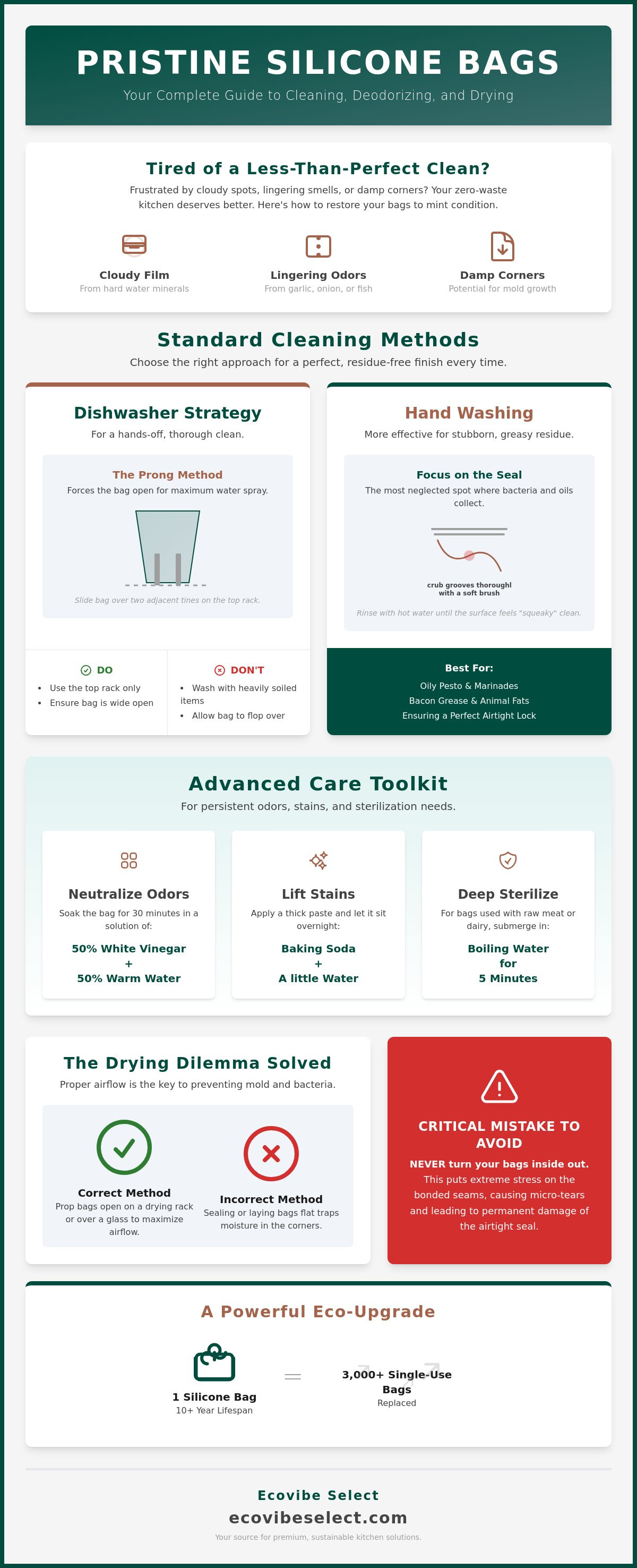
The biggest complaint with dishwashers is the "flopping" bag. When a bag tips over, it collects gray water and food particles rather than getting clean. Use the Prong Method to solve this. Slide the bag over two adjacent tines on the top rack. This forces the bag to stay wide open, allowing the spray arms to reach into the bottom corners where debris likes to hide.
Always stick to the top rack. This keeps the silicone away from the high-heat elements at the bottom of the tub, which can reach temperatures that might warp thinner seals. Avoid washing your bags alongside heavily soiled pots or plates covered in thick sauces. Those tiny food particles can recirculate during the wash cycle and settle inside the bag, leaving a gritty feeling behind.
Hand Washing for Greasy Residue
If you've stored bacon, oily pesto, or marinated meats, hand washing is often the more effective choice. Dishwasher detergents are sometimes too mild to break down bonded fats on silicone. Use a concentrated, eco-friendly dish soap and warm water. A soft-bristled bottle brush is your best tool here. It reaches the bottom seams without scratching the material or compromising the seal.
When learning how to clean silicone food bags, remember that the closure seal is the most important area to scrub. This is the most neglected spot, yet it's where bacteria and old food oils frequently collect. Scrub the grooves of the seal thoroughly with your brush. If grease remains in the tracks, it can interfere with the airtight lock and lead to leaks. Rinse with hot water until the "squeaky" feel returns. This ensures no soap film is left to flavor your next snack.
Advanced Care: Removing Persistent Odors, Stains, and Grease
Sometimes, a standard wash isn't enough to tackle the after-effects of a spicy curry or a garlic-heavy marinade. Silicone is exceptionally durable, but its surface can occasionally hold onto strong scents and pigments. If you've been wondering how to clean silicone food bags that still smell like last week's salmon, advanced care techniques using simple kitchen staples are the answer. These methods are gentle on the material while being tough on organic residues.
For bags that have reached the end of their functional life after years of use, remember that brands like Stasher offer a partnership with TerraCycle. This specialized program ensures that old silicone is repurposed into playground surfaces rather than ending up in a landfill. However, with the right deep-cleaning routine, you can usually extend the life of your bags well beyond a decade.
Natural Deodorizing Techniques
White vinegar is a powerhouse for neutralizing alkaline odors. Create a 50/50 solution of white vinegar and warm water, then let your bags soak for 30 minutes. For bags that feel slightly tacky or have a lingering oily film, a squeeze of fresh lemon juice works wonders to cut through the lipids. Baking soda acts as a natural buffer that effectively absorbs and neutralizes organic odor molecules trapped in the silicone.
Lifting Tough Stains Without Chemicals
Tomato-based sauces are the most common culprits for discoloration. To lift these, apply a thick paste made of baking soda and a small amount of water directly to the stained areas. Leave this paste to sit overnight so it can draw the pigments out of the silicone. When you're ready to clean, avoid using abrasive steel wool or stiff plastic scrubbers. These can create micro-scratches where bacteria can hide, eventually compromising the bag's hygiene. Always finish with a cold water rinse after a stain treatment to help "set" the clean surface and close the material's pores.
Deep Sterilization and Sun-Bleaching
For bags used to store raw meat or dairy, a higher level of sanitation is necessary. Food-grade silicone is typically heat-resistant up to 446°F, which means you can safely submerge your bags in boiling water for five minutes to ensure complete sterilization. If you still notice a slight tint after cleaning, try sun-bleaching. Placing your clean, damp bags in direct sunlight for a few hours uses natural UV rays to break down remaining pigments and provide an extra layer of sanitation. Using high-quality reusable silicone food storage bags makes this maintenance much easier, as premium platinum-cured silicone is less likely to retain odors than lower-grade alternatives.
The Drying Dilemma: How to Prevent Mold and Bacteria Growth
Drying is the most overlooked step in the cleaning process. If you've mastered how to clean silicone food bags but skip the thorough drying phase, you're inviting mold into those tight bottom seams. Moisture trapped in the corners is the primary cause of bacteria growth. It's a common issue because silicone is non-porous. Water doesn't evaporate as quickly as it does from a ceramic plate or a glass bowl. To keep your kitchen hygienic, you must prioritize airflow.
Keeping the bag propped open is non-negotiable. Airflow is king. While towel drying helps remove the initial bulk of the water, it rarely reaches the deep corners perfectly. Air drying ensures every millimeter is moisture-free. Never seal a bag for storage if you see even a single droplet inside. Storing a damp bag creates a dark, humid environment where mold spores thrive. This is especially true if you live in a high-humidity climate where natural evaporation takes longer.
Zero-Waste Drying Hacks
You don't need a specialized drying rack to get professional results. Some guides suggest buying extra kitchen gadgets, but we prefer using what you already own. Prop your bags over clean wooden spoons or an empty glass bottle to keep them upright. This creates a chimney effect that pulls air through the bag. If you use a standard dish rack, ensure the bags are spaced out. They shouldn't touch each other or damp dishes. Place them in a well-ventilated area. Avoid the humid space right next to the sink where steam from washing other dishes can slow down the process.
Is towel drying more hygienic than air drying? It depends on the towel. A fresh, lint-free cloth is excellent for removing mineral-heavy water before it dries. However, a used kitchen towel can actually reintroduce bacteria to your freshly cleaned bag. For the best of both worlds, use a clean cloth to remove the majority of the water, then let the bag finish air drying upside down. This prevents water from pooling at the bottom and ensures a residue-free result.
Preventing Mold and Cloudy Spots
For the most hygienic finish, wipe the interior corners with a clean cloth before propping the bag up. This removes "corner moisture" that air alone might miss. If you live in an area with hard water, you might notice cloudy residue even after a deep clean. These cloudy spots are often harmless minerals like calcium, not dirt or bacteria. To maintain clarity, give the interior a quick wipe-down with a cloth dipped in white vinegar before the final air dry. This simple step keeps your bags looking new and ensures they are 100% sanitized for your next meal prep session. Learning how to clean silicone food bags includes understanding these mineral interactions to avoid unnecessary frustration.
Maintaining Your Bags for Years of Zero-Waste Use
A high-quality silicone bag is an investment in a less wasteful future. While knowing how to clean silicone food bags is essential for daily hygiene, long-term maintenance ensures you get the full value out of the material's 10-year lifespan. Silicone is prized for its durability, but it isn't indestructible. Small habits in how you handle and store your collection can prevent premature wear and keep the airtight seals functioning as they should.
One common mistake is turning bags inside out to scrub the corners. Most manufacturers advise against this because the constant flipping puts unnecessary stress on the side seams. Over time, this can lead to small tears or cause the closure mechanism to misalign. When you master how to clean silicone food bags without stressing the material, you're ensuring a decade of utility. Instead of flipping them, rely on a soft bottle brush to reach the bottom. It's also wise to regularly inspect the seal for cracks or loss of elasticity. If the bag no longer "clicks" shut or feels loose, it may be time to transition it to a different use.
Protecting the Structural Integrity
Silicone can withstand extreme temperatures ranging from -40°F to 446°F, making it safe for everything from deep-freezing to sous-vide cooking. However, it remains vulnerable to punctures. Avoid using sharp metal utensils like knives or forks inside the bags, as even a small nick can quickly expand into a full tear. If your bags use a slide-bar closure, be gentle when pulling them across the tracks. To keep your kitchen organized and your bags in top shape, store them flat or nested in a dry drawer. This prevents dust buildup and ensures they remain accessible for your next meal prep session.
When to Retire a Reusable Bag
Eventually, every product reaches the end of its lifecycle. You'll know it's time to retire a bag if the silicone starts to feel "sticky" even after a thorough wash. This stickiness is a sign that the material is beginning to degrade. Since silicone isn't accepted in standard curbside recycling, look for specialized programs like the Stasher Repurpose Program. They partner with TerraCycle to turn old bags into playground surfaces and track materials. If the bag is still structurally sound but no longer food-safe, it can serve as a durable organizer for craft supplies or travel toiletries. To start your collection with professional-grade gear, explore our reusable silicone food storage bags designed for both durability and ease of use.
Why Silicone Bags are the Ultimate Eco-Kitchen Upgrade
Switching to reusables is one of the most effective ways to reduce your daily environmental footprint. A single silicone bag can replace thousands of single-use plastic bags over its lifetime. Since high-quality silicone is heat-stable and durable, it offers a level of utility that plastic simply can't match. Scientific evidence suggests that silicone bags release minimal to no microplastics during normal use, unlike plastic containers which often shed particles when heated or scratched. By learning how to clean silicone food bags efficiently, you remove the only barrier to making them a permanent part of your kitchen routine.
The versatility of these bags extends far beyond the refrigerator. They're essential for meal prepping, sous-vide cooking, and even organizing travel essentials. Because they meet FDA regulation 21 CFR 177.2600 for repeated food contact, you can trust their safety for your family. This multi-purpose nature simplifies your home by reducing the need for specialized containers. It's a "less is more" approach that prioritizes high-quality, long-lasting tools over disposable convenience.
Building Your Sustainable Toolkit
Creating a mindful home is about making small, manageable choices that add up. Once you've integrated silicone bags, you can pair them with other sustainable kitchen products to further reduce waste. The cost-benefit analysis is clear. While the initial investment is higher than a box of disposables, the 10-year lifespan of a platinum-cured silicone bag makes it the more economical choice in the long run. We encourage starting with a few essential sizes and expanding your collection as you discover new ways to use them in your daily life.
Shop Mindfully with Ecovibe Select
At Ecovibe Select, we act as a practical guide for those looking to simplify their lives. We curate our essentials with a focus on durability, smart design, and ease of integration. When you understand how to clean silicone food bags to keep them residue-free, they become a joy to use rather than a maintenance burden. Our commitment is to provide materials that last, helping you build a home that is both organized and responsible. We invite you to explore our curated collection of reusable silicone food storage bags and join our community of eco-conscious home organizers. Together, we can make sustainable living a steady, dependable part of every day.
Your Path to a Residue-Free Kitchen
Mastering how to clean silicone food bags is the final step in making your zero-waste transition feel effortless and rewarding. By utilizing techniques like the "Prong Method" for deep cleaning and focusing on airflow to prevent moisture traps, you ensure your gear remains perfectly hygienic for years of use. These practical maintenance habits protect your investment while keeping your food tasting exactly as it should. It's about finding a steady rhythm that fits into your daily lifestyle without extra stress.
Upgrade your kitchen with our durable Reusable Silicone Food Storage Bags to experience the difference of LFGB-certified food-grade silicone. Our leak-proof design is built to be easy to clean, helping you save thousands of single-use bags every year. You now have the knowledge to maintain a more sustainable, organized home with confidence. Every small choice contributes to a larger, positive impact, and you're well on your way to a more mindful kitchen.
Frequently Asked Questions
Can I put silicone food bags in the dishwasher?
Yes, you can place most bags on the top rack of your dishwasher. Ensure the bag is inverted over two tines to keep it open during the cycle. This allows water to circulate freely inside the bag for a thorough wash. Always verify the dishwasher-safe stamp on your specific brand first. Keeping them away from the bottom heating element prevents potential warping of the seals over time.
How do I get the smell out of my reusable silicone bags?
Neutralize odors by soaking the bag in a 50/50 mixture of white vinegar and warm water for 30 minutes. For persistent smells like garlic or onion, apply a baking soda paste overnight. This natural approach effectively absorbs organic molecules without using harsh chemicals. Understanding how to clean silicone food bags with pantry staples keeps your kitchen smelling fresh and your gear ready for the next snack.
Why do my silicone bags have a white residue after washing?
White residue is typically a buildup of minerals like calcium and magnesium from hard water. While it's harmless, it can make your bags look cloudy. To restore clarity, wipe the interior with a cloth dipped in white vinegar after washing. This dissolves the minerals instantly. Using this simple step as part of your routine ensures your storage remains crystal clear and visually appealing for years.
Is it safe to turn silicone bags inside out to clean them?
Avoid turning your bags inside out because it can damage the structural integrity of the side seams. Most manufacturers advise against this practice to prevent tears or seal misalignment. Instead, use a soft-bristled bottle brush to reach into the bottom corners. This method provides a thorough clean without putting unnecessary stress on the material, ensuring your bags last for their full intended lifespan of over a decade.
How do I dry the corners of silicone bags to prevent mold?
Prevent mold by propping bags open over a clean wooden spoon or an empty glass bottle to maximize airflow. Wipe the interior corners with a lint-free cloth immediately after washing to remove pooling water. Air drying in a well-ventilated area is essential. Never seal or store a bag that still has visible droplets inside, as moisture trapped in the seams is where bacteria and mold spores thrive.
Are silicone bags safe for raw meat storage?
Yes, silicone bags are an excellent choice for raw meat storage because they are non-porous. They meet FDA regulation 21 CFR 177.2600 for repeated food contact, ensuring they don't harbor bacteria in surface scratches. They provide a secure, leak-proof seal that prevents cross-contamination in your refrigerator. Learning how to clean silicone food bags properly makes them a safe, reliable tool for professional-level meal prep in any home.
Can I boil silicone bags to sanitize them?
You can safely boil silicone bags to achieve deep sterilization. Food-grade silicone is heat-resistant up to 446°F, so a 5-minute dip in boiling water won't damage the material. This is the most effective way to sanitize bags after they've held raw meat or dairy products. It's a quick, chemical-free method to ensure your bags are 100% safe for their next use in your mindful, zero-waste kitchen environment.
How long do reusable silicone food bags last?
High-quality silicone bags can last for over 10 years when handled with care. Their durability is a significant upgrade over single-use plastics. To reach this decade-long milestone, avoid using sharp metal utensils inside the bags and store them flat or nested in a dry drawer. Consistent, gentle maintenance ensures the seals remain airtight and the material stays flexible, making them a truly sustainable long-term investment for your home.