
The Best DIY Floor Cleaner Recipe for Spray Mop: Eco-Friendly & Streak-Free
What if the secret to a streak-free floor isn't found in an expensive plastic bottle, but right in your kitchen pantry? You've likely felt the frustration of finishing a deep clean only to see cloudy residues or worry about the chemicals your children and pets encounter on the hardwood. Finding the perfect DIY floor cleaner recipe for spray mop use doesn't have to be a guessing game. It's about balancing simple ingredients to protect your living space and your budget with mindful intentionality.
We agree that maintaining a clean home should feel like a small, manageable choice rather than a chore filled with toxic fumes. You'll learn how to create powerful, non-toxic cleaners using pantry staples like distilled white vinegar and 70% isopropyl alcohol, which costs about $3.99 for a 32oz bottle. This guide provides the precise ratios of solvent and water needed to achieve a professional finish without damaging your floors or clogging your Eco-Friendly Reusable Spray Mop. We'll explore the best essential oil blends and the specific techniques that ensure your home stays safe, fresh, and perfectly polished.
Key Takeaways
- Transition to a sustainable cleaning routine by replacing single-use plastic bottles with simple, non-toxic pantry staples.
- Master the ideal DIY floor cleaner recipe for spray mop reservoirs to ensure a streak-free finish on tile, vinyl, and linoleum.
- Learn why using distilled water and a clean mop reservoir is essential for preventing clogs and unsightly water spots.
- Identify common mixing mistakes, such as over-using soap, that lead to cloudy floors and potential hardware failure.
- Discover how to maximize your results by pairing natural solutions with high-quality microfiber technology for deeper cleaning.
Why Switch to a DIY Floor Cleaner Recipe for Your Spray Mop?
Choosing a DIY floor cleaner recipe for spray mop hardware is more than a simple budget hack; it's a shift toward a more intentional and mindful home. These homemade solutions typically rely on a few versatile, non-toxic ingredients like distilled white vinegar, isopropyl alcohol, and mild plant-based soaps. By moving away from commercial refills, you eliminate the cycle of purchasing and discarding single-use plastic bottles. This change is a small but impactful choice that supports a modern, organized lifestyle without sacrificing the quality of your clean.
Finding the right DIY floor cleaner recipe for spray mop systems allows you to take total control over your home environment. In many households, floors are the primary play areas for crawling toddlers and curious pets. When you mix your own solution, you remove the mystery of vague labels and hidden chemicals. You know exactly what is touching your surfaces and staying in your air. Beyond safety, the financial benefits are significant. Most families can save between $50 and $100 annually by replacing expensive brand-name refills with simple pantry staples that perform just as well, if not better, than their chemical counterparts.
The Environmental Impact of Commercial Refills
Standard spray mop systems often trap consumers in a cycle of avoidable waste. Every time a cleaning cartridge runs dry, another plastic container is destined for the landfill. These systems prioritize short-term convenience but often ignore the long-term impact on our planet. Many commercial cleaners also contain synthetic fragrances and phthalates that can linger in your home long after the floor is dry. Transitioning to a reusable spray mop provides a sturdy foundation for a zero-waste routine. It allows you to clean effectively while respecting the environment, proving that utility and responsibility can go hand in hand.
Cost-Effectiveness: Pantry Staples vs. Store-Bought
The math behind DIY cleaning is incredibly encouraging for the budget-conscious homeowner. A gallon of distilled white vinegar currently costs approximately $3.99 at major retailers like Kroger. When you consider that most recipes require only a few tablespoons per refill, a single gallon lasts for months. Compare this to the price per ounce of premium, store-bought solutions, and the savings become obvious. While historical Floor cleaning methods have varied across cultures, the modern combination of water and a gentle surfactant remains the most efficient choice for daily maintenance. A single bottle of concentrated castile soap can often last an entire year. This level of efficiency makes DIY cleaning a smart essential for any home focused on practical, long-term solutions.
The Best Homemade Floor Cleaner Recipes for Every Surface
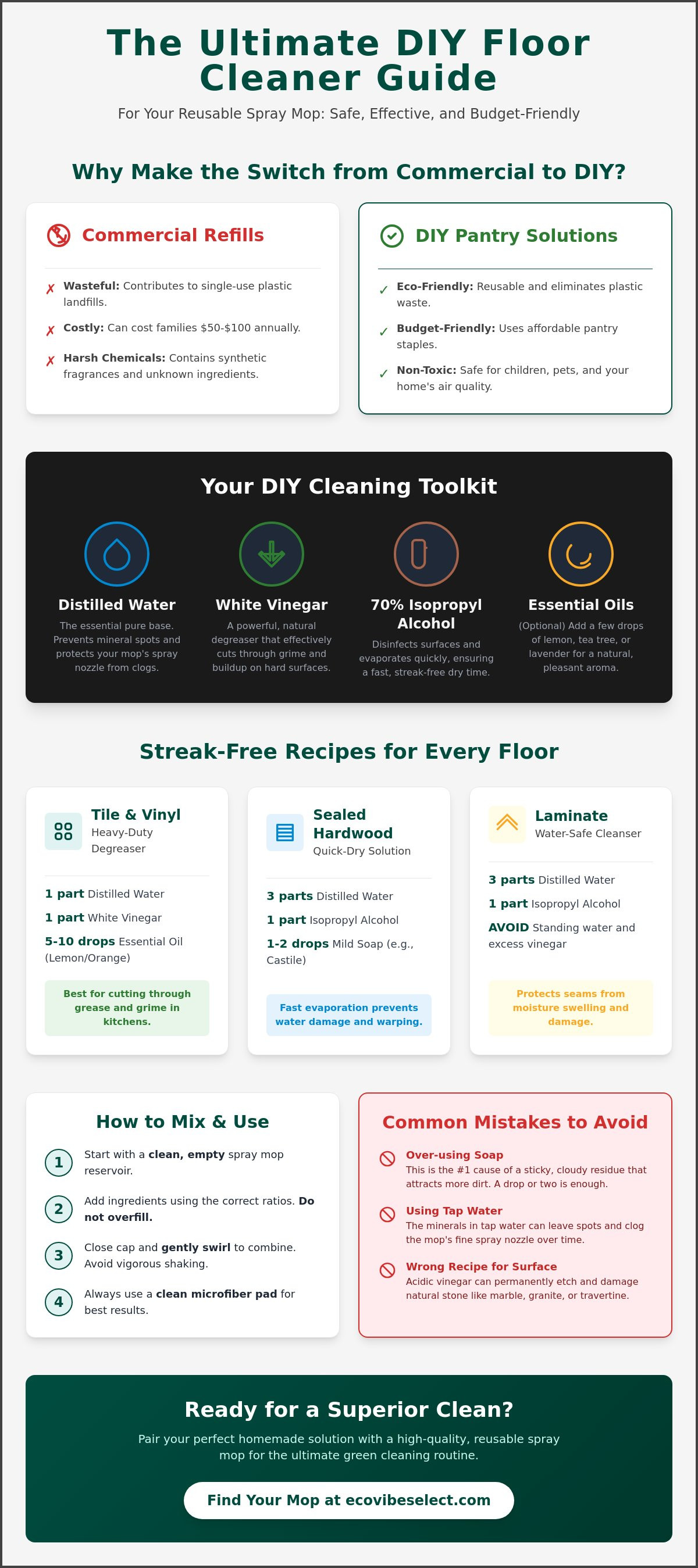
Effective floor care requires a tailored approach. Ceramic tile can withstand acidic solutions that would eventually dull the finish of a hardwood plank. When you develop a DIY floor cleaner recipe for spray mop use, you must consider the specific chemistry of your flooring material. A primary goal for any spray mop solution is the "no-rinse" factor. Because spray mops use a fine mist, the solution needs to lift dirt and evaporate quickly without leaving a soapy residue behind. This efficiency is what allows you to move through your home with ease, knowing your floors are safe and clean.
| Surface Type | Key Ingredient | Primary Benefit | What to Avoid |
|---|---|---|---|
| Tile & Vinyl | White Vinegar | Cuts through grease | Natural Stone |
| Hardwood | Rubbing Alcohol | Fast evaporation | Excessive Vinegar |
| Laminate | Rubbing Alcohol | Prevents swelling | Standing Water |
Recipe 1: The Heavy-Duty Tile and Vinyl Solution
For high-traffic areas like kitchens and mudrooms, you need a solution that breaks down organic matter and grease. Mix 1 cup of warm water with 1 cup of white vinegar and 3 drops of a mild dish soap. Vinegar is a natural acetic acid that acts as a powerful degreaser, making it ideal for the grime that accumulates near stoves or entryways. You can find more Nontoxic floor cleaner recipes that highlight how simple household acids perform better than harsh synthetics. However, a critical warning: never use this vinegar-heavy mixture on natural stone like marble or granite. The acid can etch the stone, causing permanent damage to the surface.
Recipe 2: The pH-Balanced Wood and Laminate Cleaner
Hardwood and laminate require a gentler touch to protect their delicate finishes. For this DIY floor cleaner recipe for spray mop reservoirs, combine 2 cups of water with 1/2 cup of 70% isopropyl alcohol and 2 drops of mild detergent. Rubbing alcohol is the secret to a streak-free shine on wood; it lowers the solution's evaporation point, ensuring the liquid disappears before it can soak into the wood grain. This prevents the swelling or warping often caused by traditional mopping. By choosing alcohol over vinegar, you maintain the integrity of the floor's sealant while achieving a deep clean. Using an Eco-Friendly Reusable Spray Mop with this mixture allows for the controlled, light application these surfaces demand.
Step-by-Step: How to Mix and Refill Your Spray Mop
Preparation is the foundation of a successful clean. Before you begin mixing your DIY floor cleaner recipe for spray mop use, ensure the reservoir of your Eco-Friendly Reusable Spray Mop is completely empty and rinsed. Residual chemicals from old commercial cleaners can react with natural ingredients like vinegar or alcohol, potentially causing cloudiness or even damaging the spray mechanism. Starting with a fresh, clean slate ensures that your homemade solution remains stable and effective from the first spray to the last.
The quality of your water significantly impacts the final result. If you live in an area with hard water, minerals like calcium and magnesium can leave white spots or a dull film on your floors as the solution dries. Using distilled water is a simple, low-cost way to prevent spotting and ensure a truly streak-free finish. Experts often recommend these safe and effective homemade cleaning products because they rely on pure ingredients that don't compete with mineral buildup. This small adjustment makes a noticeable difference on high-gloss surfaces like dark laminate or polished tile.
To keep the process mess-free, utilize the "Reverse Fill" method. Always add your water to the reservoir first, leaving about two inches of space at the top. Once the water is in place, add your concentrates like vinegar or rubbing alcohol. Adding soap or detergents last prevents the reservoir from filling with excess suds that can overflow or clog the intake tube. After adding all components, securely seal the cap and give the reservoir a gentle shake. This ensures the surfactants are evenly distributed throughout the solution for a consistent clean.
Customizing with Natural Scents
One of the joys of DIY cleaning is the ability to customize your home's aroma without synthetic fragrances. Essential oils like lemon, eucalyptus, or tea tree offer mild antimicrobial properties and a fresh scent. Lavender is another popular choice; a 1oz bottle of pure lavender essential oil typically costs between $8.49 and $17.49. Stick to the golden rule: use no more than 5 drops per 16oz of liquid. Excess oil can gum up the spray nozzle over time. Always choose clear oils rather than tinted versions to avoid any risk of staining lighter floor finishes or grout lines.
Labeling and Storage Tips
Organization is key to a modern, efficient home. If you use different recipes for various rooms, clearly label your reservoirs to avoid using an acidic vinegar mix on delicate stone or wood. Store your DIY solutions in a cool, dark place. Essential oils are light-sensitive and can lose their potency if left in direct sunlight. It's best to make small batches that you can use within a few weeks. Freshly mixed solutions ensure the ingredients remain active and the scent stays vibrant, making your cleaning routine a more pleasant experience.
Avoiding Common DIY Mopping Mistakes
Even the most balanced DIY floor cleaner recipe for spray mop hardware can lead to disappointing results if applied incorrectly. Most issues don't stem from the natural ingredients themselves, but from an imbalance in the ratios. The most frequent cause of equipment failure is the use of too much soap or wax-based additives. These substances create a sticky residue that attracts dust rather than repelling it. Over time, this buildup creates a dull film that makes your floors look older than they are.
Cloudy floors are another common frustration for those transitioning to green cleaning. If you notice a hazy appearance after the floor dries, your vinegar-to-water ratio is likely too high. While vinegar is an excellent disinfectant, an over-concentrated mix can leave behind acetic acid residues that trap light and moisture. Simply adjusting your mixture to a more diluted state often resolves this immediately. For those with natural stone, watch for dull, white spots. These are signs of etching, which occurs when acidic cleaners react with the calcium carbonate in the stone. If you see these marks, switch to a pH-neutral solution to protect your investment.
Preventing Clogged Spray Nozzles
Fine-mist spray systems are precision tools. Thick "oil soaps" or undissolved soap particles are the primary enemies of these internal pumps. These ingredients don't always dissolve fully in room-temperature water and can gum up the narrow intake tubes. Undissolved particles eventually solidify, which can lead to a weak spray or total hardware failure. To keep your system running smoothly, perform a monthly "Hot Water Flush." The "Hot Water Flush" is a 5-minute maintenance task where you run plain, hot water through the reservoir and nozzle to clear out lingering surfactants. Maintenance matters for longevity.
Eliminating Streaks and Residue
Streaks are often a sign of a saturated mop pad rather than a bad recipe. If your microfiber pad is full of dirt, it simply redistributes grime across the surface. Replace your pads frequently during a deep clean to maintain clarity. Also, evaluate your soap usage. Using more than three drops of dish soap per reservoir will create excess foam that dries into a visible film. As we explored in the recipe section, rubbing alcohol is essential for a professional finish. It encourages rapid evaporation, ensuring the liquid disappears before streaks can form. To achieve the best results with your homemade solutions, use an Eco-Friendly Reusable Spray Mop designed for durability and ease of use.
Maximizing Your Green Cleaning Routine with Ecovibe Select
A great DIY floor cleaner recipe for spray mop use is only as effective as the tool that applies it. While the right liquid lifts dirt and dissolves grease, the mop hardware and pad are responsible for actually removing that grime from your home. This is where the synergy between a refillable reservoir and high-quality microfiber becomes essential. By choosing tools designed for longevity, you move beyond the disposable mindset and embrace a more mindful, low-waste lifestyle. It’s a practical approach that ensures your cleaning routine is as sustainable as the ingredients you use.
Transitioning your whole home to a low-waste system doesn't happen overnight. It starts with identifying the high-waste areas, like the plastic-heavy cleaning aisle, and replacing them with smart essentials. When you pair a homemade solution with a durable, reusable system, you're not just cleaning your floors; you're participating in a larger movement toward utility and responsibility. This integrated approach simplifies your maintenance routine while significantly reducing your environmental footprint.
The Importance of High-Quality Reusable Mop Pads
Microfiber is the superior choice for modern floor care because its tiny fibers physically grab and hold onto loosened dirt particles. Different textures serve different purposes. A textured scrubbing pad is ideal for high-traffic kitchens where food spills are common, while a plush polishing pad works best for a final pass on sealed hardwood. To maintain these results, it is vital to understand how to wash reusable mop pads properly. Laundering them without fabric softener keeps the fibers absorbent for hundreds of uses. We recommend having 3-4 pads on hand. This allows you to swap for a fresh pad when moving between the bathroom and the living room, effectively preventing the cross-contamination of bacteria.
Building Your Sustainable Cleaning Kit
Creating a cohesive cleaning system simplifies your daily routine and keeps your home organized. The foundation of this kit is the best reusable spray mop with washable pads, which allows you to utilize your own DIY floor cleaner recipe for spray mop systems without hardware limitations. You can extend this eco-friendly logic to other areas of your home as well. For example, Reusable Silicone Food Storage Bags are excellent for storing damp cleaning rags or keeping dry mop pads organized in your utility closet. Transitioning to a plastic-free home happens through these small, manageable choices. Start your journey toward a more intentional living space today by choosing durable, high-utility tools that respect both your home and the planet.
Embracing a Mindful Approach to Floor Care
Transitioning to a green cleaning routine is a small, manageable choice that yields significant benefits for your home and the environment. By mastering the right DIY floor cleaner recipe for spray mop use, you ensure a streak-free finish while protecting your family from harsh synthetic chemicals. Success lies in the details, such as choosing the correct ingredients for your specific surface and performing a regular hot water flush to keep your hardware in peak condition. These simple habits turn a routine chore into an intentional act of care for your living space.
Our community has already saved over 10,000 plastic bottles by making the switch to sustainable, refillable solutions. We provide durable, nozzle-tested hardware specifically designed to handle your homemade mixtures without clogging or failing. You can also enjoy free shipping on orders over $50 as you build your essential cleaning kit. Upgrade to a Refillable Spray Mop and Start Saving Today. Creating a cleaner, safer home is an achievable goal, and we're here to support you every step of the way.
Frequently Asked Questions
Is vinegar safe for all types of floors in a spray mop?
Vinegar is not safe for all surfaces, particularly natural stone like marble, slate, or granite. The acetic acid in vinegar can etch the stone and cause permanent, dull damage that is difficult to repair. For ceramic tile and vinyl, it remains an excellent choice for cutting through kitchen grease. Always check your specific flooring manufacturer's guidelines to ensure an acidic solution won't dull the finish or void your warranty over time.
Can I use essential oils in my spray mop reservoir?
You can use essential oils to add a natural scent, but limit the amount to five drops per 16oz of liquid. Using too much oil can lead to a clogged spray nozzle or leave a slippery, dangerous residue on your floors. Choose clear oils, such as lemon, peppermint, or eucalyptus, to prevent staining lighter finishes or grout lines. This small addition makes your cleaning routine a more sensory and pleasant experience without using synthetic fragrances.
How do I prevent my DIY floor cleaner from leaving streaks?
To prevent streaks, include 70% isopropyl alcohol in your DIY floor cleaner recipe for spray mop systems. The alcohol encourages the solution to evaporate quickly before it can pool or leave visible marks on high-gloss surfaces. You should also ensure you aren't using more than a few drops of dish soap. Excess surfactants are the primary cause of cloudy residue, so a "less is more" approach is vital for a clear finish.
Will homemade floor cleaner damage the internal pump of my spray mop?
Homemade solutions are safe for the internal pump if you avoid thick, oil-based soaps and undissolved solids. These substances can gum up the fine-mist mechanism and lead to a weak spray or total hardware failure. Performing a monthly flush with plain hot water helps clear out any lingering ingredients and maintains the durability of your hardware. Using distilled water also prevents mineral buildup that can eventually obstruct the spray nozzle's path.
What is the best DIY recipe for laminate wood floors?
The best solution for laminate involves a mixture of two parts water and one part rubbing alcohol with a tiny drop of mild detergent. Laminate is particularly sensitive to moisture, so the fast-drying properties of alcohol are essential for preventing the edges from swelling. Avoid using vinegar on laminate surfaces. The acidity can eventually break down the protective top layer and dull the shine, making the floor look prematurely worn and aged.
Do I need to rinse the floor after using a DIY vinegar solution?
You don't need to rinse your floors if you use a properly diluted vinegar solution in a spray mop. The fine mist allows the liquid to evaporate naturally without leaving behind harmful or sticky residues that require a second pass. If you notice a strong vinegar scent lingering in the room, simply reduce the concentration in your next batch. A balanced ratio provides a deep clean while leaving the air fresh and neutral.
How long does a DIY floor cleaning solution stay fresh?
A DIY floor cleaner recipe for spray mop use typically stays fresh for two to four weeks. Because these homemade solutions lack commercial preservatives, it's best to mix small batches that you can use within a few cleaning sessions. Storing the reservoir in a cool, dark place also helps preserve the potency of any essential oils you've added. Freshly mixed batches ensure the ingredients remain active and the scents stay vibrant for every use.
Can I use dish soap as a floor cleaner in my spray mop?
Dish soap is a safe and effective surfactant when you use it in very small quantities. Two or three drops per reservoir are usually enough to break down surface tension and lift dirt without creating excess foam that dries into a film. Using too much soap will lead to a sticky floor that attracts more dust and requires a separate rinse pass. Stick to mild, plant-based soaps to maintain a non-toxic environment for pets and children.