
The Ultimate Guide to Eco Friendly Laundry Detergent in 2026
Approximately 68% of consumers now prioritize sustainable household products, yet the transition to a green routine often feels surprisingly complicated. You might be tired of wrestling with bulky plastic jugs that clutter your cabinets or squinting at labels to find hidden microplastics. Finding an effective eco friendly laundry detergent shouldn't mean settling for clothes that smell musty or skin that feels irritated. It is about finding a balance between powerful cleaning and mindful living.
It's frustrating when eco-conscious products don't deliver the results you expect. This guide shows you exactly how to choose a detergent that removes tough stains while meeting the latest 2026 standards, such as the EPA Safer Choice criteria and New York's strict 1,4-dioxane limits. You'll discover how to spot genuine ingredients and why high-performance laundry sheets are replacing traditional liquids in modern, organized homes.
We will break down the impact of the new EU Regulation 2026/405 on biodegradability and help you build a laundry room that is entirely plastic-free. From protecting sensitive skin to understanding the real impact of waterless formats, here is everything you need to know to upgrade your wash day with confidence.
Key Takeaways
- Traditional liquid detergents consist of up to 90% water. Switching to waterless formats significantly reduces shipping emissions and removes storage clutter.
- Look for specific enzymes like protease and amylase to ensure your eco friendly laundry detergent remains effective during energy-saving cold water washes.
- Compare the practical benefits of laundry sheets against pods and powders to find a truly plastic-free solution for your home.
- Optimize your household routine by adopting the "Full Load" rule to maximize water and energy efficiency with every cycle.
- Discover how ultra-concentrated sheets offer a simple, space-saving alternative to bulky plastic jugs without sacrificing cleaning power.
The Hidden Impact of Traditional Laundry Detergents
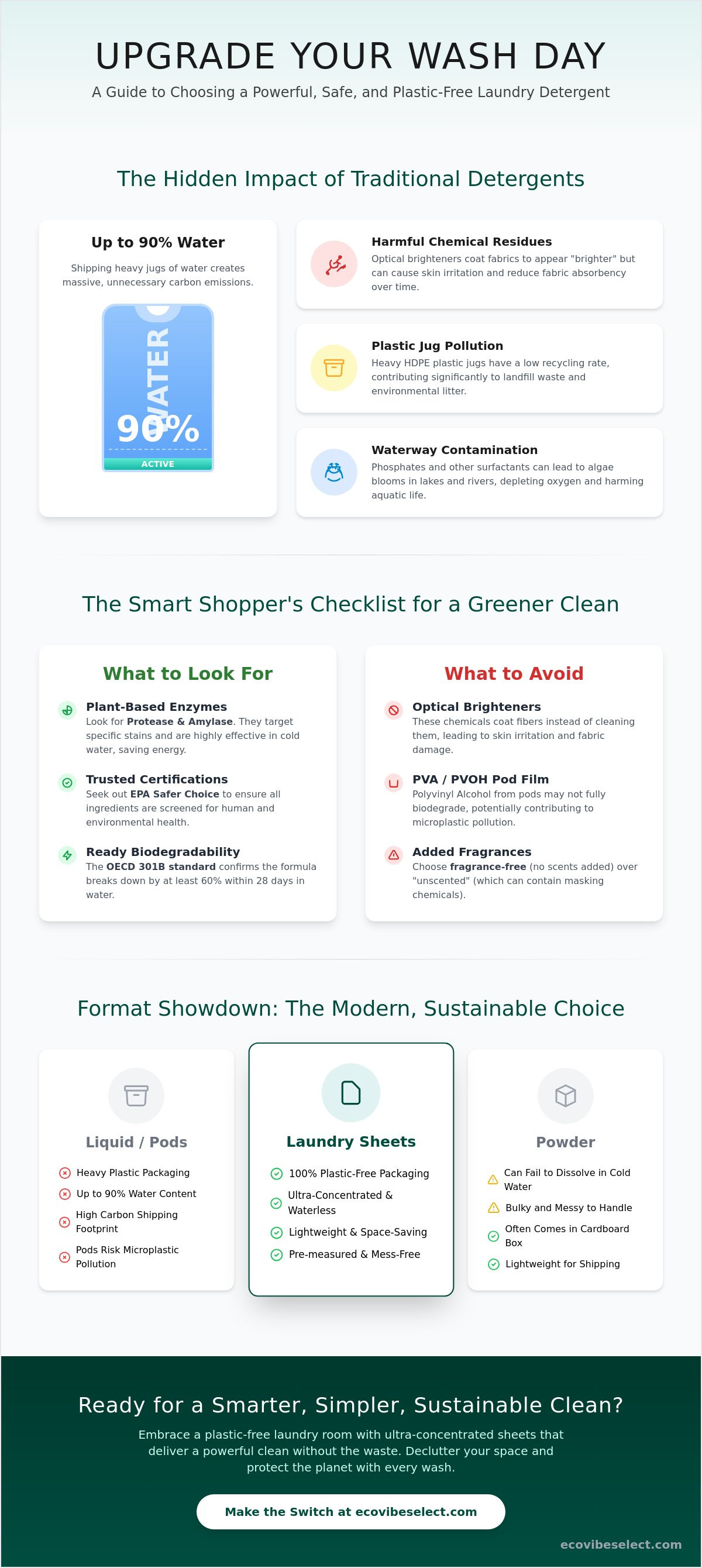
Most of us don't think twice about the heavy plastic jug sitting on the washing machine. It's a household staple. However, the contents of that jug carry a heavy environmental cost that starts long before you start a load. Traditional liquid detergents are often comprised of up to 90% water. Shipping all that extra weight across the globe creates massive, unnecessary carbon emissions. It's an inefficient way to clean that relies on moving water from one place to another.
Beyond the water, the chemistry inside the bottle matters. Many formulations still contribute to the environmental impact of phosphates, which can lead to eutrophication. This process triggers excessive algae growth in lakes and rivers, depleting oxygen and harming aquatic life. While some regions have banned them, other synthetic chemicals like surfactants and optical brighteners remain common. These substances don't just disappear; they flow into our waterways and can persist in the environment for years.
The Problem with Plastic Jugs and Water Waste
Heavy HDPE plastic containers are difficult to transport and even harder to manage after use. Although these jugs are technically recyclable, only a small fraction actually makes it through the recycling process. Most end up in landfills or as environmental litter. The "concentrated" liquid movement was a step in the right direction, but it still relies on plastic packaging and significant water content. Transitioning to a truly eco friendly laundry detergent requires moving away from these bulky, water-heavy formats entirely. Compact, waterless solutions offer a much lighter footprint and a more organized laundry room.
Chemical Residues and Skin Sensitivity
Optical brighteners are a major concern for those with sensitive skin. These chemicals don't actually clean your clothes; they coat the fibers to reflect light, making whites appear "brighter." Because they are designed to stay on the fabric, they remain in constant contact with your skin. This can lead to contact dermatitis or general irritation. Over time, these synthetic residues can also build up in your linens. This buildup reduces the absorbency of your towels and the breathability of your favorite shirts. Choosing an eco friendly laundry detergent helps protect both your skin and the longevity of your wardrobe by using ingredients that rinse away cleanly.
Decoding Eco-Friendly Labels: What Ingredients Actually Matter?
Reading a label shouldn't require a chemistry degree. Many products claim to be "natural," but this doesn't always guarantee safety for our waterways. A truly eco friendly laundry detergent prioritizes ingredients that break down quickly and completely. One reliable way to verify these claims is to look for products that meet the EPA's Safer Choice standards. This certification ensures every ingredient has been screened for human health and environmental safety.
Enzymes are another critical component of high-performance cleaning. Protease and amylase are biological catalysts that target specific stains like proteins and starches. They allow you to wash clothes effectively at lower temperatures. This saves energy and protects your clothes from heat damage. When checking for biodegradability, look for the OECD 301B standard. This indicates the formula is "readily biodegradable," meaning it breaks down by 60% or more within 28 days in an aquatic environment.
For those with allergies, the distinction between fragrance-free and unscented is vital. Fragrance-free means no scent-producing chemicals were added to the mix. Unscented products often contain masking agents to neutralize the smell of other ingredients. If you have sensitive skin, choosing a fragrance-free eco friendly laundry detergent is the most practical way to avoid irritation.
The PVA Debate: Are Pods Truly Plastic-Free?
Most laundry pods are encased in Polyvinyl Alcohol (PVA). While this material is water-soluble, recent research suggests it doesn't always fully biodegrade in standard wastewater treatment plants. Small particles can persist and enter the environment. If you want to avoid this uncertainty, consider switching to eco-friendly laundry detergent sheets. These alternatives provide the same convenience as pods without the risk of leaving microplastic residues behind. They offer a simple, space-saving solution for a more organized home.
Essential Eco-Friendly Surfactants
Surfactants are the workhorses of any detergent. They lower the surface tension of water, allowing it to lift dirt and oils from your fabrics. Safer options include alkyl polyglucosides (APGs), which are derived from renewable sources like coconut or corn. These are much gentler on the planet than petroleum-based alternatives. Biodegradable surfactants are the core of eco-detergent performance.
Laundry Sheets vs. Pods vs. Powder: A Sustainable Comparison
Choosing the right eco friendly laundry detergent often comes down to the delivery format. While liquid refills are a step up from single-use jugs, they still require transporting significant water weight. This adds to the carbon footprint of every delivery. Detergent powder remains a reliable, classic choice. It's typically packaged in cardboard, which is easy to recycle. However, some powder brands include bulky fillers like sodium sulfate that don't contribute to cleaning power. Pods offer undeniable convenience but force a fixed dose on every load, which often leads to product waste for smaller cycles.
Laundry sheets have changed the expectations for modern cleaning. They are the lightest and most compact option available. By removing the water entirely, these concentrated strips eliminate the need for plastic packaging and heavy shipping. Many high-quality sheets are now formulated following the EPA's Safer Choice program, ensuring the chemistry is as responsible as the packaging. It's a simple way to maintain an organized, efficient laundry room without the mess of measuring cups or sticky spills.
Why Detergent Sheets are Dominating in 2026
The shift toward sheets is driven by a desire for zero-waste living. Most sheets arrive in slim, compostable cardboard envelopes that take up almost no space. This format also solves the problem of precision. You can easily tear a sheet in half for a small load, ensuring you never use more than necessary. If you are curious about how these thin strips handle tough stains, you can read the truth about eco-friendly detergent strips to see the performance data. They prove that you don't need a bulky jug to get professional results.
Cost Per Load: The Real Math of Eco-Laundry
Research shows that around 44% of consumers perceive an eco friendly laundry detergent as being more expensive than traditional options. When you look at the cost per load, the math often tells a different story. Liquid detergents are easy to over-pour, which means a bottle labeled for 64 loads might only last for 40. Sheets and pods provide a controlled amount of cleaner, preventing this "invisible" waste. Dry formats also have a superior shelf life. They don't settle or lose potency over time like liquids can. Investing in concentrated formats helps you avoid the luxury tax by paying for cleaning power rather than water and plastic.
How to Optimize Your Eco-Friendly Laundry Routine
Selecting a high-quality eco friendly laundry detergent is a significant first step toward a more responsible home. However, your daily habits and machine settings play an equally important role in reducing your environmental impact. By making small, intentional adjustments to your routine, you can save energy, preserve your clothing, and ensure your cleaning products work at peak efficiency. It is about creating a system that is both effective and mindful.
Efficiency starts with the "Full Load" rule. Running a half-empty machine wastes water and detergent while putting unnecessary wear on your appliance. Always wait until you have enough for a full cycle to maximize every drop of water. You should also consider replacing liquid fabric softeners with wool dryer balls. Softeners often contain synthetic chemicals that coat fabric fibers and reduce the absorbency of your towels. Dryer balls provide a practical alternative by naturally softening clothes and improving airflow to reduce drying time.
Maintaining your machine is also vital for long-term performance. Odors often develop due to detergent buildup or trapped moisture in the door seal. Instead of reaching for harsh bleach, run a monthly maintenance cycle with white vinegar to keep the drum fresh. Always leave the washer door open between loads to allow the interior to dry completely. This simple step prevents mold and keeps your laundry smelling clean without the need for heavy synthetic fragrances.
Cold Water Washing: The Biggest Energy Saver
Heating the water accounts for approximately 90% of the energy a washing machine consumes during a cycle. Switching to a cold water setting is one of the easiest ways to lower your household's carbon footprint and utility costs. Modern formulas are now specifically designed with enzymes that remain active in lower temperatures, ensuring you don't sacrifice cleaning power. This habit also protects fabric integrity by preventing shrinkage and color fading. For more tips on building a mindful home, explore our guide to sustainable floor care.
Microplastic Filters and Laundry Bags
Synthetic fabrics like polyester, nylon, and acrylic shed thousands of tiny plastic fibers during every wash. These microplastics are too small for standard wastewater treatment plants to catch. Using a specialized laundry bag or installing an external microfiber filter on your machine can capture these fibers before they reach the ocean. Sorting your laundry by weight also helps reduce this shedding. When heavy items rub against delicate synthetics, the friction increases fiber loss. Grouping similar fabrics together is a smart way to protect your clothes and the planet.
Ready to upgrade your wash day with a simpler, more effective solution? Switch to eco-friendly laundry detergent sheets for a plastic-free routine that actually cleans.
The Ecovibe Select Standard for Clean Laundry
At Ecovibe Select, we believe that choosing an eco friendly laundry detergent should be a straightforward, rewarding experience. Our standard is built on a simple premise: products must balance high performance with a low environmental footprint. We spend time vetting every item in our collection, looking past flashy marketing to examine the actual impact of ingredients and packaging. This curation process ensures that your home remains organized and efficient while respecting the planet. It is about providing you with a reliable source of well-vetted solutions.
We prioritize ultra-concentrated sheets because they represent the most practical solution to the plastic crisis. By moving away from heavy liquid jugs, we eliminate unnecessary water transport and the waste associated with HDPE plastic. Our commitment extends to the final mile of the journey. Every order is shipped using compostable materials. This ensures that your transition to a zero-waste lifestyle is consistent from the moment you place an order to the moment you finish a load of laundry. It's a steady, dependable way to simplify your life without sacrificing quality.
Small swaps in the laundry room often lead to a more intentional home. When you remove the clutter of bulky plastic and the confusion of complex ingredient lists, you create space for a more organized routine. This mindful intentionality is at the heart of what we do. We act as a practical guide for those who want to reduce their impact through small, manageable choices. Every sheet used is one less plastic bottle in a landfill, making sustainability an achievable part of your daily life.
High-Performance, Plastic-Free Sheets
Our laundry sheets offer a versatile solution for both busy home routines and light travel. They are incredibly portable. You can slip a few strips into a suitcase or a gym bag without worrying about leaks or TSA liquid limits. We offer hypoallergenic and fragrance-free options specifically for those with sensitive skin. This "less is more" approach means you only use what you need. Tearing a sheet in half for a smaller load is a small, intentional choice that reduces waste and saves money over time. It's a smart design for essential utility.
Join the Sustainable Living Movement
Laundry is just one part of a mindful home. Once you have simplified your wash day, it becomes easier to look for other manageable swaps. You might consider exploring reusable snack bags for your daily commute or travel needs. Each of these small changes contributes to a more organized, intentional lifestyle. Start your journey toward a cleaner, plastic-free home today by visiting our shop. Shop Ecovibe Select Laundry Essentials to find effective solutions that protect your clothes and the environment.
Building a Simpler, More Intentional Laundry Room
Transitioning to a sustainable lifestyle doesn't have to be a complex overhaul. By choosing a high-performance eco friendly laundry detergent, you've already made a significant impact on your home's environmental footprint. Effective cleaning relies on smart chemistry rather than bulky packaging or synthetic fillers. You can now protect your skin and the planet with formulas that are both gentle and powerful. This shift simplifies your chores while ensuring your clothes remain fresh and well-maintained.
At Ecovibe Select, we've helped divert over 10,000 plastic jugs from landfills through our curated essentials. Our laundry sheets feature hypoallergenic, dermatologist-tested formulas designed for those who prioritize health and simplicity. With 100% compostable packaging and carbon-neutral shipping, every step of your routine becomes part of a larger, positive change. This is about making a manageable choice that aligns with your values and your daily life.
Upgrade your laundry routine with our plastic-free detergent sheets and experience a cleaner, more organized home. It's a small shift that creates a more responsible future for your household.
Frequently Asked Questions
Is eco-friendly laundry detergent as effective as traditional brands?
Modern eco-detergents match the cleaning power of traditional brands by using advanced biological enzymes. These ingredients, such as protease and amylase, are specifically designed to target and break down tough protein and starch stains. High-quality plant-based surfactants lift dirt and oils effectively, ensuring your clothes come out clean even when you use energy-saving cold water cycles.
Can I use laundry detergent sheets in a High-Efficiency (HE) washing machine?
You can use laundry detergent sheets in any HE washing machine without issue. These sheets are formulated to be low-sudsing and dissolve completely in both front-loading and top-loading models. Simply place the sheet directly into the drum with your laundry. This delivery method prevents the gunky buildup often caused by liquid detergents in the dispenser drawer.
What makes a laundry detergent "plastic-free"?
A truly plastic-free detergent avoids plastic at every stage, from the external packaging to the formula itself. This means replacing bulky HDPE jugs with compostable cardboard and avoiding water-soluble plastic films like PVA. Choosing a eco friendly laundry detergent in sheet or powder form ensures that no microplastics or synthetic residues are released into the wastewater system during your wash.
Are eco-friendly detergents safe for babies and sensitive skin?
Most eco-detergents are an excellent choice for babies and individuals with sensitive skin. These formulas typically exclude the synthetic fragrances, dyes, and optical brighteners that are common triggers for contact dermatitis. By using gentle, plant-derived ingredients, these products clean thoroughly without leaving behind the irritating chemical residues that often linger in fabric fibers after a traditional wash.
Do eco-detergents work for removing heavy stains like grease or grass?
Eco-detergents are highly capable of removing heavy organic stains like grass, mud, or grease. For the best results on stubborn spots, you can pre-treat the area by rubbing it with a small piece of a detergent sheet and a little water. This concentrated application allows the plant-based surfactants to penetrate the fibers and lift the stain before the full cycle begins.
How do I know if a detergent is truly biodegradable?
To verify if a product is truly biodegradable, look for specific certifications like the OECD 301B standard or the EPA Safer Choice label. These indicate that the formula has been tested to break down significantly within 28 days in an aquatic environment. Transparent brands will also provide a full list of ingredients, allowing you to confirm the absence of persistent synthetic chemicals.
What is the most sustainable way to dry clothes after using eco-detergent?
Air drying on a rack or clothesline is the most sustainable option because it consumes zero energy and extends the life of your garments. If you prefer using a dryer, wool dryer balls are a practical alternative to single-use dryer sheets. They bounce between layers of fabric to improve airflow, which can reduce your total drying time and soften clothes without using synthetic chemicals.
Why should I avoid optical brighteners in my laundry soap?
Optical brighteners are synthetic chemicals that don't actually clean your clothes; they simply coat the fibers to reflect light and make colors appear brighter. Because they are designed to remain on the fabric, they stay in constant contact with your skin. Avoiding these chemicals in your eco friendly laundry detergent reduces your toxic load and prevents persistent pollutants from entering local waterways.