
How to Dispose of Bamboo Toothbrush: The Complete 2026 Zero-Waste Guide
Tossing your bamboo toothbrush directly into the compost pile might actually do more harm than good. While the handle is organic, the hidden nylon bristles and metal staples can linger in the soil for decades. You've likely made the switch to reduce plastic, but the confusion between "biodegradable" and "compostable" labels makes it hard to know if you're truly making an impact. It's a common frustration, especially when you want a simple, sustainable routine that doesn't require a degree in waste management.
This guide explains exactly how to dispose of bamboo toothbrush components to ensure your dental care leaves zero trace. We'll break down a quick, five-minute routine to dismantle your brush, verify which parts are earth-safe, and explore creative ways to reuse the handle before it ever hits the bin. From navigating the current 2026 labeling standards to mastering the bristle removal process, you'll gain the confidence to manage your waste effectively. By the end, you will have a clear, methodical path to turn your daily tool back into a natural resource.
Key Takeaways
- Learn why separating the nylon bristles from the Moso bamboo handle is the most critical step for a truly zero-waste disposal.
- Master a simple three-step method on how to dispose of bamboo toothbrush handles using common household tools like pliers.
- Discover how to sanitize and repurpose your old handles into practical garden markers or cleaning tools before they reach the compost.
- Understand the timelines for home versus industrial composting and how to prep your handle to speed up natural decomposition.
- Identify the specific features that make bamboo a durable and sustainable material for your daily hygiene routine in 2026.
Anatomy of a Sustainable Brush: What’s Actually Biodegradable?
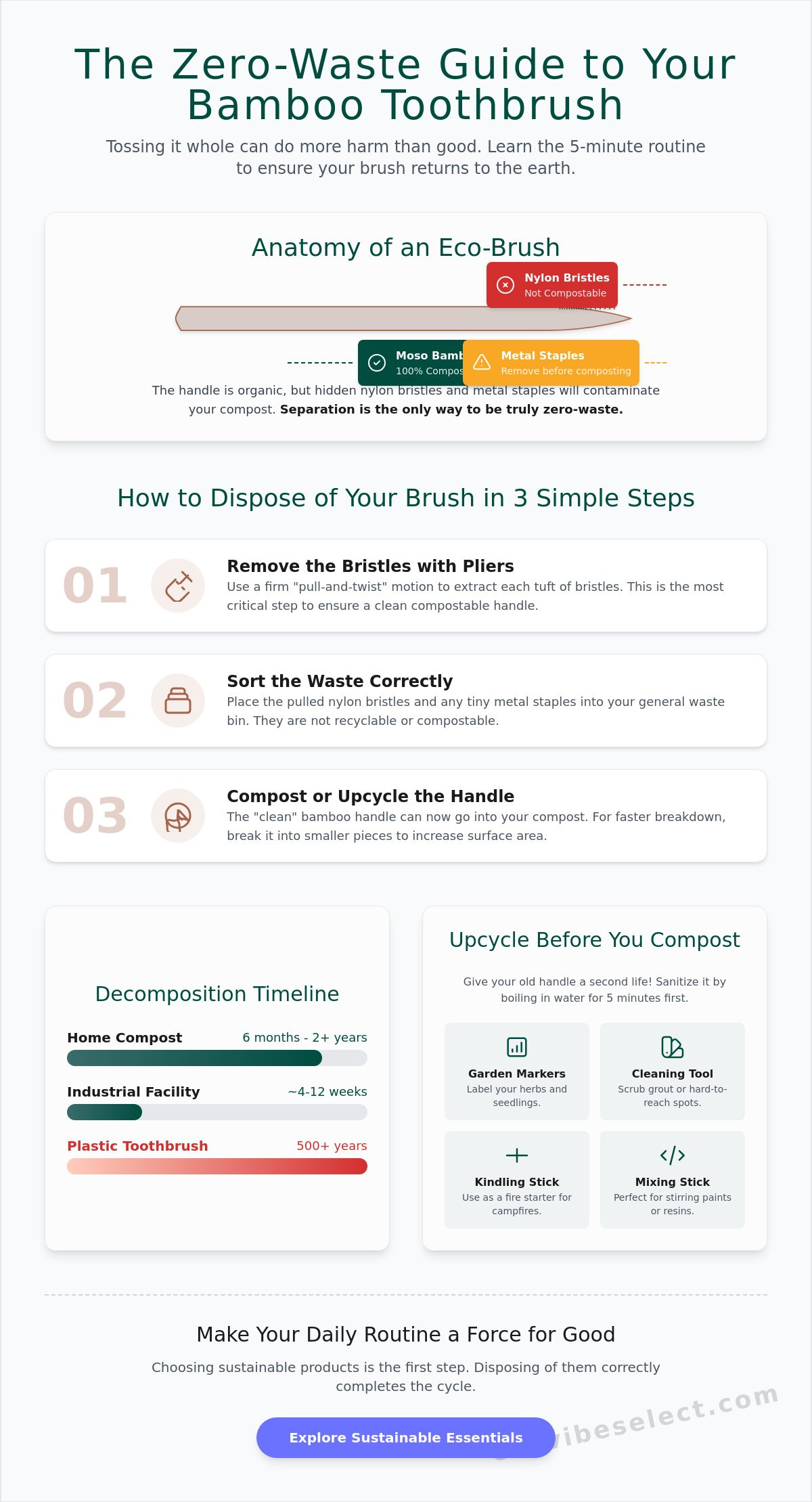
Understanding the physical makeup of your brush is the essential first step in learning how to dispose of bamboo toothbrush components responsibly. Most eco-conscious consumers realize that a bamboo handle is better than a plastic one, but the disposal process isn't as simple as tossing the whole item into a bin. True zero-waste success requires you to separate the organic bamboo from the inorganic bristles and metal staples. This ritual of dismantling your brush ensures that no synthetic materials end up polluting the soil or disrupting the composting process.
Moso bamboo has become the industry standard for handles because it's incredibly fast-growing and isn't a food source for giant pandas. This specific variety can grow up to a meter a day, making it a highly renewable resource that doesn't contribute to deforestation. While the wood itself is a natural resource, the head of the brush contains hidden complexities. Small metal staples, usually made of aluminum or brass, are used to anchor the bristles into the pre-drilled holes in the wood. These tiny components are the "invisible" hurdle in plastic-free living that many people overlook during their first few attempts at disposal.
Bamboo Handle vs. Plastic Bristles
Even though the handle is natural, 99% of bamboo toothbrushes on the market today use nylon bristles to meet dental safety standards. While the History of the toothbrush shows we once used coarse animal hair, modern hygiene relies on synthetic fibers for their durability and bacteria resistance. When we talk about these handles being "biodegradable," we are generally looking at a timeline of 6 months to 2 years depending on the environment. Finding affordable eco friendly products often involves balancing this long-term durability with ease of disposal at the end of the product's life. You want a tool that survives three months of brushing but doesn't last a century in a landfill.
The Bio-Plastic Myth: Is Your Brush 100% Compostable?
Many brands now offer "bio-based" bristles made from castor oil or Nylon-4. It's a step in the right direction, but these materials often still require specific industrial conditions to break down properly. You should never throw a whole brush into a home compost pile because the bristles and metal staples will remain long after the wood has turned to soil. Even Nylon-4, which is technically more degradable than Nylon-6, hasn't been proven to break down quickly in a standard backyard bin. Separation is the only way to ensure your zero-waste efforts actually succeed without leaving microplastics behind. Learning how to dispose of bamboo toothbrush parts separately ensures that each material reaches its proper destination, keeping your compost clean and your conscience clear.
How to Dispose of a Bamboo Toothbrush in 3 Simple Steps
Transitioning to a zero-waste lifestyle is a series of small, intentional acts. Knowing how to dispose of bamboo toothbrush handles and bristles correctly ensures your effort doesn't end in a landfill. You only need a few basic tools: a pair of pliers, a small container for the synthetic waste, and your compost bin. If your brush has been sitting in a drawer and is very dry, consider wearing eye protection. Bamboo is a natural fiber that can occasionally splinter when under pressure from pliers. This five-minute routine is a practical way to close the loop on your daily hygiene.
- Step 1: Remove the bristles. Use a rolling "pull-and-twist" motion with your pliers to extract the tufts.
- Step 2: Extract the staples. These tiny metal anchors are often left behind in the wood and must be removed.
- Step 3: Prepare the handle. Break or saw the wood into smaller pieces to increase surface area for the compost.
Technique: The Cleanest Way to Remove Bristles
The pliers method is the most thorough way to handle disposal. While some people prefer to snap off the entire head and throw it in the trash, this leaves the metal staples embedded in the bamboo. By using pliers, you ensure the wood is completely "clean" before it enters the soil. You'll know you've succeeded when the metal staple comes out attached to the bristle tuft. If the staple stays in the handle, use the tip of the pliers to fish it out. It's a methodical process that feels satisfyingly complete. If you're ready to refresh your routine, choosing a high-quality Biodegradable Bamboo Toothbrush makes this end-of-life process much easier to manage.
What to Do with the Removed Bristles
Bristles are the trickiest part of the equation. Because they are so small, they often fall through the sorting machinery at municipal facilities. The U.S. Department of Energy highlights the complexity of recycling plastic waste, especially when dealing with mixed materials or micro-sized items. Instead of the curbside bin, look for specialized dental waste programs like Terracycle. Alternatively, you can collect them in a small plastic bottle to create a "bottle brick." This prevents these tiny fibers from entering the environment as microplastics. It's a simple way to contain non-recyclable smalls until you have enough to send to a specialized facility.
Repurposing Before Retiring: Creative Upcycling Ideas for 2026
Before you commit to the final breakdown process, consider that upcycling sits higher on the waste hierarchy than composting. Keeping a material in its functional state for as long as possible reduces the demand for new resources. Once you’ve mastered how to dispose of bamboo toothbrush bristles, the sturdy handle remains a versatile piece of Moso bamboo. It is a high-quality material that deserves a second life in your home or garden before it eventually returns to the earth.
A quick sanitization is necessary before the transition. Submerge the handle in boiling water for three to five minutes to eliminate any lingering bacteria. This simple step makes the wood safe for use in your kitchen or around your plants. For those who prefer to keep the bristles attached for heavy-duty scrubbing, ensure you mark the brush clearly. A small notch carved into the end or a dot of eco-friendly paint prevents any accidental mix-ups in the bathroom cabinet.
Practical Home Hacks for Old Handles
The slim, ergonomic shape of a bamboo handle makes it an excellent precision tool. It excels at cleaning grout lines, window tracks, and tight corners where larger tools cannot reach. This focused scrubbing method pairs perfectly with a reusable spray mop routine, allowing you to tackle detailed spots while the mop handles the open floor. Other practical uses include:
- Garden Markers: Write the names of herbs or vegetables on the flat side of the handle with a permanent marker.
- Succulent Supports: Use the handle as a sturdy stake for small indoor plants that need a bit of extra stability.
- Kitchen Utility: The wood is food-safe, making it a great stirring stick for small jars or a scraper for stuck-on food in cast iron pans.
- Electronics Maintenance: Use the handle (without bristles) to gently scrape dust from between keyboard keys or along the edges of household devices.
Marking and Sorting Your Upcycled Tools
If you plan to use your handles as garden markers or in damp environments, a light coating of natural oil or beeswax will help preserve the wood. This prevents premature rot and keeps your labels legible throughout the growing season. Bamboo is a remarkably durable material; it can last for several years when kept dry and properly maintained. By finding these small, functional roles for your old tools, you're practicing a mindful lifestyle that values utility over disposability. When the wood finally begins to soften or splinter, you'll know it's truly time to move on to the final stage of how to dispose of bamboo toothbrush handles: the compost pile.
Composting the Handle: Home Pile vs. Industrial Facility
Once you have removed the bristles and metal staples, the bamboo handle is ready to return to the earth. The timeline for this process depends entirely on the environment you provide. In a managed industrial composting facility, a handle typically breaks down within 90 days due to the high, consistent heat. If you are using a backyard home compost pile, expect the process to take between 4-6 months. While this is a longer commitment, watching a daily tool transform into nutrient-rich soil is a rewarding part of a zero-waste lifestyle.
You can significantly speed up this natural decomposition by increasing the surface area of the wood. Instead of tossing the handle in whole, take a moment to break, splinter, or saw it into smaller pieces. Smaller fragments allow fungi and bacteria to penetrate the fibers more effectively. If you don't have a compost pile, you might consider burying the pieces in your garden, though this can take up to 3 years to fully disappear. Even if a bamboo handle eventually ends up in a landfill, it remains a better choice than plastic because it is an organic material that won't contribute to the permanent microplastic crisis.
Optimizing Your Home Compost for Bamboo
Bamboo is a "brown" or carbon-rich material, so it needs a balance of "greens" like food scraps and moisture to break down efficiently. Burying the handle deep in the center of your pile where the heat is most intense will accelerate the fungal breakdown. Be cautious if your brush has a painted base; unless the manufacturer confirms the use of eco-friendly, water-based pigments, it's best to saw off the painted portion before composting. For a reliable, earth-safe start to your dental routine, you can find a high-quality Biodegradable Bamboo Toothbrush that simplifies this entire lifecycle.
Solutions for Apartment Dwellers
Living in a small space without a backyard doesn't mean you can't participate in the composting cycle. Many urban dwellers now use apps like ShareWaste to connect with neighbors who have active compost bins or chickens. Community gardens are another excellent resource; they often welcome "brown" materials to balance their nitrogen-heavy piles. When researching how to dispose of bamboo toothbrush handles in the city, check your local municipal guidelines. Some regions accept untreated wood in green bins, while others only permit "certified compostable" plastics. If your city lacks these options, advocating for better local composting infrastructure is a powerful way to support your community's sustainable future.
- Home Compost: 4-6 months (break into pieces to speed up).
- Industrial Facility: Approximately 90 days.
- Garden Burial: Up to 3 years.
- Urban Options: Use ShareWaste apps or community garden drop-offs.
The Future of Your Bathroom: Choosing Your Next Sustainable Essential
Choosing a new toothbrush is an opportunity to refine your daily impact. In 2026, bamboo remains the premier choice for dental hygiene because it balances clinical safety with environmental responsibility. When you consider the American Dental Association's recommendation to replace your brush every three months, switching to bamboo removes four plastic handles from the waste stream annually. Over a decade, this single choice prevents forty non-biodegradable items from entering our oceans or landfills. Understanding how to dispose of bamboo toothbrush components completes this cycle, turning a routine purchase into a purposeful act of stewardship.
As you grow more comfortable with these rituals, you'll likely find yourself looking for other ways to streamline your home. Expanding your zero-waste toolkit often starts in the kitchen or the travel bag. For instance, transitioning away from single-use plastics can include investing in stainless steel straw sets or reusable food storage bags. These small, manageable choices create a cumulative shift toward a more organized and intentional lifestyle. It's about finding smart designs that serve your needs without leaving a permanent footprint.
Quality Indicators for Your Next Purchase
Not all bamboo brushes are created equal. To ensure your next choice is truly sustainable, look for FSC-certified bamboo. This certification guarantees the wood was harvested from forests that provide environmental, social, and economic benefits. Packaging is another critical factor. Opt for brands that use plain cardboard rather than bioplastic sleeves that require industrial processing to break down. Buying in bulk is also a smart strategy in 2026. It reduces the carbon footprint associated with individual shipping and ensures you always have a fresh brush ready when your current one reaches its limit.
Building a Mindful Daily Routine
A sustainable bathroom is built on consistency rather than perfection. Sharing the process of how to dispose of bamboo toothbrush handles with your family or housemates is a great way to build collective eco-literacy. It transforms a chore into a shared value. When children see the bristles being removed and the handle being placed in the compost, they learn that every product has a beginning and an end. This mindfulness naturally spills over into other areas of life, leading to a home that feels more prepared and conscious. If you're ready to continue your journey toward a less-is-more philosophy, Explore our curated selection of sustainable essentials at Ecovibe Select to find your next well-vetted solution.
Moving Toward a Trace-Free Lifestyle
Mastering the simple ritual of dismantling your brush ensures your commitment to the planet is complete. By using the pliers method to remove synthetic bristles and metal staples, you keep your compost clean and your impact minimal. Whether you choose to upcycle your handle as a garden marker or break it down for the soil, you're participating in a thoughtful lifecycle that values resources over waste. Learning how to dispose of bamboo toothbrush components correctly is a practical skill that supports a more intentional, organized daily routine.
Our brushes are crafted from FSC-Certified Moso Bamboo and arrive in 100% plastic-free packaging. Every product we offer is vetted by sustainability experts to ensure it meets the highest standards for durability and end-of-life ease. Shop our Biodegradable Bamboo Toothbrushes and start your zero-waste journey today.
Every small, manageable choice you make in the bathroom contributes to a larger shift toward responsible living. You've already taken the most important step by seeking a better way. Keep moving forward with quiet confidence, knowing that your daily habits are building a cleaner, more sustainable future for everyone.
Frequently Asked Questions
Can I compost a bamboo toothbrush with the bristles still in?
No, you shouldn't compost a brush with the bristles attached. Most bristles are made from nylon, which is a synthetic plastic that will persist in your soil for centuries. Tossing the whole brush into your bin leads to microplastic contamination. Always remove the bristles and metal staples first to ensure the handle can break down safely and naturally.
How long does it take for a bamboo toothbrush handle to decompose?
A bamboo handle typically takes 4 to 6 months to decompose in a healthy home compost pile. If you use a professional industrial facility, the process is much faster, often taking around 90 days. For those who bury the handle directly in garden soil, the breakdown can take approximately 3 years depending on local moisture and temperature levels.
Are the metal staples in bamboo toothbrushes dangerous for the compost?
Metal staples aren't toxic, but they won't break down in your compost pile. These tiny anchors are usually made of aluminum or brass to prevent rust while in use. While they don't pose a chemical threat to your plants, they remain in the finished soil as sharp, inorganic debris. Removing them ensures your garden remains safe and entirely organic.
What should I do with the bristles if I can't recycle them locally?
You should collect the bristles in a small container and look for specialized recycling programs like Terracycle. Since most curbside programs can't process such small plastic items, many zero-waste advocates use the "bottle brick" method. This involves stuffing non-recyclable smalls into a plastic bottle until it is solid, preventing the fibers from entering the environment as loose microplastics.
How do I know if my bamboo toothbrush handle is treated or untreated?
You can identify a treated handle by its finish and any colored pigments at the base. Most sustainable brushes use a simple carnauba wax or a natural oil to provide water resistance. If the handle has a glossy, thick coating or bright paint, it might contain non-biodegradable materials. Checking the packaging for "raw" or "untreated" labels is the best way to be certain.
Can I put my old bamboo toothbrush in the wood recycling bin?
Most municipal wood recycling bins don't accept toothbrushes because their small size causes issues with sorting machinery. These bins are typically designed for large lumber or yard waste like branches. For the most effective way on how to dispose of bamboo toothbrush handles, stick to your home compost bin or a local community garden pile.
Is it better to burn the bamboo handle or compost it?
Composting is the superior choice because it returns organic matter and nutrients to the earth. While burning the handle in a fireplace or campfire is a functional way to get rid of the wood, it releases the stored carbon back into the atmosphere immediately. Composting locks that carbon into the soil, supporting new plant growth and a healthier ecosystem.
How often should I actually replace my bamboo toothbrush?
You should replace your toothbrush every 3 months to maintain optimal dental hygiene. This is the standard recommendation from the American Dental Association, as bristles eventually fray and become less effective at removing plaque. It's also a good idea to swap for a new brush after you've recovered from a cold or flu to prevent reinfection.