
Laundry Sheets vs Liquid: The Ultimate 2026 Comparison for Sustainable Homes
What if your laundry routine could be half as heavy and twice as smart without sacrificing that deep-clean feeling? Most of us are tired of hauling heavy, messy plastic jugs and feeling a pang of guilt every time another one hits the recycling bin. It's frustrating to struggle with wasted space while feeling confused by detergent chemistry. When comparing laundry sheets vs liquid, the real choice isn't just about the format. It's about moving from guesswork to a more intentional, precise way of caring for your clothes.
You deserve a laundry room that feels organized and a routine that respects the planet. We're sharing the honest truth about cleaning power, cost, and environmental impact to help you decide if it's finally time to ditch the plastic jug. We'll look at the latest 2026 market shifts, including the new EU regulations on biodegradability and digital transparency. From performance on tough stains to the practical benefits of a clutter-free shelf, this guide provides the clarity you need for a cleaner home and a lighter footprint.
Key Takeaways
- Understand the structural difference between water-heavy liquids and concentrated, resin-bound sheets for a more efficient laundry room.
- Evaluate real-world performance in cold water cycles and see how modern sheets stack up against traditional surfactants on difficult stains.
- Examine the environmental impact of laundry sheets vs liquid by looking at plastic waste reduction and the significant drop in transport emissions.
- Learn how to avoid the "Hidden Cost of the Pour" and use pre-measured doses to stop wasting up to 30% of your detergent per load.
- Get a practical guide on choosing the right format for your home, whether you need a heavy-duty cleaner or a travel-friendly, zero-waste solution.
Understanding the Shift: What Exactly Are Laundry Sheets vs. Liquid Detergent?
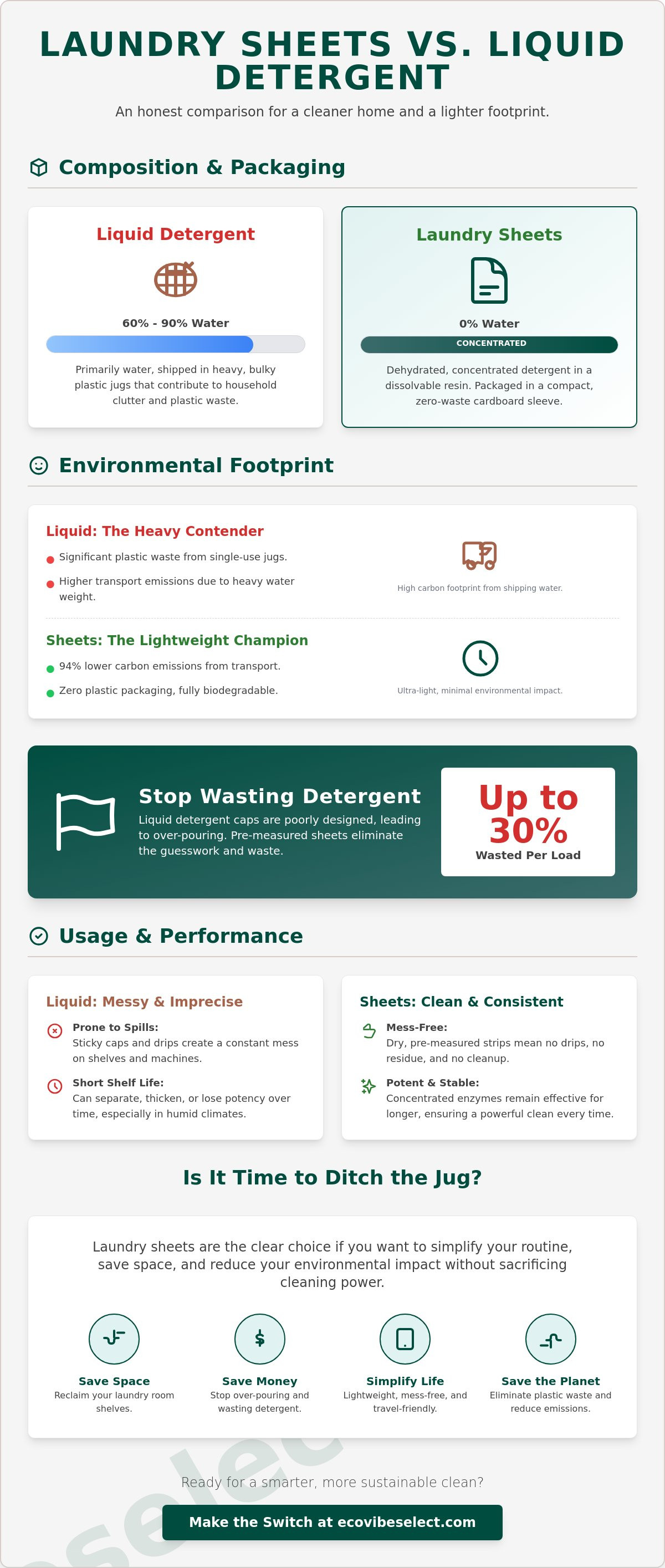
Traditional liquid detergent is essentially a heavy jug of water with a small amount of active cleaning agents mixed in. Most mainstream liquid formulas consist of 60% to 90% water. This composition means you're paying to ship, carry, and store a resource that already comes out of your tap. Laundry sheets represent a complete departure from this old model. They are concentrated, dehydrated detergent components held together by a dissolvable resin. By removing the liquid, the primary goal of sheets is to eliminate unnecessary water weight and the bulky plastic packaging that usually houses it.
Beyond the chemistry, the tactile experience changes your daily routine. We've all dealt with sticky liquid caps and the blue residue that inevitably drips down the side of the bottle, staining the laundry room shelf. Sheets offer a mess-free alternative that fits into a much smaller footprint. They are dry, lightweight, and pre-measured. You can handle them with your bare hands, toss them into the drum, and move on without any cleanup required. When comparing laundry sheets vs liquid, the physical space saved in a small laundry room is often the first thing people notice.
The Anatomy of a Laundry Sheet
A typical sheet is a precise blend of surfactants and enzymes designed to break down oils and proteins. These active ingredients are embedded into a water-soluble polymer film, often made from polyvinyl alcohol. This strip format ensures you get the exact amount of laundry detergent needed for every load. There's no more guesswork or over-pouring with a heavy plastic cup. Additionally, dry sheets have a significant shelf-life advantage. Liquid formulas can separate, thicken, or lose potency over time, especially in humid environments. Dehydrated sheets remain stable and effective for much longer when stored in their simple cardboard packaging.
Why Liquid Detergent Became the Industry Standard
Liquid detergent rose to dominance in the 1980s because it dissolved more easily than the grainy, clumpy powders of that era. As front-loading machines became popular, liquids were easier for manufacturers to market as "high-efficiency" solutions. Over time, a psychological link formed between the size of a heavy plastic jug and its perceived cleaning power. Consumers began to associate weight and volume with value. However, the industry is finally moving away from the inefficiency of shipping water across the globe. When you weigh the benefits of laundry sheets vs liquid, the shift toward a lighter, waterless format is a logical step for anyone seeking a more intentional, organized home.
Cleaning Performance: Can Sheets Compete with Liquid on Tough Stains?
The most common concern for anyone making the switch is whether a thin strip can actually match the power of a concentrated liquid. When we look at laundry sheets vs liquid, the difference lies in the delivery of active surfactants. Liquids rely on volume to carry these cleaning agents into the fabric. Sheets, however, are highly concentrated. They hold the same active components in a dry, resin-bound state. In modern 2026 high-efficiency machines, the mechanical action of the drum is designed to work with less water, making the rapid dissolution of a sheet highly effective for everyday loads of laundry.
Enzymatic activity plays a major role in how well these products handle different types of messes. Most premium sheets are formulated with specific enzymes like protease to tackle organic stains like grass or blood. While some older sheet formulas struggled with synthetic, oil-based grime, newer versions have closed that gap. The key is ensuring the sheet has enough time to fully dissolve and circulate. If you're dealing with a particularly large load, choosing quality laundry detergent sheets ensures you have the right concentration of surfactants to pull dirt away from the fibers without leaving a sticky residue behind.
The Heavy-Duty Stain Test: Mud, Wine, and Grease
Liquid detergent has long been the favorite for pre-treating stubborn spots because you can pour it directly onto the fabric. However, many users wonder, do laundry sheets work for targeted stain removal? The answer is the "tear and spot-treat" method. You simply tear off a small piece of the sheet, dampen the stained area with water, and rub the fragment directly into the spot. This creates a concentrated paste that rivals the performance of liquid pre-treaters on mud, wine, and food spills. For industrial-level grease, liquids still hold a slight edge due to their higher solvent content, but for the vast majority of household laundry, sheets provide a spotless finish.
Hard Water and Solubility Issues
Minerals in hard water can sometimes inhibit the sudsing of detergents. In a head-to-head of laundry sheets vs liquid, liquids often suds up faster in mineral-heavy water. To ensure sheets perform at their peak, follow the "Bottom of the Drum" rule. Always place the sheet at the bottom of the washing machine before adding your clothes. This ensures the sheet is the first thing hit by the incoming water, allowing the binding agent to break down immediately. This binding agent is typically made of polyvinyl alcohol, a material that the American Cleaning Institute confirms biodegrades in wastewater treatment plants under the right conditions. By maximizing water contact, you'll avoid any undissolved fragments, even in the coldest 2026 eco-cycles.
The Environmental Deep Dive: Carbon Footprints and Plastic Waste
Choosing between laundry sheets vs liquid is often driven by a desire to reduce personal waste. The most immediate difference is weight. A slim box of laundry sheets is roughly 90% lighter than a standard 100-load liquid jug. Because sheets don't contain water, manufacturers aren't shipping heavy liquid across the country. This efficiency means one delivery truck can transport significantly more loads of detergent when it's in sheet format. It reduces the overall carbon footprint of every cycle before the detergent even reaches your home.
We also need to look at what happens when the container is empty. Most liquid jugs are made from high-density polyethylene (HDPE). While recyclable, many end up as "downcycled" plastic or in landfills. Cardboard sheet boxes are easily processed by standard recycling systems or even composted in a backyard bin. Beyond the box, "Waterless Manufacturing" is becoming a critical sustainability metric. Since sheets are dehydrated, they don't require the massive water inputs that traditional liquid production demands. This saves a vital resource during the manufacturing stage, long before you ever start your machine.
The PVA Debate: Are Sheets Truly Plastic-Free?
Most laundry sheets use Polyvinyl Alcohol (PVA) as a binding agent to keep the detergent in its convenient strip shape. PVA is a water-soluble polymer that dissolves completely during the wash. There is ongoing discussion regarding whether PVA fully biodegrades in wastewater treatment plants or if it requires specific microbial conditions to break down entirely. For those living near sensitive ecosystems, it's helpful to look for PVA-free laundry sheets to ensure the highest level of environmental safety. This nuance is often missed in general comparisons of laundry sheets vs liquid, but it's vital for a truly sustainable home.
Microplastics and Liquid Detergent Additives
While sheets face scrutiny for PVA, liquid detergents have their own hidden environmental costs. Many traditional liquids contain microplastics in the form of "scent pearls" or synthetic thickeners designed to give the product a premium feel. These tiny particles often bypass filtration systems and enter our waterways directly. According to Consumer Reports' laundry detergent sheet review, the shift toward plant-based ingredients in the sheet market generally leads to a lower chemical runoff impact. Choosing a concentrated, waterless option helps prevent the long-term accumulation of plastic jugs that might never actually reach a recycling center.
Cost and Convenience: Is the Eco-Switch Economical?
When looking at the store shelf, liquid detergent often seems like the budget-friendly choice. However, the sticker price rarely tells the whole story of laundry sheets vs liquid. Most consumers fall into the "Price per Load" trap, where marketing claims assume perfect dosing. In reality, the "Hidden Cost of the Pour" is a major factor. Studies show that users typically pour 30% more liquid than a machine actually requires. This over-pouring quickly erodes any perceived savings from the larger jug. Pre-measured sheets eliminate this waste entirely, ensuring you get exactly the number of loads you paid for.
Space is another form of currency in a modern home. Reclaiming the square footage occupied by bulky, 10-pound plastic jugs can transform a cramped laundry room into an organized utility space. For those living in small apartments or using communal laundromats, the portability factor is unmatched. Carrying a slim envelope of sheets is a physical relief compared to lugging a heavy bottle through a building or across a parking lot. It turns a chore into a manageable, light task.
Dosing Precision: No More Guessing
Precise dosing does more than save money; it protects your wardrobe. Liquid over-dosing often leads to "detergent buildup," a stiff, waxy residue that traps odors and bacteria in fabric fibers. Sheets solve this by providing a consistent, dry dose every time. If you're running a small load, you can simply tear a sheet in half. This level of control is impossible with pods and messy with liquids. Using the correct amount of detergent also extends the life of your washing machine by preventing the "scrub" or "scrud" buildup that can damage internal components. Ready to simplify your routine? You can shop for eco-friendly laundry sheets here to start saving space and protecting your clothes.
Travel and Lifestyle Flexibility
The compact nature of these strips makes them the reusable snack bags for travel equivalent for your clothes. They are leak-proof, lightweight, and TSA-compliant, fitting easily into a carry-on for quick hotel sink washes. This flexibility extends to everyone in the household. Sheets are much easier for children learning to do their own chores or for elderly family members who find heavy jugs difficult to lift. Moving to a subscription model further increases convenience, delivering a slim box to your door and removing one more heavy item from your grocery list. It's a small, manageable choice that makes a big difference in daily life.
Making the Choice: Which Detergent Fits Your Lifestyle?
Deciding between laundry sheets vs liquid comes down to your daily habits and the specific needs of your household. Small apartments, frequent travelers, and busy families often benefit most from the streamlined, mess-free nature of strips. If your typical load consists of office wear, school clothes, and standard gym gear, the precision and portability of a sheet are hard to beat. However, a hybrid approach can be a helpful way to transition without feeling overwhelmed. You don't have to change everything overnight to make a meaningful impact on your home's footprint.
Choosing the right format means looking at your laundry room as a system. If you value a clutter-free environment and want to eliminate the heavy lifting of traditional shopping, sheets offer a grounded, practical solution. They represent a shift toward mindful intentionality in the home. When you compare laundry sheets vs liquid, the winner is usually the one that fits seamlessly into your routine while respecting your environmental goals. By focusing on small, manageable choices, you can achieve a more organized and sustainable lifestyle without sacrificing cleaning quality.
When to Stick with Liquid (For Now)
While sheets handle the vast majority of household needs, certain specialized situations might call for a traditional liquid formula. If you work in an industry that involves heavy industrial grease or if your household handles professional-grade sports equipment with deep-set oils, you might keep a bottle of liquid on hand for those specific loads. It's also important to choose eco-friendly liquids that avoid harsh synthetic dyes if you aren't ready for a full switch. Remember to use up your existing stock before buying something new. Tossing half-full plastic jugs to "be sustainable" is counterproductive; the most eco-friendly choice is to finish what you already have.
The Case for the Permanent Switch to Sheets
For most modern homes, the benefits of reclaimed space, dosing precision, and a lower carbon footprint make the switch a logical long-term choice. You'll likely notice a positive difference in fabric texture once you stop the accidental over-dosing common with liquid detergents. We recommend a 30-day trial to see how your clothes and your laundry room shelf respond to the change. This simple test is often the first step toward a zero waste laundry routine that feels both achievable and rewarding.
Sheets represent the future of the best laundry detergent sheets category. They offer a reliable, well-vetted solution for anyone seeking to simplify their life. We invite you to try Ecovibe Select’s curated laundry detergent sheets to experience a cleaner, more intentional way to care for your home and your wardrobe.
Ready for a Lighter, Smarter Laundry Routine?
The transition to a more sustainable home doesn't require a total lifestyle overhaul. It starts with small, practical shifts like choosing a detergent that respects your space and the environment. We've seen that the debate between laundry sheets vs liquid is about more than just cleaning power. It's about precision, reducing plastic waste, and eliminating the unnecessary transport of water. By moving away from heavy jugs, you reclaim your laundry room and reduce your carbon footprint with every load.
Our sheets arrive in 100% plastic-free packaging and feature hypoallergenic formulas that are gentle on your skin. They're compact and travel-friendly; a reliable companion for life on the go. Join the thousands of eco-conscious users who have already awarded our strips 5-star reviews for their performance and ease. You deserve a routine that feels as fresh as your clothes.
Ready to experience the difference? Shop Ecovibe Select Laundry Detergent Sheets today and start your journey toward a simpler, cleaner home. You've got this.
Common Questions About the Switch
Do laundry detergent sheets work in cold water?
Yes, modern laundry sheets are specifically engineered to dissolve rapidly in cold water cycles. Unlike older powder detergents that could clump, these strips use a highly soluble binding agent that breaks down in seconds. To ensure the best results, place the sheet at the bottom of the drum before adding your clothes so it makes immediate contact with the incoming water.
Can I use laundry sheets in a High Efficiency (HE) washing machine?
Laundry sheets are fully compatible with both front-loading and top-loading HE machines. Because they are low-sudsing, they won't interfere with the sensitive sensors in high-efficiency models. This makes them a safer choice than many liquid detergents, which can produce excessive foam if even slightly over-measured.
Are laundry detergent sheets cheaper than liquid detergent?
While the initial cost per load might seem higher on the shelf, sheets often save money by eliminating waste. When comparing laundry sheets vs liquid, the "hidden cost of the pour" is a major factor. Most people use significantly more liquid than a machine requires. Sheets provide a precise, pre-measured dose that ensures you get exactly what you paid for without over-dosing.
Do laundry sheets contain microplastics or PVA?
Most laundry sheets use Polyvinyl Alcohol (PVA) as a water-soluble binder to maintain their shape. While PVA is designed to dissolve completely, those seeking the most eco-conscious choice for sensitive ecosystems can look for PVA-free options. Importantly, sheets do not contain the synthetic microplastic thickeners or "scent pearls" frequently found in traditional liquid formulas.
How many laundry sheets should I use for a large load?
One full sheet is usually sufficient for a standard large load of laundry. For extra-large loads or heavily soiled items like work clothes, you can use two sheets to increase the surfactant concentration. The benefit of this format is the ability to tear a sheet in half for small loads, providing a level of customization that pods cannot match.
Can laundry sheets cause damage to my washing machine?
No, laundry sheets are actually gentler on your machine than liquid or powder alternatives. They dissolve cleanly and leave no waxy residue or "scrub" buildup in the internal pipes. By preventing the buildup caused by liquid over-dosing, you may even extend the life of your appliance's sensors and drainage systems.
Are laundry sheets safe for sensitive skin and babies?
Many laundry sheets are formulated to be hypoallergenic and free from harsh synthetic fragrances or dyes. This makes them an excellent choice for babies and individuals with sensitive skin. Without the thickeners and stabilizers required for liquid detergents, the ingredient list is often much simpler and cleaner for the whole family.
How should I store my laundry sheets to keep them fresh?
Keep your sheets in a cool, dry place within their original cardboard packaging. Because they are designed to dissolve in water, high humidity can cause the strips to stick together over time. A shelf in a hallway closet or a dry corner of the laundry room is ideal for maintaining their shelf life and effectiveness.