
Reusable Mop vs. Traditional Mop: Which Is the Best Sustainable Choice in 2026?
The standard bucket and string mop might seem like the ultimate deep-clean tool, but it's often the very thing standing between you and a truly sustainable, damage-free home. Most of us have felt the frustration of lugging heavy equipment or the anxiety of watching steam hit a delicate wood finish. You want a home that feels light and organized, not one cluttered with waste. When comparing a reusable mop vs traditional mop, the choice affects more than just your weekend chores. It's about finding a balance that honors both your time and your environment.
This guide breaks down the honest differences between spray, string, and steam mops to help you protect your floors and the planet. You'll discover how high-quality microfiber can remove up to 99% of bacteria with just water, offering a level of hygiene that old-fashioned cotton often misses. We'll explore the real costs of maintenance, how moisture control impacts floor longevity, and why a precision-focused spray system is the smartest choice for 2026. Transitioning to a plastic-free routine doesn't have to be complicated; it's about making small, mindful choices that provide long-lasting results for your home.
Key Takeaways
- Learn how mechanical friction removes 99% of bacteria without chemicals, outperforming high-heat steam and traditional methods.
- Protect your home from "thermal shock" and moisture damage by choosing tools designed for sensitive hardwood and modern vinyl floors.
- Analyze the five-year total cost of ownership to see why the debate of a reusable mop vs traditional mop favors durable, long-lasting materials.
- Simplify your cleaning routine with reliable, cord-free tools that eliminate the need for bulky buckets and disposable waste.
The Evolution of Floor Care: Reusable Mops vs. Traditional and Steam Methods
The way we care for our homes is shifting. In 2026, the conversation around a reusable mop vs traditional mop has moved beyond simple utility toward a philosophy of Mindful Cleaning. This approach prioritizes tools that are effective, durable, and gentle on the planet. We now see three primary contenders in the floor care space: the classic string mop with its heavy bucket, the high-heat steam mop, and the streamlined, reusable spray mop. While disposable-heavy systems once dominated the market, many households are now transitioning to circular floor care routines that eliminate recurring waste. The Evolution of Mops shows how we've moved from simple bundles of cloth to sophisticated microfiber systems designed for specific surfaces. This transition reflects a broader desire for an organized lifestyle that doesn't sacrifice performance for sustainability.
The Traditional String Mop: Why the Bucket is Fading
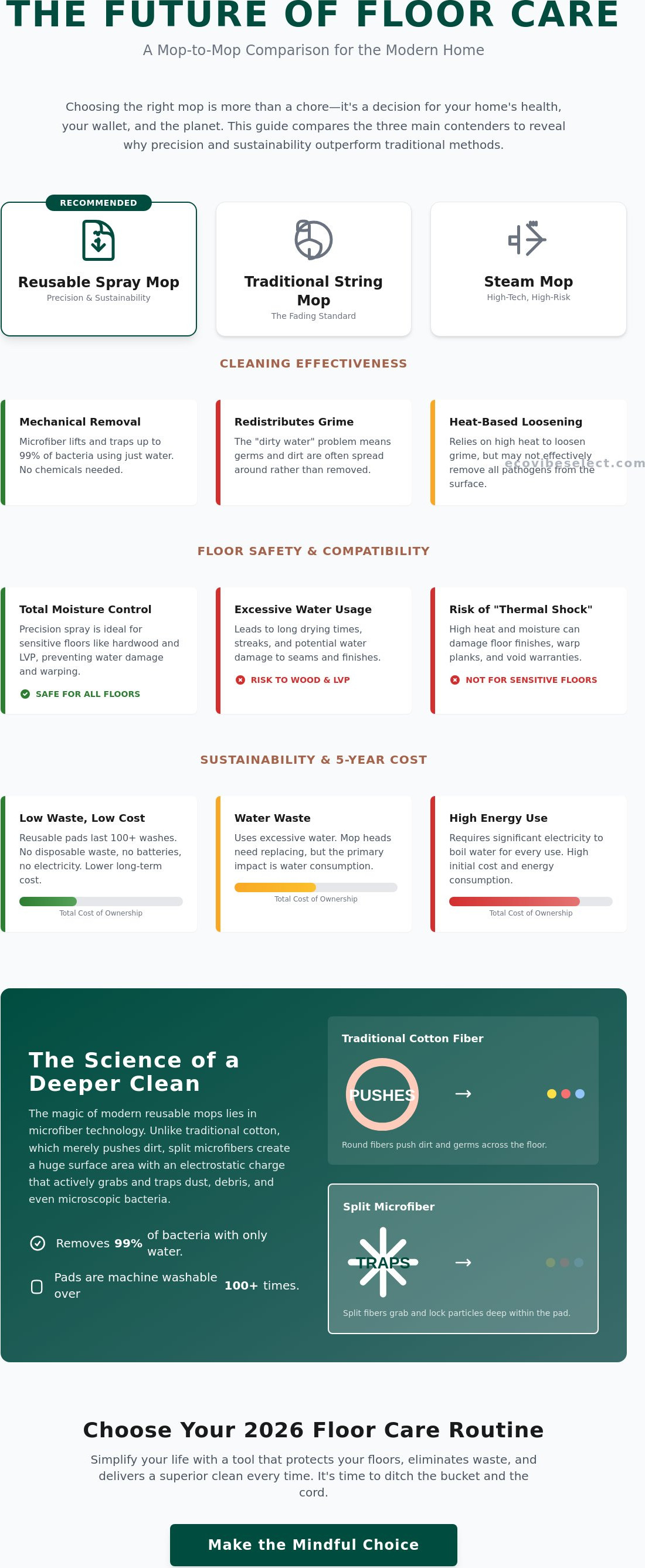
For decades, the string mop was the industry standard. However, it carries a significant "dirty water" problem. Once you dip a soiled mop back into the bucket, you're essentially redistributing bacteria across your floors rather than removing it. The physical toll is another factor. Carrying a heavy bucket and repeatedly wringing out cotton strands is a chore most people are eager to leave behind. Traditional methods also use excessive water. This leads to long drying times, which can create slip hazards and leave behind unsightly streaks on polished surfaces. In a modern home, these inefficiencies feel increasingly out of place.
The Rise of the Reusable Spray Mop in 2026
The reusable spray mop has emerged as the precision tool of choice. Unlike its predecessors, it allows for controlled moisture. This is vital for protecting today's sensitive floor finishes like luxury vinyl plank and engineered hardwood. The shift toward damp-mopping ensures that water doesn't seep into seams or cause warping. By choosing a reusable mop vs traditional mop, you embrace a "less is more" philosophy. There are no batteries to charge, no heavy buckets to fill, and no disposable pads to throw away. It's a simple, mechanical solution that values high-quality materials over complex electronics. This simplicity represents a quiet sophistication in sustainable design, making it easier than ever to maintain a clean home with minimal environmental impact.
Mechanized Heat vs. Manual Precision: The Science of Cleaning
High-tech solutions often promise a shortcut to a sterile home, but the science of floor care suggests that precision usually beats power. When analyzing the reusable mop vs traditional mop, the debate often centers on how soil is actually removed from a surface. Steam mops rely on pressurized vapor to loosen grime, while manual microfiber systems use mechanical action to lift and lock it away. While steam is marketed as a total disinfectant, its real-world application often falls short of these claims. Effective cleaning isn't just about heat; it's about the physical removal of pathogens and debris from your living space.
The 99% bacteria removal rate associated with premium microfiber isn't a marketing gimmick. It's a result of microscopic split fibers that create a massive surface area. These fibers act like tiny hooks, grabbing onto particles that traditional cotton strings or pressurized steam might simply move around. This mechanical removal is a core part of reducing the environmental impact of cleaning tools by eliminating the need for harsh chemical residues. By focusing on manual precision, you maintain a healthier home without the energy-intensive process of boiling water for every chore.
How Microfiber Technology Redefined Manual Mopping
The physics of microfiber changed everything. Traditional mops use rounded fibers that push dirt. In contrast, a reusable spray mop with washable pads utilizes split-fiber technology to trap soil deep within the fabric. This design prevents cross-contamination because the dirt stays locked in the pad until it's laundered. Premium pads are built for the long haul. Most can survive over 100 wash cycles before the fibers begin to lose their structural integrity. This durability makes them a reliable partner in a low-waste household. If you're looking to simplify, starting with an Eco-Friendly Reusable Spray Mop is a practical way to upgrade your routine.
The Reality of Steam Sanitization
The "Sanitization Myth" often leads to a false sense of security. To actually kill bacteria and viruses with steam, you must achieve a specific "dwell time." This usually requires holding the steam head over a single spot for 10 to 15 seconds. In practice, most people move the mop too quickly to achieve true disinfection. Furthermore, the pressure from steam can sometimes force liquid and fine dirt deeper into grout lines or under the edges of floorboards. Beyond the cleaning performance, there's the hidden cost of energy. Boiling water for a 20-minute cleaning session creates a larger carbon footprint than the simple, human-powered movement of a manual mop. Choosing manual precision is often the more honest, sustainable path.
Sustainability and Cost: The Hidden Impact of Your Cleaning Tools
The true cost of a cleaning tool isn't found on the price tag at the checkout counter. To understand the real financial and environmental burden, we have to look at the five-year Total Cost of Ownership (TCO). When evaluating a reusable mop vs traditional mop, many people overlook the recurring expenses and the "embodied energy" required to manufacture and dispose of these items. A mindful approach to floor care considers the entire lifecycle of the tool, from the raw materials used in the factory to the moment it eventually reaches a landfill. By choosing high-quality, manual tools, you can significantly reduce your household's waste and your long-term expenses.
The environmental lifecycle of a product includes its manufacturing, transportation, and end-of-life disposal. Traditional cotton mops often require vast amounts of water and pesticides to grow the fiber, while disposable pads are frequently made from non-biodegradable synthetic materials. In contrast, a manual spray mop with a refillable tank and washable pads offers a zero-waste advantage. It eliminates the need for plastic bottles of specialized cleaner and keeps thousands of disposable sheets out of the waste stream. It's a simple change that supports a more circular home economy.
Energy Consumption and E-Waste: The Cost of a Cord
Electronic cleaning tools like steam mops introduce a modern problem: e-waste. When a steam mop's internal pump fails or the heating element burns out, the entire plastic-heavy appliance often becomes unrepairable trash. These devices also carry a hidden carbon footprint through daily electricity use. Boiling water for 20 minutes every week adds up over the years. Mechanical spray mops avoid these issues entirely. They are the ultimate "repairable" household essential. Without cords, batteries, or complex circuits, they offer a level of durability that electronic alternatives simply can't match. This makes them a more dependable partner for an organized, low-impact lifestyle.
Cost-per-Use: Calculating the Long-Term ROI
The math of disposables is eye-opening. While a starter kit for a disposable pad system might seem affordable, the ongoing cost of replacement pads and specialized solutions can reach hundreds of dollars over five years. When comparing a reusable mop vs traditional mop, the savings become clear within the first six months. Reusable systems give you the freedom to use your own cleaning solutions, such as a simple water and vinegar mix or even diluted residues from eco friendly laundry detergent. This flexibility removes the "subscription" model of cleaning, where you're forced to keep buying brand-specific refills. Investing in a quality manual tool pays for itself quickly, leaving you with more room in your budget and less clutter in your trash can.
Floor Compatibility: Protecting Hardwood, LVP, and Tile from Damage
Choosing the right tool is about more than just removing dirt. It's about preserving the long-term integrity of your home's most expensive surfaces. When we look at the reusable mop vs traditional mop debate through the lens of floor safety, the risks of high-heat and high-moisture methods become clear. Many modern flooring materials, particularly Luxury Vinyl Plank (LVP) and engineered hardwood, are designed for durability but remain vulnerable to extreme temperature shifts. This is where the concept of "thermal shock" comes into play. Rapidly applying pressurized steam can cause materials to expand and contract too quickly, leading to cracked grout lines or the delamination of vinyl layers. For a home built on quality and longevity, a gentler approach is essential.
The mechanism of moisture delivery is the deciding factor for floor health. Electric mops often use "steam injection," which forces water vapor into the microscopic gaps of your flooring. In click-lock systems, this moisture can settle in the seams, causing the core material to swell and eventually fail. Conversely, a manual spray mop provides a controlled, fine mist that rests only on the surface. This prevents the "clouding" effect often seen with steam, where moisture becomes trapped under polyurethane or wax finishes, leaving a permanent dull, milky residue. By prioritizing manual precision, you ensure your floors retain their original luster for years.
The Hardwood and LVP Danger Zone
Hardwood and LVP require a "damp-only" cleaning standard to stay in peak condition. Most major LVP manufacturers now include clauses in their warranties that specifically void coverage if a steam mop is used. The pressurized heat can weaken the adhesive bonds and cause the wear layer to peel. Natural wood faces a different threat: cupping. This happens when the bottom of a floorboard remains dry while the top is exposed to excessive moisture, causing the edges to rise. A reusable mop vs traditional mop comparison shows that the spray mop's ability to use a minimal, targeted mist is the safest way to meet professional maintenance standards without risking structural damage.
Tile and Stone: When Steam Might Actually Win
There is one specific scenario where steam offers a clear advantage: deep-cleaning grout on unsealed ceramic tile. The pressurized vapor can lift stubborn stains from porous grout lines that manual scrubbing might miss. However, for daily maintenance of natural stone like marble or granite, manual microfiber remains superior. Stone is sensitive to pH changes and extreme heat, which can lead to etching or a loss of shine over time. For a multi-surface home, the most practical solution is a tool that offers versatility without the risk of damage. You can maintain all your surfaces safely with a high-quality Eco-Friendly Reusable Spray Mop, ensuring every room gets the specific care it needs.
Choosing Your 2026 Floor Care Routine: Why Reusable Wins
Adopting a "Less is More" approach isn't just about aesthetics; it's about choosing functionality that lasts. In the final comparison of a reusable mop vs traditional mop, the winner is the system that fits seamlessly into a modern, organized life. Manual tools offer a level of reliability that electronic alternatives can't match. There are no batteries to charge, no cords to untangle, and no electronic pumps to fail. This simplicity provides a quiet confidence, knowing your equipment is always ready for the task at hand. By moving away from complex machinery, you reclaim both storage space and peace of mind.
The mental health benefits of a "grab-and-go" routine are significant. When cleaning feels like a heavy production involving buckets or heating times, it often gets postponed. A lightweight, manual system turns floor care into a series of small, manageable choices rather than a daunting weekly chore. This shift in mindset helps maintain a tidy environment with much less effort. For the 2026 home, the reusable mop vs traditional mop debate is settled by the desire for tools that are as efficient as they are responsible.
Simplifying Your Cleaning Routine
Efficiency in 2026 is defined by the "Spot Clean" mentality. Instead of waiting for dirt to accumulate for a massive deep-clean session, you can address spills and footprints as they happen. This proactive approach is only possible with a tool that requires zero setup time. Maintenance is equally straightforward. You can easily integrate pad washing into your eco-friendly laundry routine. Tossing a durable microfiber pad in with your regular wash eliminates the need for specialized cleaning cycles. This reduces the mental load of home management, letting you focus on living rather than maintaining.
Ecovibe Select: Smart Essentials for the Modern Home
Our Eco-Friendly Reusable Spray Mop is more than a cleaning tool; it's a well-vetted solution for a sustainable lifestyle. We've engineered every component to prioritize durability and plastic reduction. The quality of our pads is a point of pride. They are designed to survive hundreds of wash cycles without shedding or losing their effective soil-trapping texture. Choosing our system means investing in a long-term partner for your home. We invite you to join the movement of homeowners making sustainable living the standard, one floor at a time. It's a practical, grounded choice for anyone seeking to simplify their life without sacrificing quality.
A Simpler Path to a Cleaner, Greener Home
Choosing the right floor care routine is a small but meaningful step toward a more organized and intentional lifestyle. We've explored how manual precision outperforms high-heat steam and how the reusable mop vs traditional mop debate favors tools that protect your home's long-term value. By moving away from bulky buckets and fragile electronics, you gain a reliable system that works without cords or batteries. It's about choosing quality materials that remove up to 99% of bacteria while keeping your hardwood and LVP finishes safe from moisture damage.
Making the switch helps you eliminate over 500 disposable pads every year, drastically reducing your household waste. You'll enjoy the benefit of zero-energy manual precision that is as gentle on your budget as it is on the planet. This transition to circular floor care simplifies your daily routine and protects the integrity of your living space. It's a practical choice that feels right for today and even better for the years ahead.
Ready to upgrade your routine? Switch to a Mindful Clean with the Ecovibe Reusable Spray Mop. You'll find that a cleaner home is easily achievable through small, manageable choices that honor both your time and the environment.
Frequently Asked Questions
Is a reusable mop better than a steam mop for hardwood floors?
Yes, a reusable spray mop is generally safer for hardwood. Steam mops inject pressurized heat that can penetrate the wood grain and weaken polyurethane finishes over time. A manual spray mop allows you to use a fine mist, keeping the surface "damp-only" as recommended by flooring professionals. This prevents the warping or cupping that often occurs when natural wood is exposed to excessive heat and moisture.
Can I use a steam mop on Luxury Vinyl Plank (LVP) flooring?
You should avoid using steam mops on LVP flooring. High temperatures can cause the vinyl layers to delaminate or peel, and many manufacturers void their warranties if they detect steam damage. When comparing a reusable mop vs traditional mop for LVP, the manual spray mop is the superior choice. It provides the necessary moisture for cleaning without the risk of thermal shock or seam swelling.
How many times can I wash reusable mop pads before replacing them?
High-quality microfiber pads can typically be laundered up to 100 times before they begin to lose their effectiveness. To extend their life, wash them with a gentle detergent and avoid using fabric softeners, which can clog the split fibers. Once the pads start to thin or lose their soil-trapping grip, it's time to swap them for new ones. This durability is why many prefer a reusable mop vs traditional mop system.
Are traditional string mops more hygienic than microfiber mops?
Traditional string mops are actually less hygienic because they tend to redistribute dirty water across the floor. Once the mop is dipped back into the bucket, you're cleaning with contaminated liquid. Microfiber mops are designed to lift and lock away bacteria within the fibers. Because you use a fresh or clean section of the pad for each area, you effectively remove pathogens rather than spreading them around your home.
Does steam cleaning actually kill bacteria effectively?
Steam can kill bacteria, but only if the heat is held in place for a specific dwell time, usually 10 to 15 seconds. In most household settings, people move the mop head too quickly for true sanitization to occur. This often creates a false sense of security. Manual microfiber removal is often more reliable for daily hygiene because it physically lifts pathogens off the surface without the need for prolonged heat exposure.
What is the most eco-friendly cleaning solution for a spray mop?
A simple mixture of water and white vinegar is a highly effective, biodegradable choice for most hard surfaces. If you need more cleaning power, you can also use a small amount of residue from Eco-Friendly Laundry Detergent Sheets diluted in water. This approach avoids the harsh chemicals and plastic waste associated with pre-mixed, store-bought cleaning solutions, making your entire floor care routine more sustainable and cost-effective.
Why do professional floor installers warn against steam mops?
Installers warn against steam because of the risk of moisture intrusion into click-lock seams. Pressurized steam can force water into the core of the flooring, leading to swelling, buckling, and permanent structural damage. They also cite thermal shock as a concern, where rapid temperature changes cause grout to crack or finishes to cloud. Manual tools are always the safer recommendation for preserving the integrity of a new floor installation.
How much money can I save by switching to a reusable spray mop?
You can save a significant amount by eliminating the recurring cost of disposable pads and specialized cleaning solutions. While we don't provide specific pricing for our products, the long-term ROI is clear when you stop buying subscription-style refills. Most households find that a quality manual system pays for itself within the first six months. Over five years, these savings add up to hundreds of dollars kept in your pocket.