
Sustainable Kitchen Products: The 2026 Guide to a Plastic-Free Home
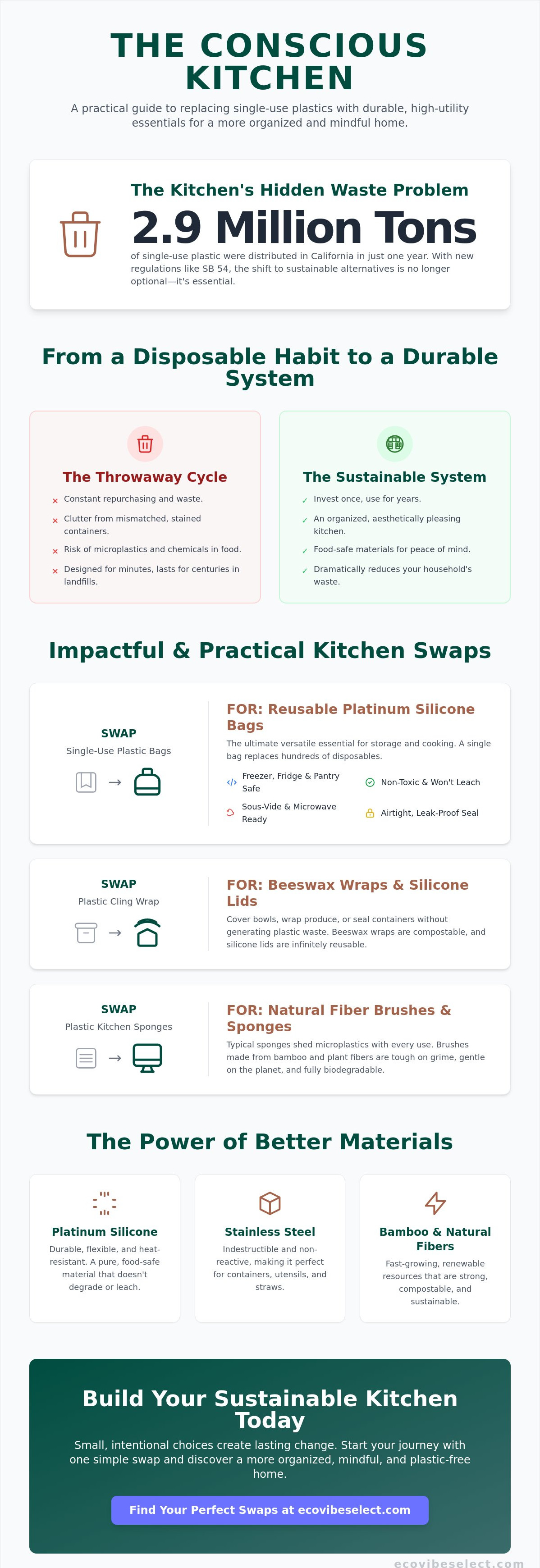
According to the Los Angeles Times, an estimated 2.9 million tons of single-use plastic were distributed in California in a single year. With the SB 54 packaging law taking effect in May 2026, the shift toward sustainable kitchen products is now a practical necessity. It's common to feel confused by conflicting claims about materials or hesitant about upfront costs. You deserve a kitchen that's organized and efficient, not a source of environmental guilt.
It's natural to feel skeptical about whether a reusable bag can really replace a box of plastic. We believe sustainability is about choosing high-utility essentials that outlast their plastic predecessors by years. This guide identifies the most impactful, practical swaps to help you eliminate waste and reclaim your cabinet space. We'll walk through durable solutions, from reusable silicone food storage bags to stainless steel straw sets and eco-friendly spray mops. These choices give you the confidence to build a mindful, organized home.
Key Takeaways
- Learn why choosing materials like platinum silicone and bamboo creates a more durable, plastic-free environment compared to traditional disposables.
- Discover how to transition your food prep and storage using high-utility swaps like reusable silicone bags that eliminate the need for single-use plastic film.
- Identify hidden microplastics in standard cleaning tools and find out why natural fibers are a more effective choice for daily scrubbing.
- Master simple maintenance techniques to ensure your sustainable kitchen products last for years, maximizing both their utility and environmental impact.
- Gain a clear, curated strategy for building a more organized and mindful kitchen space through intentional, manageable choices.
What Are Sustainable Kitchen Products and Why Do They Matter?
The kitchen is the heart of the home, but it's also often the primary source of household waste. Choosing sustainable kitchen products isn't just about following a trend; it's a shift toward mindful intentionality. In 2026, this movement focuses on high-utility essentials that outlast their plastic predecessors. By selecting items made from renewable, recyclable, or indefinitely reusable materials, you create a space that reflects your values. Sustainable products are those that provide environmental and social benefits while protecting public health over their entire life cycle. In a modern home, these tools are designed to minimize environmental footprints while maximizing utility.
The impact of a single swap is often underestimated. One durable reusable item can replace hundreds of single-use equivalents over its lifespan. This shift reduces the demand for new plastic production and prevents thousands of microplastic particles from entering our food chain and water systems. As we move through 2026, the focus has moved away from "perfect" zero-waste living and toward practical, manageable choices that fit into a busy, organized lifestyle.
The Environmental Cost of the Standard Kitchen
The average household uses an incredible volume of plastic wrap and sandwich baggies every year. These items are designed for minutes of use but persist in landfills for centuries. Beyond the sheer volume of trash, traditional kitchenware often hides invisible risks. Many older non-stick coatings are associated with "forever chemicals" that can leach into food when heated. Manufacturing these single-use disposables is also an energy-intensive process that relies heavily on fossil fuels. Transitioning to better materials helps break this cycle of constant consumption and disposal.
Benefits Beyond the Planet: Efficiency and Organization
A sustainable kitchen is often a more organized one. When you swap flimsy plastic containers for durable alternatives, you eliminate the clutter of mismatched lids and stained surfaces. These choices lead to a cleaner, more aesthetic environment where every tool has a clear purpose. Over time, the financial savings become clear. While a reusable item might require a higher initial investment, it saves money by ending the cycle of constant repurchasing. Choosing sustainable kitchen products allows you to invest in quality once rather than buying disposable items forever. It's a practical approach that prioritizes substance over flashiness, helping you build a home that is both beautiful and responsible.
Top Sustainable Swaps for Food Storage and Prep
Reducing waste in the kitchen begins with changing how we handle leftovers and meal prep. For years, the default choice was thin plastic film or disposable zip-top bags. These items are difficult to recycle and often end up as environmental pollutants. By focusing on the core principles of reducing and reusing, you can replace these recurring expenses with durable, long-term solutions. High-quality sustainable kitchen products like platinum silicone and stainless steel offer the performance you need without the plastic waste.
Platinum silicone has become the gold standard for flexible storage. Unlike cheaper plastic, it doesn't leach chemicals into your food and can withstand extreme temperature shifts. Stainless steel is another professional favorite. It's virtually indestructible and perfect for dry goods or pantry organization. While glass is excellent for visibility, silicone and steel provide the portability and durability required for a modern, active lifestyle.
Reusable Silicone Food Bags: The Versatile Essential
Silicone bags are a direct, high-performance replacement for single-use plastic. They're thick, puncture-resistant, and feature airtight seals that keep food fresh longer. These bags are incredibly versatile, moving easily from the pantry to the refrigerator. Many users find them particularly helpful for meal prepping liquids like soups or sauces because they're naturally leak-proof. It's also helpful to know that silicone bags are freezer safe, making them an ideal tool for sub-zero organization and long-term food preservation. You can even use them for sous-vide cooking or steaming vegetables.
Sustainable Alternatives to Plastic Wrap
Replacing plastic wrap requires a mix of materials based on what you're storing. Beeswax wraps are a popular choice for bread, produce, and cheese. They use the warmth of your hands to create a seal around a bowl or food item. It's best to avoid using them for raw meat or fish, as they can't be washed in hot water. For those items, silicone stretch lids are a better permanent solution. These lids fit over odd-shaped bowls and containers, creating a vacuum seal that prevents spills. When selecting these sustainable kitchen products, always prioritize BPA-free, food-grade materials to ensure your kitchen remains a safe environment. Making these small, intentional choices, like switching to Reusable Silicone Food Storage Bags, simplifies your routine and keeps your space organized.
Plastic-Free Cleaning: From Sponges to Brushes
Most standard kitchen sponges are made from polyurethane, a petroleum-based plastic that sheds microplastics every time you wash a dish. These tiny particles flow directly into our waterways, while the sponge itself sits in a landfill for centuries. Shifting to sustainable kitchen products for your cleaning routine is one of the most effective ways to reduce your daily plastic footprint. It's about moving away from "disposable eco" items that still require frequent replacement and toward long-term, high-utility tools that simplify your chores.
Natural Fiber Brushes vs. Plastic Scrubbers
Bamboo and sisal are a superior pairing for scrubbing. Bamboo is naturally water-resistant and fast-growing, making it an ideal handle material for wet environments. Sisal fibers, derived from the agave plant, provide a tough texture that cuts through grease without scratching surfaces. While a plastic sponge might last two weeks before it starts to smell, a well-maintained bamboo brush can last for months or even years. Use a stiff-bristled pot scrubber for cast iron and a softer bottle brush for glassware. This targeted approach ensures you aren't wearing down your tools prematurely.
Eliminating Paper Towel Waste
Paper towel production is an energy-intensive process that consumes millions of trees and billions of gallons of water annually. Swedish dishcloths and UNpaper towels offer a practical, washable alternative. A Swedish dishcloth, made from a blend of cellulose and cotton, acts as a hybrid between a sponge and a cloth. It's incredibly absorbent, picking up spills with ease and drying quickly to prevent bacterial growth. One Swedish dishcloth can replace up to 17 rolls of paper towels. Making this single swap significantly reduces your household volume of trash and keeps your counters streak-free.
Mindful cleaning also extends to the floors. Instead of using a mop with disposable plastic pads, consider an Eco-Friendly Reusable Spray Mop. This tool uses washable pads that you can toss in the laundry, ending the cycle of constant repurchasing. You can also reduce chemical waste by choosing concentrated soap blocks or refillable glass spray bottles. These systems prioritize essential utility over flashy packaging. By integrating these sustainable kitchen products into your home, you create a cleaner, more organized space that functions with quiet confidence and minimal impact.
Maintenance and Longevity: Making Your Swaps Last
Owning sustainable kitchen products is a commitment to quality over convenience. To ensure "zero-waste" truly means zero waste, you must prioritize proper maintenance. Most eco-friendly materials require slightly different care than their plastic counterparts. For instance, bamboo thrives when kept dry between uses, while beeswax wraps must stay away from hot water to preserve their seal. Adopting a stewardship mindset helps these items reach their full lifespan.
Dishwasher safety varies significantly by material. High-quality silicone and stainless steel can typically handle the heat, but natural fibers like bamboo or sisal will crack if subjected to high-temperature cycles. If your reusables develop odors or stains, don't discard them. A simple paste of baking soda and water often removes stubborn food smells from silicone, while a quick soak in diluted vinegar can sanitize your brushes without damaging the wood. These small efforts prevent premature replacement and keep your kitchen running efficiently.
Deep Cleaning Your Reusables
Regular rinsing isn't always enough to prevent buildup over time. Learning how to clean silicone food bags correctly ensures they remain residue-free and clear for years. For bamboo brushes, avoid soaking them in water for long periods. Instead, mist the bristles with hydrogen peroxide and let them air dry completely. If your beeswax wraps lose their stickiness, you can often refresh them. Place them on a baking sheet in a very low oven for just a few seconds to redistribute the wax. This simple maintenance routine keeps your tools in peak condition.
End-of-Life Disposal for Sustainable Products
Eventually, even the most durable items reach the end of their utility. The goal is to keep these materials out of the landfill. Bamboo handles and natural sisal bristles are home-compostable once you remove any metal staples. For materials like silicone or stainless steel, look for specialized recycling facilities, as most curbside programs aren't equipped to handle them. Before you give up on a product, consider a "repair first" mindset. A loose handle can often be tightened, and a stained bag is still perfectly functional for freezer storage. Taking care of your tools is a key part of a mindful lifestyle. Explore our full collection of durable kitchen essentials to find sustainable kitchen products built for longevity.
Building Your Sustainable Kitchen with Ecovibe Select
Building a mindful home shouldn't feel like an overwhelming overhaul. At Ecovibe Select, our curation process focuses on smart design and essential utility. We believe that the best sustainable kitchen products are the ones you use every single day. By prioritizing high-quality materials like food-grade silicone and stainless steel, we help you transition away from the "buy-and-toss" culture. Our products are designed to integrate seamlessly into a busy, organized lifestyle without sacrificing functionality. Every item we offer is a well-vetted solution for the modern home.
The Ecovibe Select Reusable Silicone Food Storage Bags are a cornerstone of this approach. These bags offer a clear, professional solution for pantry organization and meal prep. They're durable enough for the freezer and simple enough for daily school lunches. Similarly, our Stainless Steel Straw Set provides a permanent alternative to plastic disposables. These straws are easy to clean and built to last for years, making them a staple in any plastic-free kitchen. They represent a visible commitment to a more responsible way of living. It's about substance over flashiness.
Why Quality Matters Over Quantity
Our philosophy is rooted in the "less is more" principle. Many brands engage in greenwashing by selling low-quality "eco" items that break after a few uses, eventually ending up in the same landfills as the plastic they replaced. We avoid this by vetting every item for long-term durability. Our customers often share stories of how a few well-chosen swaps made their kitchen feel more spacious and less chaotic. Choosing quality once is far more sustainable than buying cheap alternatives repeatedly. It creates a steady, dependable presence in your home that you can rely on.
Starting Your Journey Today
If you're just beginning, don't try to change everything at once. We recommend starting with one category, such as food storage, and expanding as you get comfortable with your new routine. Our direct-to-consumer shipping makes it easy to build your eco-kit at your own pace. You might start with silicone bags and eventually move to our Eco-Friendly Laundry Detergent Sheets or a Reusable Pet Hair Remover. Every small choice you make leads to a significant long-term impact on your household waste. You have the power to reclaim your kitchen space through manageable, intentional decisions. It's about progress, not perfection.
Reclaiming Your Space with Intentional Swaps
Transitioning to a plastic-free home is a journey of small, intentional choices. We've seen how high-utility materials like platinum silicone and bamboo outlast their disposable counterparts, reducing both household waste and daily clutter. By prioritizing durability and mastering simple maintenance, you ensure your essentials remain functional for years to come. These shifts create a more organized and efficient environment where every tool serves a clear purpose.
Investing in sustainable kitchen products is a practical way to align your daily routine with your values. Our curated selection focuses on BPA-free materials and high-durability designs to help you simplify your life without sacrificing quality. With global eco-friendly shipping available, building your mindful kitchen is straightforward and accessible. Shop our curated collection of sustainable kitchen essentials to find well-vetted solutions for your home. You're ready to make a lasting impact through the steady, manageable choices you make every day.
Frequently Asked Questions
Are sustainable kitchen products more expensive in the long run?
No, they generally save money over time by ending the cycle of constant repurchasing. While the initial cost of a high-quality reusable item is higher, it replaces hundreds of single-use disposables. Over months and years, the cost per use drops significantly. Choosing durable sustainable kitchen products allows you to invest in a permanent solution rather than a recurring expense that adds up every month.
Can I put silicone food storage bags in the dishwasher?
Yes, most food-grade silicone bags are dishwasher safe. It's best to place them on the top rack and ensure they are pinned open so water can reach the interior corners. This ensures a thorough clean and removes any food residue without the need for hand scrubbing. For the best results, always check if your specific bag is rated for high-heat cycles to ensure it maintains its seal.
How long do beeswax wraps actually last before needing replacement?
A well-maintained beeswax wrap typically lasts about one year with regular use. You'll know it's time for a replacement when the wax begins to crack or it no longer sticks to itself or your bowls. You can often extend its life by "refreshing" it in a low oven for a few seconds to redistribute the wax. Once it reaches the end of its utility, it is fully home-compostable.
Is bamboo really more sanitary than plastic for dish brushes?
Bamboo is naturally resistant to moisture and contains antimicrobial properties that help prevent bacterial growth. Unlike plastic sponges that trap food particles and stay damp, bamboo brushes with natural sisal bristles dry much faster. This rapid drying time is key to maintaining a sanitary kitchen environment. Just remember to store your brush in a dry spot between uses to prevent the wood from soaking or cracking over time.
What are the best sustainable products for meal prepping?
Reusable silicone food storage bags and stainless steel containers are the most effective tools for meal prepping. Silicone is particularly useful because it's leak-proof and freezer-safe, making it perfect for portioning out liquids or marinated proteins. These sustainable kitchen products keep your ingredients organized and fresh while maximizing your refrigerator space. They offer a professional level of utility and durability that flimsy plastic wrap simply cannot match.
How do I know if a product is truly plastic-free or just greenwashed?
Look for specific material descriptors like "platinum silicone," "304-grade stainless steel," or "FSC-certified bamboo." Avoid vague terms like "eco-friendly material" that don't provide details on the actual composition. Truly sustainable brands are transparent about their manufacturing and provide clear instructions on how to care for or recycle the item. Checking for verified certifications like BPI for compostability also helps confirm that a product meets rigorous environmental standards.
Can I use stainless steel straws for hot drinks safely?
It's generally better to use stainless steel straws for cold or room-temperature beverages. Because steel is a highly efficient thermal conductor, the straw can become quite hot if left in boiling liquids like tea or coffee. If you prefer a straw for warm drinks, consider a silicone-tipped version or a collapsible silicone travel cup. This ensures you enjoy your drink comfortably without any risk of heat transfer while still avoiding single-use plastics.
What is the easiest first swap for a beginner in 2026?
Replacing your single-use plastic bags with reusable silicone storage bags is the simplest and most impactful first step. It requires no change in your daily routine but immediately eliminates a major source of household waste. Another easy entry point is switching to a stainless steel straw set. These small, manageable choices build the confidence you need to eventually tackle larger swaps like your cleaning tools or your laundry routine.