
The 2026 Buyer’s Guide to Eco-Friendly Household Products: How to Choose Sustainable Essentials That Last
What if the most sustainable choice you make this year isn't buying more "green" items, but finding the one high-quality tool that replaces a hundred single-use ones? It's a common frustration. You've likely dealt with flimsy brushes that break after a week or felt overwhelmed by the high upfront costs of some sustainable kits. With 2026 PFAS bans now active in states like Maine and Colorado, the pressure to find safe, reliable eco-friendly household products has never been higher. You want a home that's free from harsh chemicals without sacrificing your busy schedule or your budget.
We'll show you how to cut through the confusion and select durable, high-performance tools that stand the test of time. This guide explores how to evaluate material safety, identify long-term cost savings, and streamline your routine with essentials like reusable spray mops and laundry detergent sheets. You'll discover how to build a plastic-free cleaning routine that's as efficient as it is responsible. By focusing on smart design and essential utility, you can create a healthier environment while making your daily chores simpler and more cost-effective.
Key Takeaways
- Understand why durability is the ultimate sustainability metric in the 2026 circular economy, helping you move past the hidden costs of disposable plastic.
- Learn to identify high-performance eco-friendly household products by evaluating the integrity of materials like food-grade silicone and stainless steel.
- Streamline your cleaning routine by swapping single-use floor pads and bulky detergent bottles for efficient, reusable alternatives that save space.
- Discover how to extend the life of your sustainable tools with proper maintenance techniques for mop pads and silicone storage bags.
- Master the "one-at-a-time" transition strategy to build a functional, plastic-free home without the waste of unused bulk kits.
The Shift to Sustainable Living: Why Your Household Choices Matter in 2026
By mid-2026, the way we manage our homes has fundamentally shifted. New regulations, such as the EU Digital Product Passport mandate starting in July 2026, are forcing a new level of transparency regarding what goes into our cleaning tools. Choosing eco-friendly household products is no longer just a trend; it's a necessary response to a world moving toward a circular economy. This model prioritizes repairability and reuse over the old "take-make-waste" cycle. When you invest in sustainable products, you aren't just buying a tool. You're opting out of a system that relies on planned obsolescence.
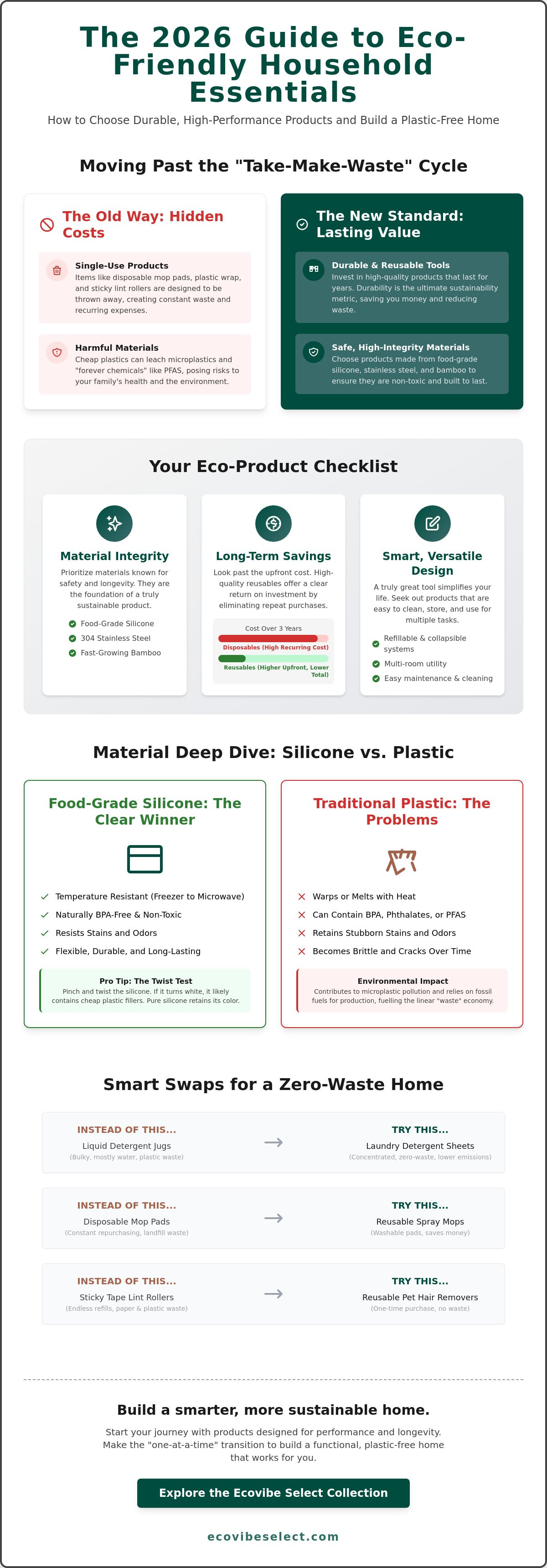
The hidden cost of "cheap" plastic is often higher than we realize. A flimsy plastic mop might seem like a bargain, but the cycle of replacement and the constant purchase of disposable pads creates a financial drain. Over a three-year period, the return on investment for high-quality reusables becomes clear. You save by eliminating recurring costs. Beyond the wallet, there's the health of your living space. Switching to reusables, like silicone food storage bags or stainless steel straws, significantly reduces your family's daily exposure to microplastics and chemicals like PFAS. These "forever chemicals" are now facing strict bans in states like Maine and Colorado, making material safety a top priority for eco-friendly household products.
The Problem with Single-Use Household Staples
Every home has its "waste giants." These are the items we use and discard without a second thought. Traditional spray mops with single-use pads, sticky tape lint rollers, and plastic wrap are major contributors to household waste. These products are often designed for short lifespans to keep you coming back to the store. Similarly, traditional liquid laundry detergents are mostly water. Shipping these heavy plastic jugs creates a massive carbon footprint compared to lightweight, concentrated laundry detergent sheets. The shift to waterless formulations is a key trend in 2026, reducing both packaging waste and transportation emissions.
The 2026 Standard for "Eco-Friendly"
The definition of sustainability is evolving. We've moved past simple "recyclable" labels to focus on "reusable" and "compostable" certifications that actually mean something. A Zero Waste home is a journey of small, impactful swaps that prioritize longevity. Smart design now makes this easier. Modern essentials, such as collapsible silicone travel cups or refillable cleaning systems, integrate seamlessly into a busy lifestyle. They offer the same convenience as disposables but with the durability required for years of use. By choosing items built from bamboo, stainless steel, or high-grade silicone, you ensure your household essentials last well beyond the current season.
What to Look for When Buying Eco-Friendly Household Products
Selecting the right eco-friendly household products requires looking beyond the "green" label and examining the physical build of the tool. In 2026, the standard for sustainability is defined by material integrity and long-term utility. You should prioritize materials like food-grade silicone, 304-grade stainless steel, and fast-growing bamboo. These aren't just aesthetic choices; they represent a commitment to durability. A stainless steel straw or a bamboo toothbrush is designed to perform its function without leaching chemicals or breaking under pressure. When evaluating a new tool, ask if it's versatile enough to handle multiple rooms. A well-designed cleaning tool should simplify your life, not add another specialized item to your storage closet.
Silicone vs. Plastic: A Durability Comparison
Food-grade silicone has emerged as the clear winner over traditional plastics for items like travel cups and storage bags. Unlike plastic, high-quality silicone is temperature resistant, meaning it can safely move from the freezer to the microwave without warping or releasing toxins. It's naturally BPA-free and won't retain stubborn food odors or stains if cleaned properly. To identify quality, look for silicone that feels substantial and doesn't turn white when twisted, which can indicate the presence of cheap plastic fillers.
Maintenance is another critical factor. A product is only sustainable if you can actually keep it clean and functional. Check if items are "easy-clean" or if they require complex disassembly. For instance, laundry detergent sheets are designed to work perfectly with standard machines while eliminating the mess of liquid spills. Transparency also matters. You should verify that brands are committed to ethical manufacturing. A great way to confirm safety is to look for products that align with the EPA's Safer Choice program, which vets ingredients for human and environmental health.
Hardware Mechanics: Spray Mops and Pet Tools
When it comes to hardware, simpler is usually better. Manual trigger mechanisms on spray mops are often more reliable than battery-operated versions because they have fewer points of failure. This mechanical simplicity ensures your mop stays in service for years rather than months. Look for high-density microfiber pads that are rated to last for at least 100 washes. This longevity is what creates the real cost savings over time.
The same logic applies to pet care. A sustainable fur removal tool should be purely mechanical. By avoiding adhesive refills and sticky tape, you eliminate ongoing waste and the frustration of running out of supplies. If you're ready to upgrade your home with tools that prioritize substance over flashiness, exploring a curated collection of household essentials is a practical place to start. Choosing tools that are compatible with your existing routine ensures that your shift toward a plastic-free home is both manageable and permanent.
Comparing Top Categories: Floor Care, Laundry, and Pet Management
Organizing a home sustainably involves looking at the high-traffic areas where waste accumulates fastest. In 2026, over 71% of consumers are willing to pay more for sustainable cleaning solutions according to March 2026 industry data. This shift is most visible in how we manage floors, laundry, and pets. By selecting multi-functional eco-friendly household products, you replace the need for endless refills and bulky plastic packaging. The goal is to move toward a streamlined system where every tool earns its place through durability and performance.
The Reusable Mop Revolution
A reusable spray mop offers a practical alternative to traditional systems that rely on disposable pads. These tools feature 360-degree swivel heads and refillable tanks, allowing you to use your own DIY cleaning solutions. The cost benefits are immediate. While a year's supply of disposable pads can create a significant recurring expense, two high-quality washable pads can handle the same workload for years. This mechanical approach eliminates the need for batteries and reduces the volume of non-biodegradable waste heading to landfills.
Next-Gen Laundry: Detergent Sheets
The science behind eco friendly laundry detergent has evolved into lightweight, concentrated sheets. These are particularly beneficial for urban dwellers or travelers who need to maximize space. Unlike heavy liquid jugs that are mostly water, sheets are easy to store and transport. A common concern is the "dissolve factor," but modern formulations are designed to leave zero residue even in cold water washes. This efficiency helps reduce the carbon footprint associated with shipping liquid detergents, which is a major factor in the growing global market for eco-detergents, projected to reach billions by the end of 2026.
Pet management is another area where small changes make a large impact. With 78% of U.S. pet owners considering sustainability a key factor in their decisions as of May 2026, the demand for better tools is rising. A reusable pet hair remover replaces hundreds of sticky tape sheets with a simple mechanical motion. In the kitchen, the transition continues with reusable silicone food storage bags and stainless steel straw sets. These items replace flimsy plastic wrap and single-use plastics, creating a kitchen environment that is both organized and responsible. Choosing these essentials ensures your home remains clean without the constant cycle of buying and tossing "cheap" disposables.
Common Mistakes to Avoid When Switching to Sustainable Products
Transitioning to a more conscious home is a rewarding process, but it's easy to stumble into common traps. One of the biggest mistakes is the "Everything All at Once" pitfall. You don't need to replace every plastic bottle in your cabinet today. In fact, the most sustainable product is often the one you already own. Wait until your current tools break or run out before seeking eco-friendly household products. This prevents the irony of throwing away perfectly functional items just to make room for "green" alternatives that you might not even need yet.
The "Everything All at Once" Pitfall
Creating a sustainability roadmap helps you prioritize swaps based on how often you use them. Start with the items you touch every day. This might include your toothbrush, your kitchen storage, or your floor care tools. If you buy a massive "bulk kit" of items you rarely use, you're just creating a different kind of clutter. Focus on high-impact changes first. This methodical approach ensures your new habits actually stick without the overwhelm of a total lifestyle overhaul. It's about mindful intentionality, not just filling a cart.
Maintenance Myths and Realities
Improper care is a silent killer of sustainable tools. Reusable mop pads can last for years, but only if you avoid fabric softeners. These chemicals coat the microfiber and ruin the pad's ability to trap dirt and absorb spills. Similarly, food-grade silicone storage bags are incredibly durable. They need proper drying, though. Storing them while damp can lead to mold and mildew in the corners. Always prop them open to air dry completely before putting them away. Longevity is tied directly to how well you follow the care instructions.
When it comes to eco-friendly household products, you should also be wary of "greenwashing" where plastic is hidden in plain sight. Some "natural" products might still contain hidden linings or non-recyclable components like certain types of PVA. Always check for material transparency. Finally, don't neglect ergonomics. A tool isn't truly sustainable if it's too difficult or painful for you to use in your daily routine. If a tool is clunky or hard to clean, you'll likely revert to disposables. Choosing well-vetted, comfortable tools is the only way to ensure long-term success in a modern, organized home.
Ready to make swaps that actually last? Explore our collection of durable household essentials designed for real-world use and lasting quality.
Standout Essentials from the Ecovibe Select Collection
Building a sustainable home is about choosing tools that perform better than their disposable counterparts. The Ecovibe Select Household Appliances collection is curated for durability, style, and ease of integration into your daily routine. By focusing on mechanical simplicity and high-grade materials, these eco-friendly household products eliminate the need for recurring purchases. Each item serves as a long-term partner in maintaining a clean, organized, and responsible living environment.
Deep Dive: The Reusable Spray Mop with Washable Pads
The Eco-Friendly Reusable Spray Mop is a cornerstone of a waste-free cleaning routine. It features an ergonomic manual trigger that gives you precise control over your cleaning solution. No batteries are required. The high-density microfiber pads are designed to trap dust and grime with just water or your favorite DIY cleaner. These pads are rated for over 100 washes, providing a significant lifetime value compared to the endless cycle of buying disposable refills. This mop pairs perfectly with reusable snack bags for travel, allowing you to maintain the same waste-free standards whether you're at home or on the road.
Smart Kitchen and Travel Integration
Many sustainable journeys stop at the front door, but the Collapsible Silicone Travel Cup bridges the gap between home and travel. It's pocket-sized, leak-proof, and made from heat-resistant, BPA-free silicone. This cup is a practical solution for the commuter who wants to avoid single-use coffee cups without carrying a bulky tumbler. It's lightweight, durable, and fits effortlessly into a modern, mobile lifestyle. It represents the "less is more" philosophy by providing essential utility in a compact form factor.
For pet parents, the Reusable Pet Hair Remover is a game-changer. It uses a purely mechanical motion to lift fur from furniture and clothing. There are no adhesive sheets to peel and toss, making it the last lint roller you'll ever need to buy. This tool exemplifies why high-quality eco-friendly household products are worth the investment. They solve a daily problem without creating a permanent waste stream. When building your sustainable home kit, start with these versatile, well-vetted essentials. Focus on one swap at a time, and you'll soon have a home that's as efficient as it is conscious of its impact.
Build a Sustainable Home That Lasts Beyond 2026
The transition to a more mindful lifestyle doesn't happen overnight. It starts with choosing tools that prioritize substance over flashiness. By focusing on material integrity and mechanical simplicity, you ensure your household essentials serve you for years rather than months. You've learned how to spot greenwashing and why the long-term return on investment for reusables far outweighs the temporary convenience of disposables. Whether you are managing floor care with a spray mop or simplifying laundry with concentrated sheets; every choice makes a difference.
Finding high-quality eco-friendly household products shouldn't be a chore. Our collection is curated for durability and style; utilizing only BPA-free and non-toxic materials to keep your living environment healthy. We offer global shipping to help you streamline your routine wherever you are. If you're ready to invest in essentials that actually perform, shop the Ecovibe Select Household Appliances Collection today. You have the power to create a cleaner, more organized home through small, manageable choices that respect both your schedule and the planet.
Frequently Asked Questions
Do eco-friendly household products really work as well as traditional ones?
Yes, modern eco-friendly household products are engineered to meet or exceed the cleaning performance of traditional plastic-based options. High-density microfiber and concentrated plant-based surfactants provide deep cleaning power without the need for harsh chemicals. These tools rely on smart design and durable materials rather than disposable convenience to maintain a professional level of cleanliness in your home.
How much money can I save by switching to reusable spray mops?
You save money by eliminating the recurring expense of disposable pads and proprietary cleaning solutions. While there is an initial investment in the hardware, the washable pads are designed to last for over 100 uses. Since you can use your own DIY solutions in the refillable tank, you stop paying for the water and plastic packaging that make up most traditional floor cleaners.
Are silicone food storage bags truly safe for the freezer and microwave?
Food-grade silicone is extremely temperature resistant and safe for both freezing and reheating. Unlike many plastics, it doesn't warp or leach toxins like BPA when exposed to high heat or extreme cold. This makes silicone bags a versatile choice for meal prep, allowing you to move food directly from the freezer to the microwave without switching containers.
How do I properly clean and maintain my reusable mop pads?
You can wash your reusable mop pads in a standard washing machine with mild detergent. It's vital to avoid fabric softeners, as they coat the microfiber and ruin its ability to trap dust and absorb spills. Air drying is the best way to preserve the fiber's integrity, ensuring the pads remain effective for a year or more of regular use.
What is the most important eco-friendly household product for a beginner to start with?
A reusable spray mop or laundry detergent sheets are excellent entry points for any household. These items replace high-frequency waste products that you likely use every week. By starting with these high-impact swaps, you'll see immediate waste reduction and cost savings, which helps build the confidence needed to tackle other areas of your home.
Why are laundry detergent sheets better than liquid or pods?
Detergent sheets are superior because they are waterless, concentrated, and eliminate bulky plastic jugs. They are pre-measured, which prevents the common mistake of overusing soap that can lead to machine buildup. Their lightweight design also significantly reduces the carbon emissions associated with shipping heavy, water-based liquid detergents across the globe.
Can I use my own cleaning solution in a refillable spray mop?
Yes, the refillable tank is designed to give you total control over your cleaning ingredients. You can mix your own solutions using water and white vinegar or use a concentrated plant-based cleaner. This flexibility allows you to avoid the synthetic fragrances and harsh chemicals found in many pre-mixed, single-use floor cleaning products.
How long do bamboo toothbrushes and other compostable items actually last?
A biodegradable bamboo toothbrush has a functional lifespan of about three months, which matches the recommendation for traditional plastic brushes. Other compostable eco-friendly household products, such as natural fiber cloths, are built for durability and can last for months of daily use. The primary benefit is that these items return to the earth rather than sitting in a landfill for centuries.