
The Ultimate Guide to Eco-Friendly New Home Essentials for 2026
Did you know that products marketed as sustainable now account for 32% of total market growth? It's a clear sign that more people are prioritizing longevity over the disposable culture of the past. Setting up a fresh space is the ideal moment to invest in eco-friendly new home essentials that actually last. You've likely felt the frustration of replacing "bargain" plastic items that crack within months or felt confused by vague labels that don't provide real value.
We believe a move should be a fresh start, not a source of endless waste. You deserve a home that's organized and intentional from the very first night. You'll discover how to curate a sustainable space using high-impact, waste-reducing tools that save you money while protecting the planet. We'll explore the long-term ROI of durable reusables like silicone storage and biodegradable bamboo. These are smart, functional solutions for a low-waste sanctuary.
We'll also cover the latest 2026 ENERGY STAR efficiency thresholds and zero-VOC standards to ensure your new environment is healthy, functional, and future-proof. It's time to simplify your daily routine with items built for the long haul.
Key Takeaways
- Understand how to avoid the "moving waste" phenomenon by prioritizing durable home essentials that offer a high return on investment.
- Learn to distinguish between truly sustainable materials like bamboo and food-grade silicone when selecting your eco-friendly new home essentials.
- Discover the four "anchor" reusables that eliminate common waste streams, including a spray mop system that replaces disposable pads.
- Avoid common pitfalls like the "bulk buy" trap by focusing on functional design rather than just "eco-friendly" aesthetics.
- Implement a zero-waste move-in strategy that begins with a mindful audit of your existing items before you invest in new solutions.
The Impact of Your Move: Why Sustainable Essentials Matter
Starting fresh in a new home often triggers a massive buying spree. We fill carts with temporary plastic bins, disposable cleaning pads, and rolls of paper products. This surge in consumption creates what experts call the moving waste phenomenon. It is a cycle of buying cheap, short-lived items that often end up in landfills before your first year in the house is over. By making intentional choices now, you can break this cycle and establish a home that reflects your values from day one.
According to 2024 data, roughly 55% of consumers are willing to pay more for eco-friendly brands. By 2026, this commitment to sustainable living has become the standard for modern homeowners. A truly sustainable home isn't just about high-tech solar panels or smart thermostats. It is built on the foundation of eco-friendly new home essentials that handle your daily routines without generating a constant stream of trash. These small, high-impact swaps in high-traffic areas like the kitchen and laundry room create the biggest cumulative change.
The Hidden Cost of Single-Use Home Goods
Think about the kitchen floor. A traditional mop system often relies on disposable pads that you toss after every use. Over a year, these costs add up quickly. "Cheap" plastic essentials often fail because they aren't designed for durability. Replacing a flimsy pet hair remover or a thin plastic storage container every six months is a hidden tax on your budget. Choosing durable alternatives, such as a reusable spray mop or food-grade silicone bags, provides a clear return on investment. There is also a psychological benefit to a mindful setup. When your home is filled with intentional, well-made tools, you feel more organized and less burdened by clutter.
Setting Your Sustainability Baseline
Every new floor plan has "waste hotspots." These are usually the areas where you perform repetitive tasks: the kitchen sink, the laundry room, and the bathroom. Instead of trying to overhaul your entire lifestyle in one weekend, start by identifying these zones. Small, manageable choices lead to more permanent habits. For example, switching to eco-friendly new home essentials like biodegradable bamboo toothbrushes or stainless steel straws can eliminate a significant amount of plastic waste over time.
Today's standards for a sustainable household go beyond simple recycling. With the 2026 ENERGY STAR updates and the launch of LEED v5, the focus has shifted toward a holistic approach to waste reduction and healthy indoor environments. Integrating high-quality reusables into your move-in strategy aligns your personal habits with these broader environmental goals. It is about creating a clean, low-waste foundation that stays functional for years to come.
What to Look for in Eco-Friendly New Home Essentials
Material selection is the foundation of a sustainable household. It's the difference between a tool that lasts a decade and one that ends up in a bin by summer. When you're curating eco-friendly new home essentials, look for materials that prioritize both durability and end-of-life impact. Understanding the nuance between "biodegradable" and "compostable" is vital. While biodegradable items break down eventually, compostable products are designed to transform into nutrient-rich soil under specific conditions. For kitchen and travel items, food-grade silicone is a reliable, BPA-free choice. It's heat-resistant, flexible, and doesn't leach chemicals like traditional plastics often do.
Moso bamboo has emerged as the gold standard for renewable home goods in 2026. This specific species grows incredibly fast, sometimes up to three feet in a single day, without the need for pesticides or heavy irrigation. It's strong, lightweight, and naturally antimicrobial. Choosing items like a biodegradable bamboo toothbrush ensures your daily routine doesn't leave a permanent footprint. True sustainability also involves circularity. Ask yourself if a product can be easily recycled or composted when it finally wears out. If it can't be repurposed, it's likely just "eco-looking" waste.
A Checklist for Sustainable Materials
Stainless steel and bamboo are superior to plastic in the kitchen because they don't harbor bacteria or degrade with heat. For floor care, high-quality microfiber is a smart investment. It traps dust and allergens effectively, often allowing you to clean with just water. This eliminates the need for plastic-bottled chemical cleaners. If you're buying wood accessories, look for the FSC-certified label. This confirms the timber was harvested from responsibly managed forests that provide environmental, social, and economic benefits. These materials are built to last, reducing the frequency of replacements.
Avoiding Greenwashing in Home Retail
Be wary of vague buzzwords like "earth-friendly" or "all-natural" that lack specific evidence. These terms are often used to distract from a product's actual environmental impact. In 2026, transparency is a non-negotiable trait for trustworthy brands. Verify third-party certifications such as Fair Trade or Organic to ensure claims are backed by rigorous standards. A brand should be able to explain its supply chain and material choices clearly. Investing in well-vetted solutions helps you avoid the "bulk buy" trap and ensures your new home remains a clean, low-waste sanctuary from the start.
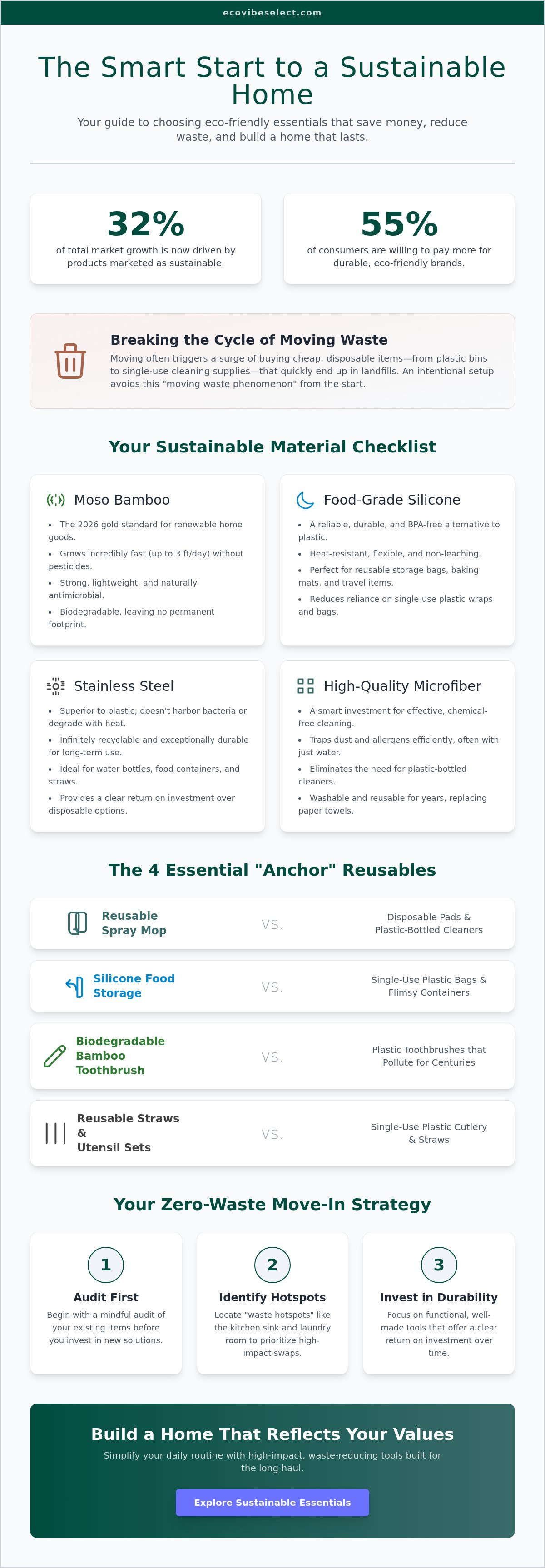
The Home Starter Kit: 4 Essential Anchors for Your New Space
Setting up a new home does not require a forty-item checklist. Many guides overwhelm readers with expensive decor or niche gadgets that rarely get used. We prefer a more intentional approach. By focusing on four "anchor" reusables, you can address the most common waste streams in a typical household from your very first night. The Ecovibe Select Home Starter Kit was designed as a foundational solution for this exact transition. These eco-friendly new home essentials prioritize utility and durability, ensuring your move-in process is as clean as it is organized.
Deep Dive: Floor Care and the Reusable Spray Mop
Floors are often the first thing you clean in a new space. Traditional mop systems rely on single-use plastic pads and proprietary chemical solutions. This creates a cycle of recurring costs and unnecessary landfill waste. The Ecovibe Reusable Spray Mop offers a more sensible path. It utilizes washable microfiber pads that trap dust and grime effectively, often requiring nothing more than water or a mild natural cleaner. This shift saves hundreds of dollars over the life of the tool. For a detailed look at maintaining different surfaces without the waste, explore our sustainable floor care guide.
Sustainable Habits: Travel Cups and Oral Care
Moving day is physically demanding, and staying hydrated is essential. A Collapsible Silicone Travel Cup is a practical companion for those busy errands between your old and new house. It tucks away into a bag or glove box, helping you avoid the convenience trap of single-use plastic bottles. Similarly, the bathroom is a prime spot for a high-impact swap. The Bamboo Toothbrush replaces the standard plastic version, which can take centuries to break down. By choosing these two items, you help prevent thousands of microplastic fragments from entering our waterways and oceans.
Managing Pet Waste Sustainably
If you are moving with furry friends, managing pet hair on new carpets and furniture is a top priority. Sticky lint rollers are a common but wasteful solution, as they rely on layers of adhesive paper that are discarded after a single pass. Our Reusable Pet Hair Remover works without any refills or sticky tape. It uses a specialized fabric to lift fur from upholstery and rugs with a simple back-and-forth motion. This tool is built for longevity and eliminates the need for constant repurchasing. You can find more tips on keeping a tidy, low-impact home with animals in our pet parent guide to sustainable fur removal. These eco-friendly new home essentials prove that a clean home and a healthy planet can exist together.
Common Mistakes When Buying New Home Essentials
Moving into a new house often triggers a sense of urgency. You feel you need everything at once to feel "settled." This mindset often leads to the "bulk buy" trap. Buying dozens of items in a single trip results in a cabinet full of gadgets you'll never use. It also generates massive amounts of unnecessary packaging waste. Instead, focus on high-impact eco-friendly new home essentials that serve multiple purposes. This prevents the clutter that often plagues a fresh start.
Another pitfall is choosing aesthetics over function. It's easy to fall for "eco-looking" plastic. These products often use earthy tones or clever branding to appear sustainable while remaining non-recyclable. If a product doesn't state its material composition clearly, it's likely not the sustainable choice you're looking for. Always prioritize material transparency and durability over a trendy appearance. A tool that looks natural but breaks in three months isn't actually helping the planet.
Forgetting the end-of-life plan is a frequent oversight during the move-in rush. Every new purchase eventually wears out. If an item is made of bonded materials that can't be separated, it can't be recycled or composted. We prefer the simplicity of bamboo and silicone because they have a predictable and manageable lifecycle. Proper maintenance ensures that lifecycle lasts as long as possible, keeping your home efficient and your waste levels low.
How to Avoid Move-In Panic Buying
Create a "needs vs. wants" list before you step foot in a big-box store. Move-in day often feels like an emergency, but most occasional-use gadgets can wait. Stick to the "Core Four" approach we explored earlier to keep your new cabinets organized and clutter-free. Focus on the tools you'll use daily, like your floor care system and food storage. This disciplined approach keeps your budget intact and reduces the volume of cardboard and plastic wrap entering your new home. Prioritizing high-use eco-friendly new home essentials ensures you have exactly what you need without the excess.
Maintenance: Making Your Essentials Last
Proper care is the ultimate act of sustainability. Even the best essentials won't last if they aren't maintained. Wash your microfiber mop pads after every use to prevent grime buildup and maintain their electrostatic charge. For bamboo toothbrushes, ensure they air dry in a well-ventilated spot to prevent warping. If you're using silicone storage bags, avoid sharp utensils that could puncture the material. Taking a few minutes to clean and store your items properly preserves their functionality for years. You can find more long-term habits in our sustainable living tips.
Ready to build a home that lasts? Shop our curated collection of durable, waste-reducing home solutions.
Your Move-In Strategy: Building a Zero-Waste Foundation
A successful move is not just about getting boxes from one place to another. It is an opportunity to reset your habits and establish a mindful environment. Transitioning to a sustainable lifestyle is most effective when you have a clear, actionable plan. By integrating eco-friendly new home essentials into your moving process, you ensure that your new space remains organized and low-impact from the very first day. This strategy focuses on manageable steps that prioritize utility and long-term waste reduction.
- Step 1: Audit and Donate. Before you pack a single box, go through your current belongings. Moving items you no longer need is a waste of energy and space. Donate functional goods to local charities and responsibly recycle electronics or worn-out textiles. Starting with a lighter load makes your new foundation much easier to manage.
- Step 2: Secure Your Utility Base. Instead of buying a dozen different cleaners, invest in a Home Starter Kit. This covers your immediate needs for floor care, oral hygiene, and hydration with durable, reusable tools.
- Step 3: Establish Stations. Designate a specific spot in your new kitchen for cleaning and hydration. Having your reusable straws and silicone bags visible encourages you to use them instead of reaching for disposable alternatives.
- Step 4: Practice Gradual Replacement. You don't need to throw away every plastic item you own. Use what you have until it is no longer functional. When it finally wears out, replace it with a high-quality, sustainable version.
- Final Step: Celebrate Mindfully. When it is time for a housewarming, opt for a low-waste celebration. Use real glassware and encourage guests to bring practical, sustainable gifts if they wish to contribute to your new home.
The First 24 Hours: Sustainable Setup
The first day in a new home is often chaotic. Unpack your spray mop first to keep your new floors pristine as people move in and out. Setting up a dedicated hydration station with your reusable cups prevents the need for bottled water during the heavy lifting. There is also a significant psychological win in starting your first night with a bamboo toothbrush. It signals that your new life in this space is built on intentional, healthy choices. These small eco-friendly new home essentials create an immediate sense of order and purpose.
Long-Term Sustainable Home Growth
Once you are settled, identify the next high-impact area for improvement. This might be the laundry room, where you can switch to eco-friendly detergent sheets to eliminate bulky plastic jugs. Share your journey with friends and family. When they ask what you need for the house, suggest items that support your low-waste goals. This helps them participate in your journey while ensuring you receive gifts that add genuine value to your life. Shop the Home Starter Kit to begin your sustainable journey today and build a home that is as efficient as it is beautiful.
Ready for Your Sustainable Reset
Your move is more than just a change of address. It's a rare opportunity to reset your daily habits and build a home that reflects your values. By choosing durable materials like Moso bamboo and food-grade silicone, you ensure your eco-friendly new home essentials stay out of the landfill and in your cabinets for years. You now have the strategy to avoid the "bulk buy" trap and prioritize the four anchors of a low-waste household from your very first night.
Our curated selection focuses on high-impact tools designed for the modern efficiency of 2026 living. These high-quality essentials are built to eliminate hundreds of single-use plastic items annually. You don't need a house full of gadgets to make a difference. You just need a practical, reliable foundation to simplify your routine.
Start your sustainable home journey with our curated Home Starter Kit.
Enjoy the quiet confidence that comes with an organized, intentional space. Your new home is ready for a fresh start.
Frequently Asked Questions
What are the first eco-friendly products I should buy for a new home?
Start with high-frequency utility items like a reusable spray mop and bamboo toothbrushes. These address the most immediate waste streams in the kitchen and bathroom. By starting with these eco-friendly new home essentials, you establish a low-waste baseline before the move-in chaos begins. These tools provide immediate functionality while preventing the need for dozens of disposable plastic alternatives during your first week in the new space.
Is silicone really better for the environment than plastic?
Food-grade silicone is a more sustainable choice because of its durability and safety profile. Unlike plastic, it doesn't leach chemicals when heated and won't break down into microplastics over time. It's made from silica, a common mineral, and lasts significantly longer than traditional plastic containers or cups. This longevity makes it a smart investment for a kitchen that prioritizes both personal health and a reduced environmental footprint.
How much money can I save by switching to reusable home essentials?
You save money by eliminating the recurring cost of disposable goods. While the initial investment for reusables is higher, you stop paying for items like paper towels, plastic mop pads, and adhesive lint roller refills. Over several years, these savings add up to hundreds of dollars in avoided household expenses. It's a practical way to lower your cost of living while maintaining a clean and organized home.
Can I use a reusable spray mop on hardwood floors?
A reusable spray mop is safe for hardwood floors when you use a fine mist and a microfiber pad. Microfiber lifts dirt with very little moisture, which prevents the wood from absorbing water and warping. You can fill the bottle with a pH-neutral cleaner to ensure the finish stays protected. This method provides a deep clean without the waste or chemical residue of traditional disposable mop systems.
How do I properly dispose of a bamboo toothbrush?
Remove the bristles with pliers before composting the handle. The bamboo handle is biodegradable and can be placed in a home compost bin or buried in the garden. Most bristles are made of nylon and should go into your regular trash. This simple process ensures the largest part of the toothbrush returns to the earth rather than sitting in a landfill for centuries like a plastic version would.
What makes a pet hair remover "eco-friendly" compared to lint rollers?
A reusable pet hair remover is eco-friendly because it eliminates the need for adhesive paper refills. Traditional lint rollers generate a constant stream of sticky paper waste that cannot be recycled. A fabric-based remover uses a specialized surface to lift fur and can be used indefinitely. It's a more sustainable and cost-effective way to manage pet hair on furniture, rugs, and clothing without generating daily trash.
Do eco-friendly cleaning products work as well as traditional ones?
Modern solutions like laundry detergent sheets and microfiber pads are engineered to match the performance of traditional chemical cleaners. They rely on concentrated plant-based ingredients and physical lifting power to remove grime effectively. These eco-friendly new home essentials provide a deep clean while maintaining a healthy indoor environment. You get the same results without the plastic jugs or the exposure to harsh synthetic detergents and fragrances.
Why should I choose a kit over buying individual sustainable items?
A kit provides a curated foundation of high-impact tools that address multiple waste streams at once. This approach prevents the "bulk buy" trap by focusing on items that work together to reduce your environmental footprint. It also simplifies your shopping process during a move. You'll have the most necessary utilities ready for your first day, ensuring your new home stays organized and low-waste from the start.