
Sustainable Living Tips: A Practical Guide to a Zero-Waste Home in 2026
Did you know that the U.S. plastic recycling rate has stalled at just 5% as of 2026? It's a sobering reality that makes many of us question if our individual efforts even matter. If you've felt paralyzed by information overload or the high price tags often attached to "green" products, you aren't alone. Most people want to do better but don't have the time to audit every single item in their pantry. Finding practical sustainable living tips shouldn't feel like a second job or a drain on your bank account.
We agree that sustainability is a curation problem, not a sacrifice problem. You don't need a total life reset to make a difference; you just need a better set of tools. This guide offers a high-impact framework to help you reduce household waste and eliminate microplastics without the typical overwhelm. We'll walk through a priority list of functional swaps, from reusable silicone storage to durable bamboo essentials, that save you money while protecting the environment. Get ready to simplify your routine with a focused, intentional approach to a zero-waste home.
Key Takeaways
- Learn how to prioritize home transitions by evaluating the long-term cost-per-use of high-quality reusables.
- Discover essential sustainable living tips for the kitchen and bathroom, focusing on smart swaps like silicone storage bags and bamboo toothbrushes.
- Understand the 2026 shift toward a "refuse and reuse" mindset to move beyond the limitations of traditional recycling.
- Find out how to conduct a simple trash audit to identify your most frequent waste sources and plan your first high-impact changes.
- Learn to manage eco-anxiety by focusing on measurable personal progress rather than the pressure of being a "perfect" environmentalist.
Rethinking Sustainability: Why Small Swaps Matter in 2026
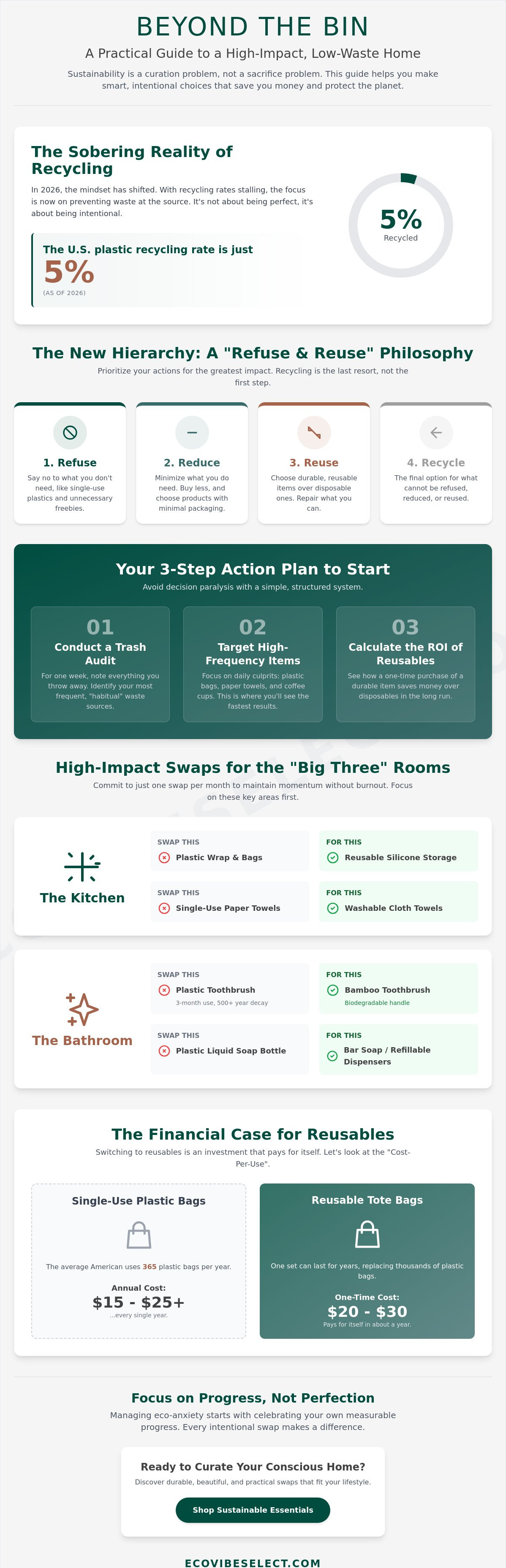
Sustainable living isn't about reaching an impossible standard of perfection. It's about the intentional reduction of personal resource consumption through mindful, manageable choices. In 2026, we've moved past the idea that recycling alone will save us. With the U.S. plastic recycling rate sitting at a mere 5%, the focus has shifted toward high-impact sustainable living tips that prioritize what we bring into our homes in the first place. This shift represents a move from a "recycling-first" mentality to a "refuse and reuse" philosophy.
The "Daily Frequency Rule" is a helpful tool for prioritizing your efforts. While a yearly flight has a large carbon footprint, your daily habits often have a more significant impact on your immediate environment and household waste accumulation. Replacing a single-use coffee cup every morning or switching to a stainless steel straw set creates a cumulative benefit that far outweighs occasional choices. Beyond the environmental impact, a mindful, less-cluttered home offers a quiet sense of calm. It reduces the mental load of managing excess waste and keeps your living space organized.
The Problem with Single-Use Culture
Convenient items often come with hidden environmental costs that last for centuries. A plastic toothbrush, for example, persists in the environment long after its short three-month lifespan. Switching to a biodegradable bamboo toothbrush offers a simple, circular solution that fits into your existing routine. In 2026, concerns about microplastics have moved from the fringe to the mainstream. Choosing plastic-free alternatives isn't just about the planet; it's about keeping these particles out of our living spaces and our bodies.
Beyond the Bin: The New Hierarchy of Waste
Recycling is no longer a "get out of waste free" card. New regulations, like California's SB 1053 which eliminated all plastic checkout bags in 2026, reflect a growing legal push to refuse waste at the source. The Zero Waste philosophy encourages us to prioritize Refuse, Reduce, and Reuse before we ever consider the bin. In 2026, the circular economy is defined as a system where every household product is designed to be reused, repaired, or safely returned to the earth without leaving a trace.
The Impact vs. Effort Framework: How to Prioritize Your Changes
Most lists of sustainable living tips fail because they treat every change as equal. Swapping a toothbrush doesn't require the same logistical planning as upgrading your home's insulation, yet both often sit on the same overwhelming checklist. To avoid decision paralysis, you need a structured system that prioritizes high-impact, low-effort changes. This framework helps you identify exactly where your energy is best spent for the greatest return on your time and money. Applying these sustainable living tips systematically ensures that your efforts lead to lasting change rather than temporary enthusiasm.
Identifying High-Frequency Waste
The first step is a simple trash audit. For one full week, track every single item you throw away. You'll likely notice a clear pattern of "habitual" waste versus "necessary" waste. Necessary waste might include medical packaging or safety seals, while habitual waste includes items that enter your home daily out of convenience. Since the average American uses about 365 single-use plastic bags every year, targeting these daily offenders provides the fastest results. Focus on the items you touch every day. These small, frequent leaks in your household budget and environmental footprint are the easiest to plug.
Calculating the ROI of Reusables
Switching to reusables is a financial strategy as much as an ecological one. Evaluate the "Cost-Per-Use" by dividing the purchase price of an item by its expected lifespan. For instance, a stainless steel straw set pays for itself within months when compared to the recurring cost of disposables. Longevity is the key to real savings. While cheap plastic storage containers often warp, crack, or stain, reusable silicone food storage bags are designed to last for years. You can calculate your yearly savings by totaling what you currently spend on paper towels, plastic wrap, and bottled water. Often, the one-time cost of a durable alternative is recovered in less than a year.
Once you've identified your frequent waste, target the "Big Three" rooms: the kitchen, bathroom, and laundry. These areas are the primary sources of single-use plastics and chemical waste. To maintain momentum and avoid burnout, commit to just one high-impact swap per month. This unhurried pace allows you to find products that actually work for your lifestyle. If you're looking for a place to start, exploring a thoughtfully curated selection of home goods can help you identify the most functional swaps for your specific needs.
A Room-by-Room Guide to High-Impact Sustainable Swaps
Once you've established your framework, the next step is applying it to the physical spaces where you live and work. Moving through your home room by room allows you to focus on specific waste streams without feeling scattered. These sustainable living tips are designed to replace low-utility disposables with durable, high-performance alternatives. By focusing on the areas with the highest daily traffic, you'll see an immediate reduction in your weekly trash volume and a cleaner, more organized environment.
Kitchen and Dining Essentials
The kitchen is often the primary source of single-use plastic waste. Traditional plastic wrap and thin sandwich bags are designed for a single use but last for centuries in landfills. Reusable silicone food storage bags offer a superior alternative. They are leak-proof, heat-stable, and keep food fresh longer by creating a more effective seal. Transitioning to silicone also helps you eliminate microplastics from your meal prep routine, a growing concern for many households in 2026.
Beyond food storage, consider your daily commute. Replacing disposable coffee cups with a collapsible silicone travel cup is a simple way to reduce morning waste. These cups are designed for portability, fitting easily into a bag once you've finished your drink. When paired with a stainless steel straw set, you've effectively eliminated the need for several common single-use items before your workday even begins. These small, consistent choices are the foundation of a conscious kitchen.
Waste-Free Personal Care
Personal care routines generate a surprising amount of non-recyclable waste. In the United States alone, roughly 1 billion plastic toothbrushes are discarded every year, eventually breaking down into harmful microplastics. Choosing a bamboo vs plastic toothbrush is one of the easiest sustainable living tips to implement immediately. Bamboo is a fast-growing, renewable resource that performs just as well as its plastic counterparts without the permanent environmental footprint.
Proper disposal is just as important as the purchase itself. Knowing how to dispose of bamboo toothbrush handles versus the nylon bristles ensures the material actually returns to the earth as intended. You can also look for plastic-free toothpaste tabs and metal grooming tools to further refine your bathroom routine. These swaps prioritize quality and durability, turning a daily chore into a more mindful experience.
The laundry room and floor care are the final frontiers for a zero-waste home. Bulky plastic detergent jugs are roughly 90% water, making them heavy to ship and difficult to store. Switching to concentrated detergent sheets removes the plastic and the bulk. Similarly, you can transform your cleaning routine by replacing disposable floor pads with a reusable spray mop. Using washable microfiber pads reduces recurring costs and keeps unnecessary waste out of the bin, proving that effective cleaning doesn't require disposability.
Overcoming the "Perfect Environmentalist" Trap
One of the biggest hurdles to starting a more conscious lifestyle is the belief that you must produce zero trash to make an impact. This "all or nothing" mindset often leads to eco-anxiety, making the process feel like a burden rather than a choice. In reality, a thousand people doing sustainability imperfectly is far more effective than one person doing it perfectly. Focus on measurable personal wins, like successfully switching to a stainless steel straw set or remembering your reusable bags for a month. These sustainable living tips are meant to be tools for progress, not rigid rules for a lifestyle audit.
The goal is intentionality, not perfection. If you forget your travel cup once, it doesn't erase the 50 times you used it. In a globalized world, some waste is unavoidable. Acknowledge the systemic challenges, like the fact that the U.S. plastic recycling rate remains at just 5%, and focus your energy where you have direct control. By shifting your perspective from "zero-waste" to "less-waste," you create a sustainable habit that can actually last for years.
Sustainable Living on a Budget
Living intentionally shouldn't be a luxury. Many believe that "going green" requires a massive upfront investment in expensive gadgets. To avoid this trap, prioritize swaps that pay for themselves within six months. For example, switching from liquid laundry detergent in plastic jugs to eco-friendly laundry detergent sheets reduces waste and saves shelf space. You should also be wary of "greenwashing" in big-box retail, where products are marketed as eco-friendly but lack durability. Always use what you already have before buying new gear. A glass jar from your pantry works just as well as a designer container. For more guidance, check out this checklist on how to find affordable eco friendly products that actually last.
Building Long-Term Habits
Consistency is the key to reducing your footprint. Most people find success by following the "Three-Week Rule," which suggests that it takes 21 days for a new routine to feel automatic. If you're living with family or roommates, involve them without the friction of a lecture. Instead of demanding perfection, demonstrate the utility of the products. Show how a reusable pet hair remover is more efficient than sticky paper rollers. Celebrate small victories together, such as your first full month without purchasing plastic wrap. These milestones build the confidence needed to tackle more complex changes later. If you're ready to start your journey with well-vetted, durable solutions, explore our collection of essential home goods designed for a modern, organized lifestyle.
Curating Your Conscious Home with Ecovibe Select
Choosing the right tools is the final step in moving from theory to practice. At Ecovibe Select, we believe that sustainability is a curation problem. You don't need a house full of "green" gadgets; you need a few well-designed, high-utility essentials that replace hundreds of single-use items. Our mission focuses on quality over quantity, ensuring that every item we offer is durable enough to become a permanent part of your routine. By choosing products that are built to last, you simplify your life and reduce your environmental footprint simultaneously. This unhurried approach to shopping ensures that your home remains organized and intentional.
For those living in multi-pet households, the reusable pet hair remover is a perfect example of this philosophy. Instead of going through rolls of adhesive paper that end up in the trash, this tool uses a durable mechanism to lift fur from furniture and clothing indefinitely. It's a practical, one-time investment that solves a daily frustration while upholding your commitment to less waste. Similarly, our collapsible silicone travel cup addresses the problem of morning waste with smart design. It's portable, leak-proof, and folds down to fit in a pocket or bag once you're done. This makes it easier to stick to your goals while you're on the move without adding bulk to your commute.
Smart Essentials for Modern Life
Portability and durability are the cornerstones of our vetting process. We select materials like food-grade silicone and sustainable bamboo because they integrate seamlessly into a modern lifestyle. Smart design is what makes these sustainable living tips stick. When a product is easy to clean, carry, and use, it stops being an "eco-swap" and simply becomes your favorite tool. We do the heavy lifting of researching materials and mechanisms so you can focus on living intentionally without the stress of constant product research. Our focus remains on smart design and essential utility for every room in your home.
Start Your Journey Today
The most effective way to begin is by picking just one high-impact swap from this guide. Whether you start with a set of reusable silicone food storage bags or transition to eco-friendly laundry detergent sheets, every choice matters. You don't have to overhaul your entire home overnight to see a difference. Small, manageable choices lead to lasting change. We invite you to explore our curated collection for the home and travel to find the right fit for your current needs. If you're ready to take the first step, our beginner-friendly essentials are designed to help you build a more conscious home with ease. Shop our curated collection to discover quality tools that support your journey toward a zero-waste lifestyle.
Step Into a More Intentional Future
Creating a zero-waste home is a journey of curation rather than a sudden overhaul. We've explored how focusing on high-frequency waste and using the impact vs. effort framework helps you prioritize changes that last. By choosing durable materials like bamboo and silicone, you're investing in tools that serve your daily needs while reducing your household's reliance on single-use plastics. These sustainable living tips are designed to fit seamlessly into your modern life without the pressure of perfection.
Our collection features high-quality reusables designed for 2026 standards, ensuring that your home essentials are as functional as they are responsible. With worldwide shipping available, we're here to help you make a global impact from your own front door. Start your sustainable journey with our curated home essentials at Ecovibe Select. Each small, mindful choice you make today builds a cleaner and more organized environment for the future. You've got the framework; now it's time to take that first manageable step.
Frequently Asked Questions
What are the easiest sustainable living tips for beginners?
The easiest way to start is by replacing items you use every single day. Swapping a plastic toothbrush for a biodegradable bamboo version or using a stainless steel straw set requires almost no change in your routine. These sustainable living tips allow you to reduce waste without the stress of a total lifestyle overhaul. Focus on one room at a time to keep the process manageable and rewarding.
Is sustainable living actually more expensive?
While some reusables have a higher upfront cost, they save you significant money over their lifespan. You stop paying for recurring disposables like plastic wrap or paper towels. When you calculate the cost-per-use of a durable silicone storage bag compared to hundreds of single-use plastic bags, the savings become clear. Investing in quality tools reduces your long-term household expenses while keeping waste out of landfills.
How do I reduce plastic waste in a small apartment?
Reducing waste in a small space requires choosing multi-functional and collapsible tools. Opt for items like collapsible silicone travel cups or laundry detergent sheets that take up minimal shelf space. These compact solutions prove that you don't need a large pantry to live more intentionally. Focus on high-impact swaps that eliminate bulky plastic packaging, such as moving from bottled cleaners to a reusable spray mop system.
Are silicone food bags better than plastic ones for the environment?
Silicone food bags are a superior choice because they are designed for thousands of uses. Unlike plastic bags that leach chemicals or tear easily, food-grade silicone is heat-stable and extremely durable. This longevity prevents hundreds of plastic bags from entering the waste stream. It's a practical way to implement sustainable living tips while ensuring your food stays fresh and free from microplastic contamination.
What is the most high-impact eco-friendly habit I can start today?
Conducting a personal trash audit is the most effective way to identify where you can have the biggest impact. By seeing exactly what you throw away, you can target your most frequent waste sources immediately. This habit helps you move away from a "recycling-first" mindset and toward refusing unnecessary items at the source. It's about making a conscious decision to stop waste before it ever enters your home.
How can I tell if a product is truly eco-friendly or just greenwashed?
Truly eco-friendly products prioritize material transparency and durability over flashy marketing. Look for specific material descriptors like "304 stainless steel" or "food-grade silicone" rather than vague terms like "natural." Greenwashed items often hide their true composition or rely on disposable components. A reliable brand acts as a curator, providing well-vetted solutions that are built to last rather than items that need frequent replacement.
Can I still be sustainable if I travel frequently?
You can maintain a sustainable routine on the go by packing a small kit of essential reusables. A collapsible silicone cup and a set of stainless steel straws fit easily into any carry-on or backpack. These items allow you to refuse single-use plastics at airports, hotels, and cafes. Staying prepared ensures that your travel habits align with your home values, making sustainability a portable part of your lifestyle.
What happens to bamboo toothbrushes after they are thrown away?
The handle of a bamboo toothbrush is fully biodegradable and will return to the earth within six months in a home compost bin. Before disposal, you must remove the nylon bristles with pliers, as these are typically not biodegradable. The handle can even be repurposed as a garden marker or kindling. This circular lifecycle ensures that your daily oral care routine doesn't leave a permanent footprint on the planet.