
Bamboo vs Plastic Toothbrush: The 2026 Definitive Comparison for Sustainable Oral Care
Did you know that over a billion plastic toothbrushes are discarded every year in the United States alone? You likely feel the weight of that waste every time you toss a worn-out brush in the bin. It's a common struggle to balance a sustainable lifestyle with the need for effective oral care. When weighing the bamboo vs plastic toothbrush choice, you might worry about moldy handles or whether plant-based materials can actually protect your enamel as well as traditional options.
We understand that making a switch should feel like a step forward, not a sacrifice. This comparison explores the real environmental trade-offs, cleaning efficacy, and cost-effectiveness of both options using 2026 data. You'll learn how to properly care for a Biodegradable Bamboo Toothbrush and gain the confidence that your oral health won't suffer for the sake of the planet. We'll break down everything from microplastic concerns to the March 2026 ADA safety standards. This guide provides a clear, practical path toward a more mindful daily routine.
Key Takeaways
- Understand the material science behind Moso bamboo and its role as a carbon-neutral alternative to petroleum-based handles.
- Learn why the bamboo vs plastic toothbrush debate is settled when it comes to professional cleaning power and dental safety.
- Discover the "Dry-Handle Method" to prevent moisture buildup and maintain your brush for its full three-month lifespan.
- Explore the naturally antimicrobial benefits of bamboo that provide a clean, hygienic brushing experience without synthetic chemicals.
- See how small, intentional changes in your morning routine create the momentum for a more sustainable and organized lifestyle.
The Plastic Toothbrush Crisis: Why Your Bathroom Routine Matters in 2026
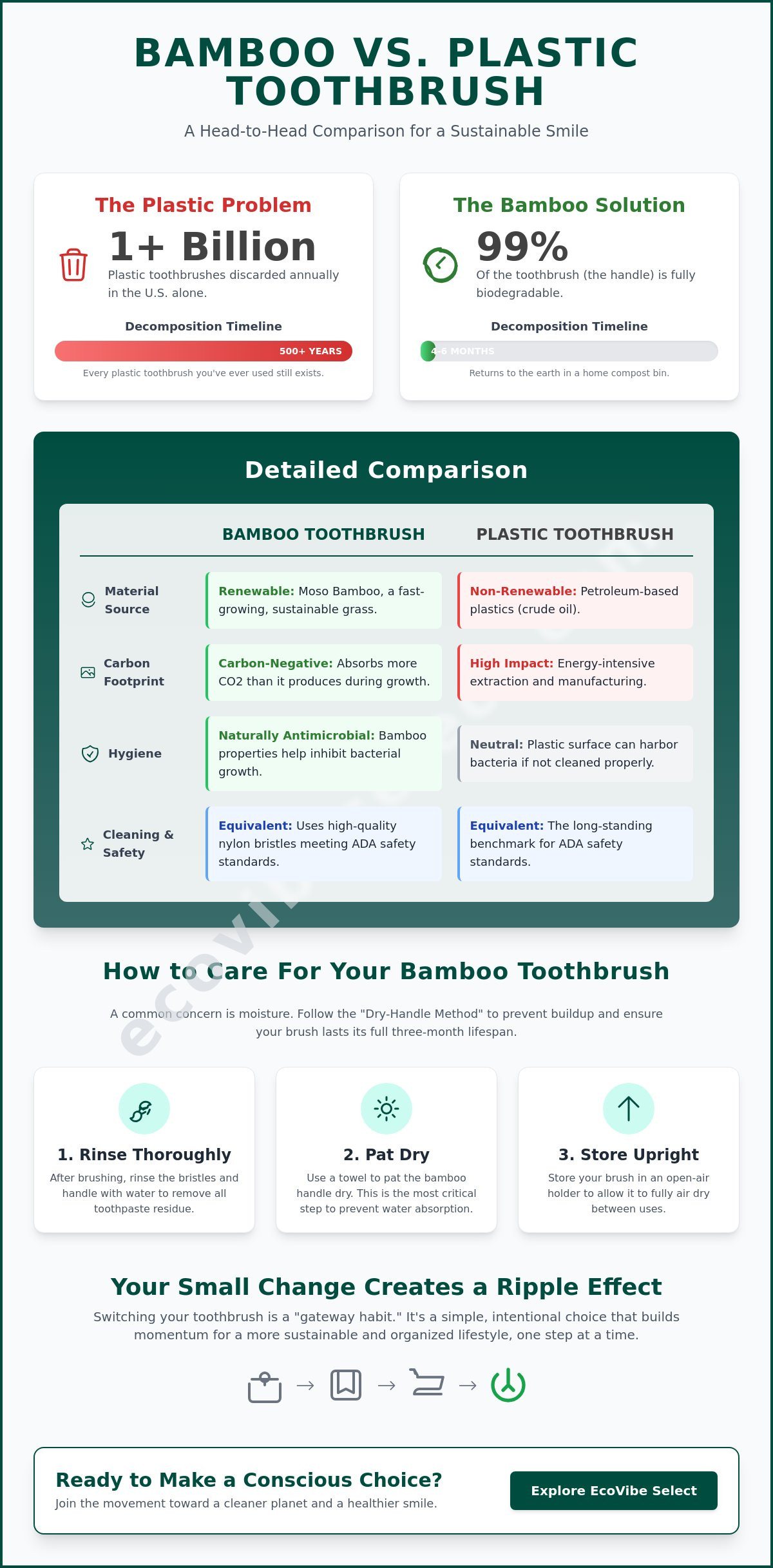
Every year, over one billion plastic toothbrushes end up in U.S. landfills. It is a staggering number for such a small, everyday object. Most of these items are made from petroleum-based plastics that persist for centuries, long after their three-month utility has ended. In contrast, a bamboo toothbrush serves as a biodegradable alternative that aligns with a more organized and responsible lifestyle. While the history of the toothbrush includes various materials, the modern shift back to plant-based handles represents a return to mindful intentionality in our daily habits.
The timeline difference between these two materials is remarkable. A standard polypropylene handle takes roughly 500 years to decompose. This means every plastic brush you have ever used still exists somewhere on the planet today. Bamboo, specifically Moso bamboo, can grow up to a meter in just one day and reaches maturity for harvest in a fraction of the time it takes to create plastic. Choosing a bamboo vs plastic toothbrush isn't just about the end of the product's life; it is about the speed and sustainability of its beginning. It is a functional choice that respects the planet's resources.
The Anatomy of a Plastic Toothbrush
Most conventional brushes consist of a rigid polypropylene handle and Nylon-6 bristles. These materials are technically recyclable, but their small size and the fusion of different plastics make them a nightmare for sorting facilities. Most municipal recycling centers simply reject them. As these brushes sit in landfills or wash into our oceans, the bristles fray and break down into microplastics. These tiny particles eventually enter our water systems and food chains, creating a long-term environmental impact that far outlasts your morning routine. It is a cycle of waste that is becoming increasingly difficult to ignore.
Why 2026 is the Year of the Sustainable Switch
This year, we see a clear shift toward high-utility, low-impact living. Consumers are no longer interested in complex overhauls; they want affordable eco friendly products that integrate seamlessly into their current lives. Swapping your brush is a simple, manageable choice that builds momentum for larger changes. It often acts as a "gateway habit." Once you see how easy it is to reduce waste at the bathroom sink, it becomes much more natural to consider other swaps for a zero-waste home. This is the core of the bamboo vs plastic toothbrush transition: it is a small change with a massive cumulative effect on your personal footprint.
Bamboo vs Plastic Toothbrush: A Head-to-Head Comparison
Choosing between a bamboo vs plastic toothbrush starts with understanding where these materials originate. Plastic handles are derived from crude oil, a non-renewable resource that requires energy-intensive extraction and refining. In contrast, Moso bamboo is a powerhouse of efficiency. It is one of the fastest-growing plants on Earth, capable of growing up to one meter per day. During this rapid growth phase, bamboo actually acts as a carbon sink. It absorbs more carbon dioxide and releases more oxygen than an equivalent stand of trees, making the raw material carbon-neutral or even carbon-negative before it ever reaches your bathroom.
Manufacturing processes also tell a different story. Plastic brushes are mass-produced through injection molding, a process fueled by fossil fuels. Bamboo handles are often handcrafted or shaped with simple mechanical tools, significantly lowering the total energy required for production. While the handle is a clear win for the planet, the bristles remain a point of discussion. Most high-quality bamboo brushes in 2026 still utilize nylon bristles to meet dental safety standards. Some brands have transitioned to plant-based nylon derived from castor oil, but the majority of bristles must still be removed and disposed of separately from the compostable handle.
Environmental Impact and Biodegradability
The "end-of-life" stage is where the bamboo vs plastic toothbrush comparison becomes most visible. A plastic brush will sit in a landfill for roughly 500 years. A bamboo handle, however, can return to the earth in just 4 to 6 months when placed in a well-managed home compost bin. This is possible because bamboo is a natural cellulose fiber that soil microbes can easily break down. By choosing a Biodegradable Bamboo Toothbrush, you ensure that the largest part of your oral care routine doesn't leave a permanent mark on the ecosystem.
Cleaning Performance and Dental Health
There is no need to worry about your oral health when making the switch. The American Dental Association (ADA) updated its standards in March 2026, confirming that manual toothbrushes are effective regardless of handle material. Clinical performance depends on bristle quality and your personal brushing technique. Many bamboo options now feature charcoal-infused bristles, which help with plaque removal and neutralizing odors. The shape of the brush head is also vital. A tapered or compact head allows you to reach back molars just as easily as a plastic equivalent. If you maintain a consistent two-minute brushing routine, your teeth will stay just as clean with a sustainable handle as they would with a petroleum-based one.
Addressing the Skeptics: Hygiene, Durability, and Texture
Skepticism is a natural part of changing a lifelong habit. Many people hesitate to make the bamboo vs plastic toothbrush switch because they worry about the sensory experience or the cleanliness of a natural material. It's a valid concern. We've used smooth, non-porous plastic since childhood; switching to a wooden texture can feel uncertain. However, modern manufacturing has solved most of the issues associated with early eco-friendly designs. High-quality bamboo handles are now heat-treated and carbonized. This process seals the surface, ensuring the handle never splinters and remains comfortable throughout its use.
On the topic of hygiene, bamboo is naturally antimicrobial and antifungal. It contains a bio-agent that helps the plant resist pests and fungi in the wild. This property remains in the fibers after harvesting. While a plastic handle is non-porous, it often features rubber grips that can trap bacteria and biofilm in small crevices. A smooth, polished bamboo handle is often easier to keep clean with a simple rinse. Regarding durability, both options last exactly three months. According to the ADA standards updated in March 2026, you should replace your brush once the bristles fray, regardless of what the handle is made of. The bamboo won't break or degrade before your bristles wear out.
The Truth About Mold and Moisture
The fear of mold is perhaps the most common reason people stick with plastic. It's important to understand that mold only grows if a brush is left in standing water. Because bamboo is a porous organic material, it needs to breathe. Plastic brushes are often tossed into damp cups where water pools at the bottom, and while the plastic doesn't rot, the grime that builds up is equally unhygienic. To keep your bamboo brush pristine, simply avoid deep, closed containers. Quick Tip: Use a vertical, open-air brush holder that allows the entire handle to dry between uses. This simple adjustment to your bathroom organization keeps the material dry and fresh.
Texture and Sensory Experience
There is a brief transition period when you first move away from plastic. Most users report that it takes about three to five days to get used to the feel of wood in their mouth. Some describe a "dry" sensation initially, but this disappears once the brush is wet and you become accustomed to the natural grip. Bamboo handles are naturally non-slip, providing excellent ergonomic control even when your hands are soapy. A high-quality polished finish eliminates the "popsicle stick" sensation, ensuring the handle feels smooth against your lips and gums. This small shift in texture quickly becomes a grounding part of a more intentional morning ritual.
The Practical Guide to Maintaining Your Bamboo Toothbrush
Maintaining a bamboo brush is slightly different than the "set and forget" approach often taken with plastic. It requires a few seconds of mindful care to ensure the organic material stays as clean as the day you bought it. If you've been hesitant about the bamboo vs plastic toothbrush choice due to maintenance, these four steps will simplify your routine. It's about small, manageable actions that preserve the utility of your brush while respecting its natural origins.
- Step 1: Rinse thoroughly. After brushing, run the head and handle under warm water. Ensure all toothpaste residue is gone, as leftover paste can settle into the wood grain over time.
- Step 2: The "Dry-Handle Method." This is the most vital step. Take a quick second to pat the handle dry with your bathroom towel. Removing surface moisture immediately prevents the bamboo from soaking up excess water.
- Step 3: Store in the open. Ventilation is your best friend. Never keep a damp brush in a closed travel case or a dark cabinet. It needs airflow to stay fresh.
- Step 4: Replace on time. Follow the March 2026 ADA guidelines and swap your brush every three months. If you notice the bristles fraying sooner, it's time for a new one to ensure your cleaning performance doesn't dip.
Ready to upgrade your morning ritual? You can find a high-quality Biodegradable Bamboo Toothbrush that fits perfectly into a modern, organized bathroom.
Preventing Handle Discoloration
You might notice the base of a bamboo brush turning a darker shade over time. This isn't necessarily mold; it is often just water absorption. Bamboo is naturally thirsty. If your brush sits in a shared cup where water pools at the bottom, the wood will pull that moisture upward. To prevent this, avoid standing water entirely. A practical tip is to rub a tiny drop of coconut oil into the base of the handle when it's new. This creates a natural, food-safe seal that repels water and keeps the bamboo looking pristine for the full three months of its lifespan.
Zero-Waste Disposal Instructions
The beauty of the bamboo vs plastic toothbrush transition is how it ends. When your three months are up, don't just toss the whole unit in the trash. Use a pair of pliers to pluck out the nylon bristles. These can often be recycled if your local facility accepts small nylon parts; otherwise, they go in the general waste. The handle itself is 100% compostable. You can bury it in your garden or add it to a home compost bin where it will break down naturally. Many people also choose to upcycle old handles as garden markers for herbs or as precise cleaning tools for tight corners around the house. For a deeper dive into the process, check out How to Dispose of Bamboo Toothbrush: The Complete 2026 Zero-Waste Guide.
Building a Sustainable Lifestyle Beyond the Bathroom Sink
The decision you made regarding the bamboo vs plastic toothbrush is more than just a dental choice. It is a functional entry point into a more intentional way of living. This single swap proves that you don't need to sacrifice quality to reduce your footprint. We believe in "sustainability momentum." This is the idea that one small success leads to another. Once you feel the natural grip of bamboo each morning, you'll likely start noticing other areas where petroleum-based products have overstayed their welcome.
Your bathroom is full of opportunities for these quiet improvements. Consider transitioning to silk floss or toothpaste tablets to eliminate plastic dispensers and tubes. For personal care, reusable pads offer a durable alternative to single-use cotton rounds. These choices aren't about being perfect. They are about being prepared and organized. Each small item represents a vetted solution that simplifies your environment while respecting the planet. By focusing on the intersection of utility and responsibility, you can build a routine that feels both professional and personal.
The Next Easy Swaps
Your sustainability journey doesn't have to stop at the bathroom sink. Moving your focus to the kitchen or your travel bag is a natural next step. A high-quality stainless steel straw set is a perfect example of a portable, essential utility that replaces thousands of single-use plastic straws. Similarly, switching to reusable silicone food storage bags helps organize your pantry while keeping waste out of landfills. These items are designed for longevity. They offer the same "less is more" philosophy you found when comparing the bamboo vs plastic toothbrush. Collectively, these swaps significantly reduce your annual plastic footprint without adding complexity to your daily routine.
Why Quality Matters in Eco-Products
True sustainability is found in durability. "Cheap" eco-friendly products that break after a few uses actually create more waste than they save. When selecting new essentials, look for precise material descriptors. We prioritize FSC-certified bamboo to ensure responsible forest management and BPA-free silicone for safety and longevity. This focus on smart design ensures your tools last. A well-vetted product should be a steady, dependable presence in your home. It should prioritize substance over flashiness. By choosing quality over quantity, you create a home that is both efficient and conscious of its impact. Explore our curated collection of sustainable essentials at Ecovibe Select.
Embracing a Mindful Morning Ritual
Choosing a more sustainable path doesn't require a total lifestyle overhaul. The bamboo vs plastic toothbrush decision is a practical way to align your daily habits with your values. You now know that bamboo offers equal cleaning performance while sequestering carbon during its growth. By adopting the "Dry-Handle Method," you can ensure your brush remains hygienic and durable for its full three-month lifespan. This shift is about more than just oral care; it's about building the momentum needed for a more organized and intentional home.
Ready to make the switch? Start your sustainable journey with our Biodegradable Bamboo Toothbrush. Our brushes feature FSC-certified bamboo handles and BPA-free bristles, arriving in entirely plastic-free packaging. It's a simple, high-quality solution designed to fit seamlessly into your modern life. Every small change you make at the sink contributes to a healthier planet. You've got the tools and the knowledge to move forward with confidence. Here's to a cleaner smile and a lighter footprint.
Frequently Asked Questions
Is a bamboo toothbrush better for your teeth than plastic?
Bamboo toothbrushes provide the same level of cleaning efficacy as plastic options. According to the ADA Seal of Acceptance standards updated in March 2026, the material of the handle doesn't impact oral health. The effectiveness depends entirely on the quality of the bristles and your personal brushing technique. Choosing a bamboo vs plastic toothbrush is a choice of material preference and environmental impact rather than a compromise on dental hygiene.
How long does a bamboo toothbrush last compared to plastic?
A bamboo toothbrush has the same three-month lifespan as a standard plastic brush. Dental professionals recommend replacing your brush every 90 days or sooner if you notice the bristles becoming frayed or worn. While the handle is made of organic material, it is designed to withstand daily use without deteriorating before the bristles need replacement. Regular care ensures the tool remains functional throughout its intended life.
Do bamboo toothbrushes get moldy or harbor bacteria?
Bamboo toothbrushes don't naturally harbor more bacteria than plastic, and they possess inherent antimicrobial properties. Mold only becomes a concern if the handle is left in standing water or a damp environment without airflow. By following the "Dry-Handle Method" and using an open-air holder, the porous bamboo stays dry and hygienic. Plastic brushes can actually trap more biofilm in rubberized grips than smooth bamboo handles.
Are the bristles on bamboo toothbrushes biodegradable?
Most bristles on the market today are made of Nylon-6 and are not biodegradable. While some manufacturers utilize plant-based nylon derived from castor oil, these still require specialized industrial composting to break down. To maintain a zero-waste routine, you should remove the bristles with pliers before composting the handle. This ensures the synthetic components are disposed of correctly while the organic handle returns to the soil.
Can I recycle my old plastic toothbrush?
Standard plastic toothbrushes are rarely accepted by municipal recycling programs due to their small size and mixed material composition. In the United States, they are classified as Class I medical devices, which adds another layer of complexity to the recycling process. Most of the one billion brushes discarded annually end up in landfills. Specialized private recycling programs exist, but they are not yet a widespread solution for most households.
How do I properly dispose of a bamboo toothbrush?
Proper disposal involves a two-step process to separate the organic and synthetic parts. First, use pliers to pluck the bristles from the head of the brush. Once the bristles are removed, the bamboo handle can be placed in a home compost bin where it typically breaks down within 4 to 6 months. This separation is the most effective way to manage the bamboo vs plastic toothbrush end-of-life cycle responsibly.
Do bamboo toothbrushes feel different in your mouth?
Bamboo toothbrushes do have a distinct texture that feels different from the non-porous plastic you might be used to. Most people experience a transition period of about three to five days as they adjust to the natural wood grain. High-quality handles are polished and heat-treated to ensure a smooth, comfortable feel against the lips. This sensory shift quickly becomes a grounding part of a more intentional daily routine.
Why are bamboo toothbrushes more expensive than plastic ones?
The price difference reflects the more complex manufacturing and sustainable sourcing required for natural materials. Unlike plastic handles that are mass-produced through fossil-fuel-intensive injection molding, bamboo handles are often shaped and carbonized through mechanical processes. The cost also covers the use of Moso bamboo, which is harvested responsibly to protect local ecosystems. It is an investment in a durable, high-utility tool that supports a healthier planet.